Cedarwood Oil FAQ: Species, Skin, Pets and Storage
Nearly every question about cedarwood oil starts with one: which tree is in the bottle? "Cedarwood" is a trade name, not a species, and the answers below shift with the tree. Here are the questions we think matter most, answered plainly.
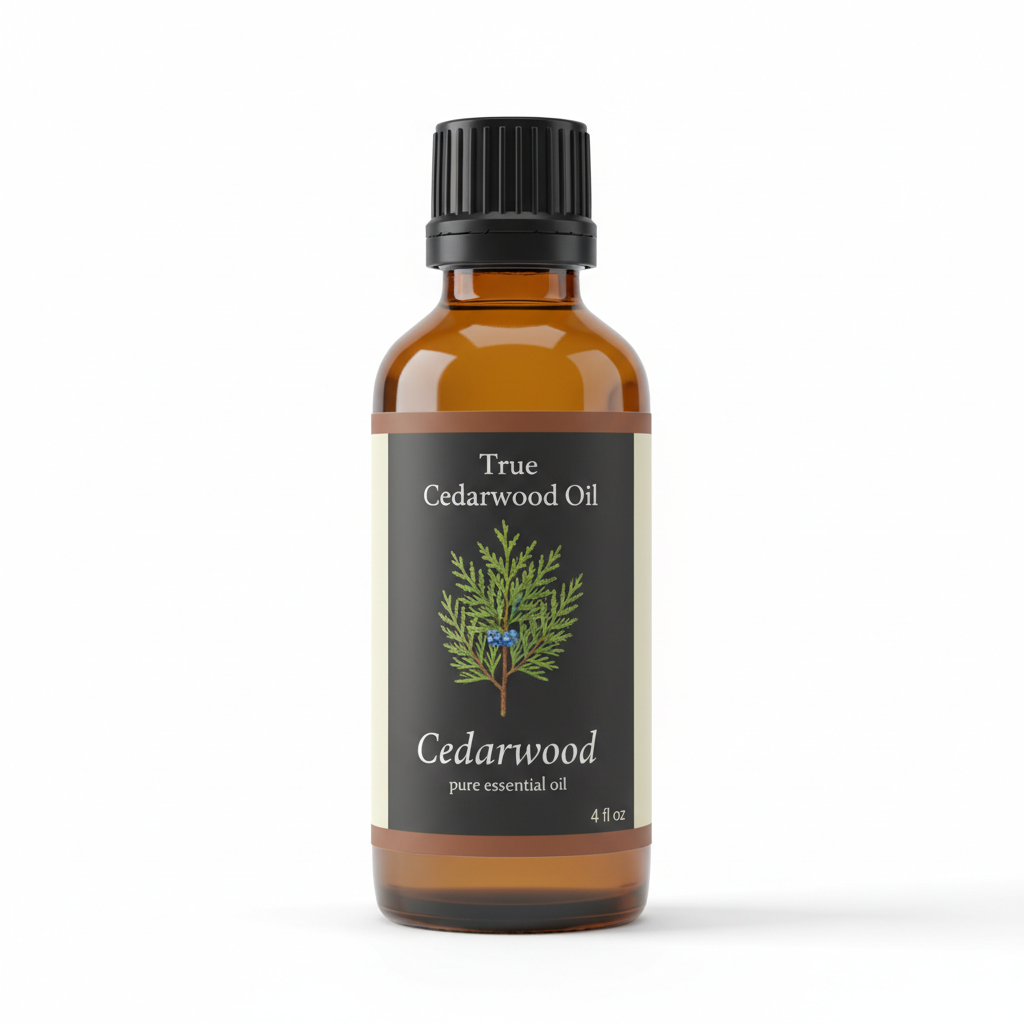
Cedarwood Essential Oil
Our own Cedarwood Essential Oil, in sizes from 0.5 oz to bulk.
From $9.99
Shop Now →Is all cedarwood oil from the same tree?
No. The Tisserand Institute puts it memorably: there are at least five different cedarwood oils. A 2026 review of wood oils from trees called "cedar" found that true cedars (Cedrus) are dominated by compounds called himachalenes and atlantones, while Virginia juniper oil leans on cedrenes, cedrol and thujopsene. Those are averages for commercial oils in general, not figures for our bottles, but they explain why scent and safety limits vary by species.
Which cedarwood oils do we sell?
Four. Atlas (Cedrus atlantica) is dry, woody and warmly sweet. Himalayan (Cedrus deodara) is warm, sweet and softly resinous. Virginian (Juniperus virginiana) is dry, sharp and classically like fresh pencil shavings. Texas, which we list as Juniperus mexicana, is soft, smooth and gently sweet. Two are true cedars and two are junipers, and they are not interchangeable in a recipe. Each is sold neat and undiluted in sizes from 0.5 oz up to bulk, and we sell no carrier oils, blends or accessories. Our species buying guide shows how to ask any seller which tree you are getting.
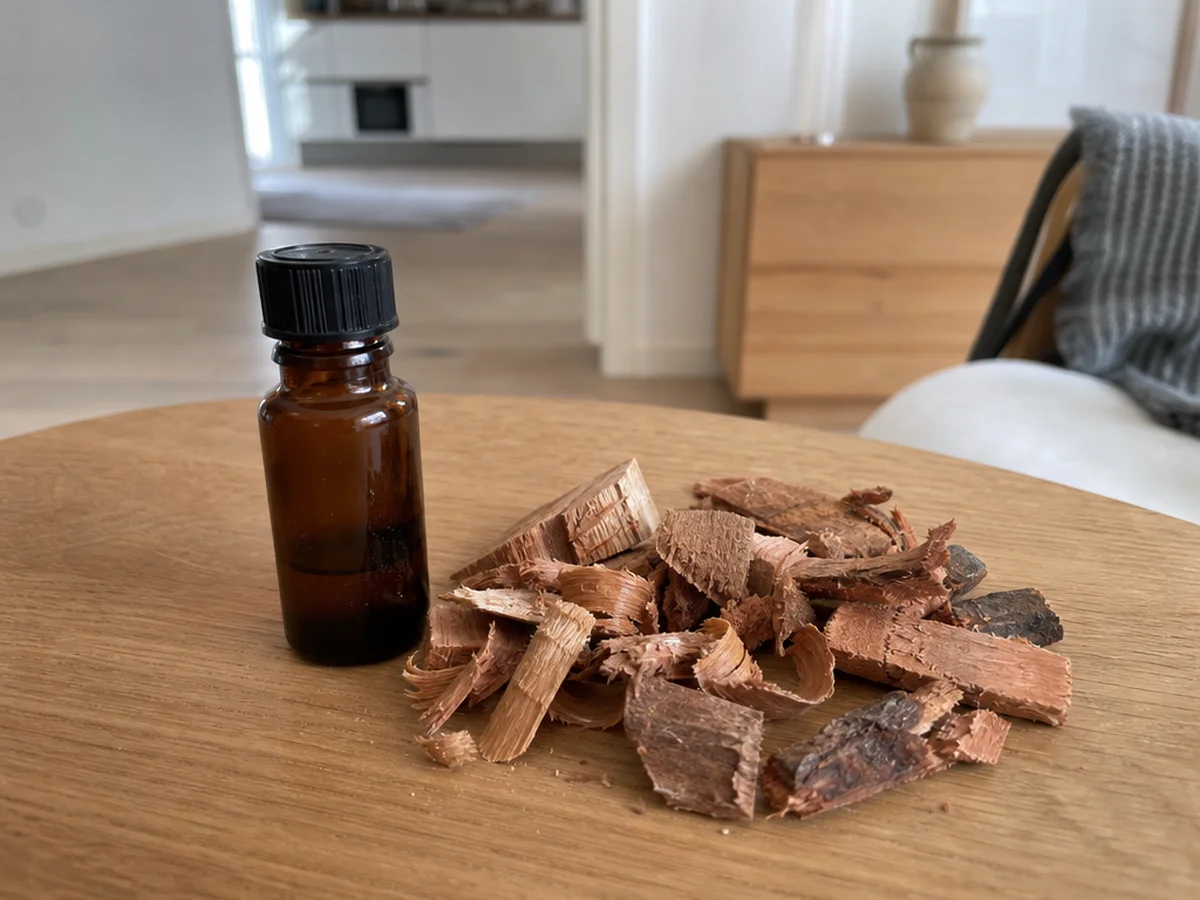
What does our Certificate of Analysis show?
The certificate we publish covers one batch of the Atlas oil. It lists a relative density of 0.934 at 20 C and a refractive index of 1.513, both inside the printed standard ranges, plus a best-by date of 07/12/2028. It does not include constituent data, so if you need a GC-MS report or species confirmation for your own purchase, ask us in writing through the contact page before you order. The GC-MS article explains how to read one when you have it.
How much can go on skin?
Our guidance is to dilute to 0.5 to 2 percent in a carrier oil, patch test first and keep it away from eyes. We start at the low end, and here is why. A 13-week rodent study of Virginia cedarwood oil in ethanol produced skin lesions, with benchmark dose lower limits between 0.65 and 4.4 percent depending on the effect. It is animal data and not a human limit, but it argues for starting low. A 2025 review mentions an example limit of 2 percent or less for leave-on products. Our dilution guide walks through the arithmetic, and a dermatologist is the right person for reactions that persist.
Does it repel insects?
We make no pest claim for any of our oils. A USDA lab study found that a cedarwood extract made with carbon dioxide turned ticks away from treated paper, but that is not the same as a person wearing a diluted oil outdoors. For tick country, the CDC points to EPA-registered repellents. Our insect overview covers the studies one at a time.
Which one smells like what?
People often ask which of our four is the "real" cedar smell, and the honest answer is that it depends on what you remember. If you picture a pencil sharpener or a cedar chest, the Virginian is the one. If you picture something warmer, sweeter and more like a cosy wooden room, the Atlas or Himalayan will be closer. The Texas oil is the easygoing one in between. Smell is personal, so we like to suggest starting with the scent that makes you smile.
How do I open and use a bottle?
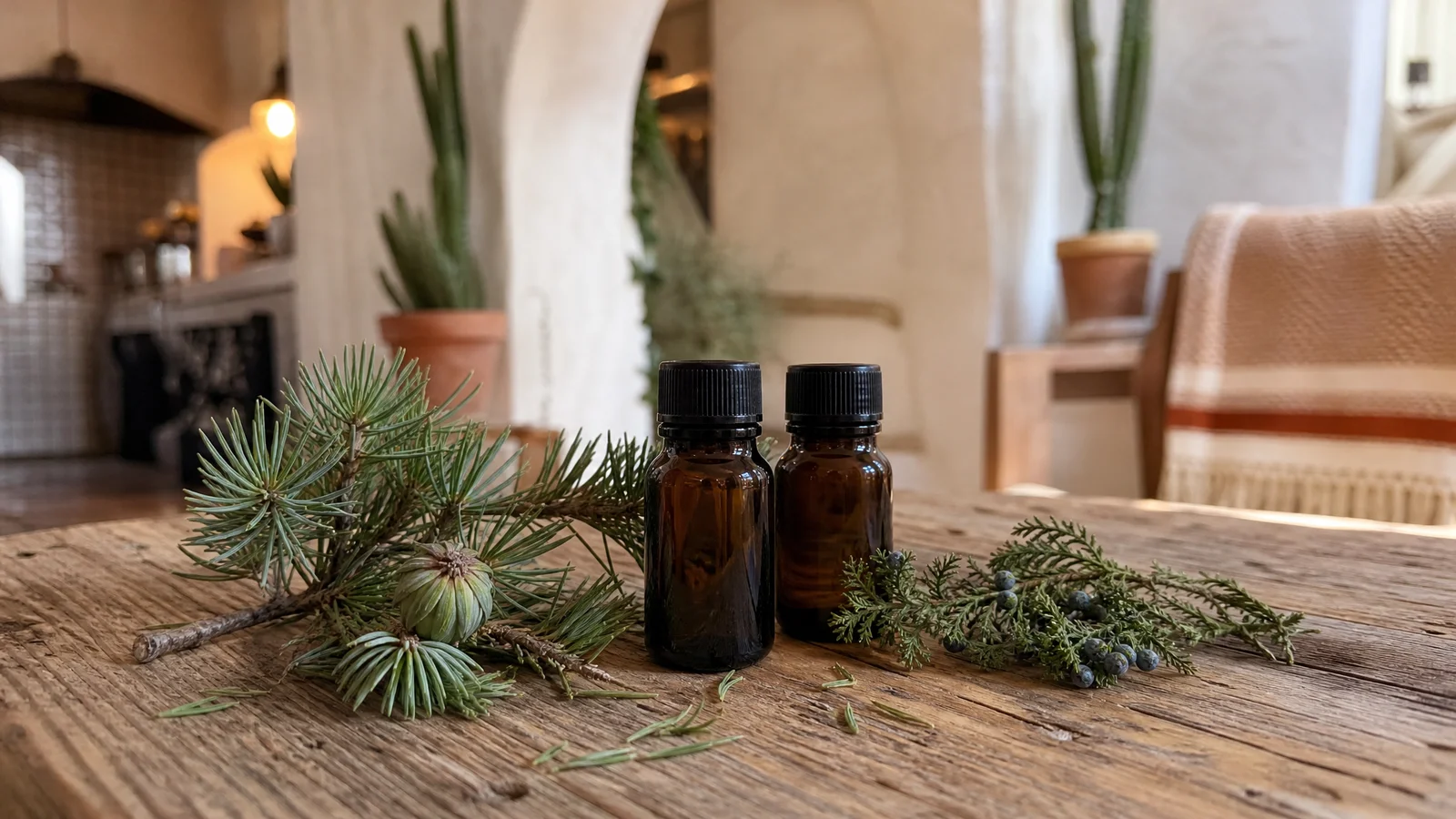
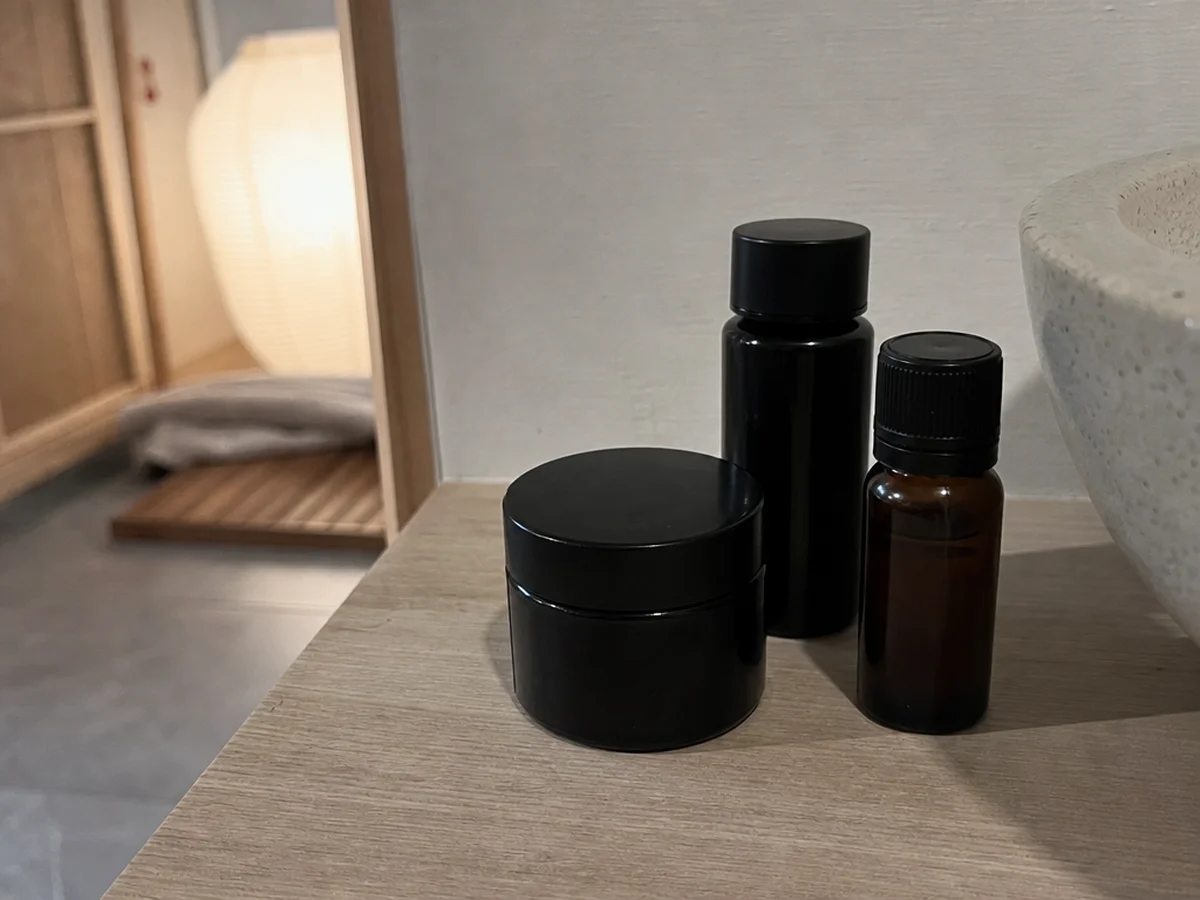
Our oils come in amber bottles with a black label showing the oil name, the Latin name and the size. Open the bottle over a surface you can wipe, tip out a drop at a time and cap it again straight away. You will notice the smell lingers on your fingers, so wash your hands before touching your face or eyes, and put the bottle back somewhere cool and dark.
Is it okay around children and pets?
Keep the bottles out of reach of both, and do not use them internally. Poison Control advises that essential oils be locked up, out of the sight and reach of children and pets, and gives the number 1-800-222-1222 in the United States if a child swallows one. Cats in particular are a veterinary question, so ask your vet before using any oil near an animal. See our pages on children and cats.
What about pregnancy?
We suggest setting cedarwood oil aside during pregnancy as a precaution, and speaking with your midwife or doctor about anything you are unsure of. The reasoning is on our pregnancy page.
How long does it last?
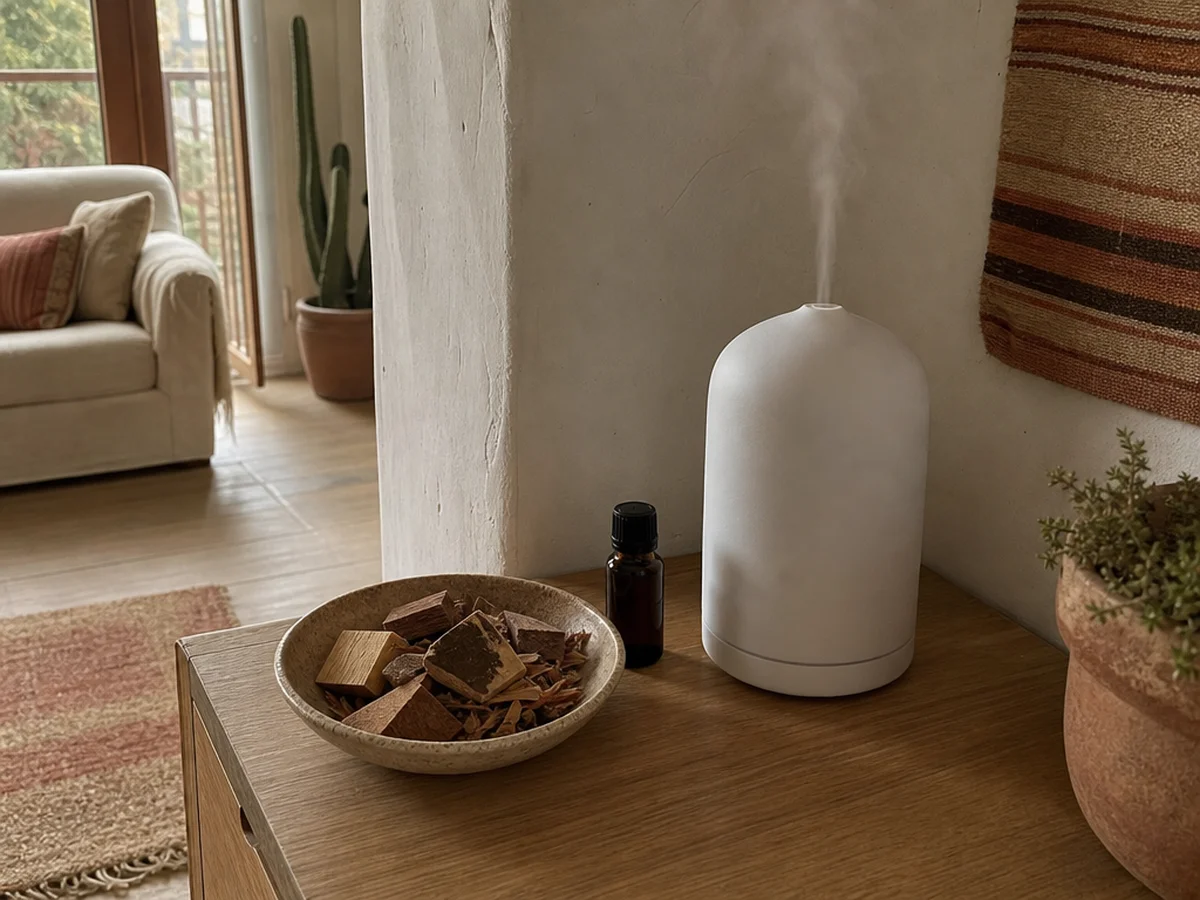
All essential oils change with time, and the Tisserand Institute notes that oxygen, light and heat speed that up. For our oils we say typically 4 to 6 years for Atlas and Texas and 3 to 5 years for Himalayan and Virginian, kept tightly capped in a cool, dark place. Our storage article has the details.
If your question is not here, write to us through the contact page. Good questions are how we decide what to explain next.
Cedarwood Essential Oil
Cedarwood Essential Oil from our own shop, in sizes from 0.5 oz to bulk.
From $9.99
Shop Now →Sources & Further Reading
- What’s in a name? - Tisserand Institute
- Cedarwood Oils: The Wood Essential Oil Compositions from Trees Known as "Cedar" (Setzer and Satyal, Plants, 2026)
- Dose-response assessment of the dermal toxicity of Virginia cedarwood oil in F344/N rats and B6C3F1/N mice (Catlin et al., Food Chem Toxicol, 2016)
- Cedarwood essential oil (Cedrus spp.): a forgotten pharmacological resource with emerging therapeutic potential (Gonçalves, Explor Drug Sci, 2025)
- Essential oils: Poisonous when misused (Poison Control)
- Oxidation and the Shelf Life of Essential Oils - Tisserand Institute