Is Cedarwood Oil Safe in Pregnancy? Our Cautious Take
Pregnancy brings a lot of well-meaning advice about what to avoid, and essential oils land on both sides of it. Our own position on cedarwood is a simple one: we suggest setting it aside during pregnancy as a precaution. Here is how we got there, and why it is a position, not a claim that harm has been shown.

Cedarwood Essential Oil
Our own Cedarwood Essential Oil, in sizes from 0.5 oz to bulk.
From $9.99
Shop Now →The honest state of the research
We looked for a study of cedarwood oil in pregnant or breastfeeding people and found none among the sources we could reach. That is different from saying cedarwood has been tested and found harmless, and the two statements are easy to confuse. MotherToBaby, a teratology information service, makes the general point that for many products there may be few studies on use in pregnancy and breastfeeding. A 2025 review of Cedrus (true cedar) oils is blunt about it: major gaps persist regarding long-term safety, reproductive and developmental toxicity, and species-specific differences.
That review covers the true cedars, which are Atlas and Himalayan in our range. It does not speak to juniper oils like Virginian and Texas, so for those two the gap is even wider. When the use is optional, as scenting a room or a grooming blend is, a precaution is the natural response to a gap. That is the whole of our reasoning.
Skin, scent and swallowing
Skin first. MotherToBaby notes that products used on the skin usually do not lead to large absorption, and that constant use, use on broken or diseased skin and use over large areas increase it. The sentence is general and does not name cedarwood, but the area point is practical. At 1 percent, a 30 ml massage blend holds 0.3 ml of oil, around 6 drops by the usual 20-drops-per-milliliter convention. That is arithmetic to show scale, not a pregnancy recommendation. A whole-body application spreads far more over far more skin than a dab behind the ear.
Scent is the question people ask most. We found no study of diffused or inhaled cedarwood in pregnancy, and none that measures what a diffuser delivers to a room, so we cannot say anything for or against it. If you are particularly sensitive to smells in pregnancy, that is something to settle with your midwife or doctor.
Swallowing is simple: our oils are for external use only. Poison Control notes that misusing essential oils can cause serious poisoning, and if one is swallowed, pregnant or not, call 1-800-222-1222 in the United States rather than waiting for symptoms.
What a precaution looks like day to day
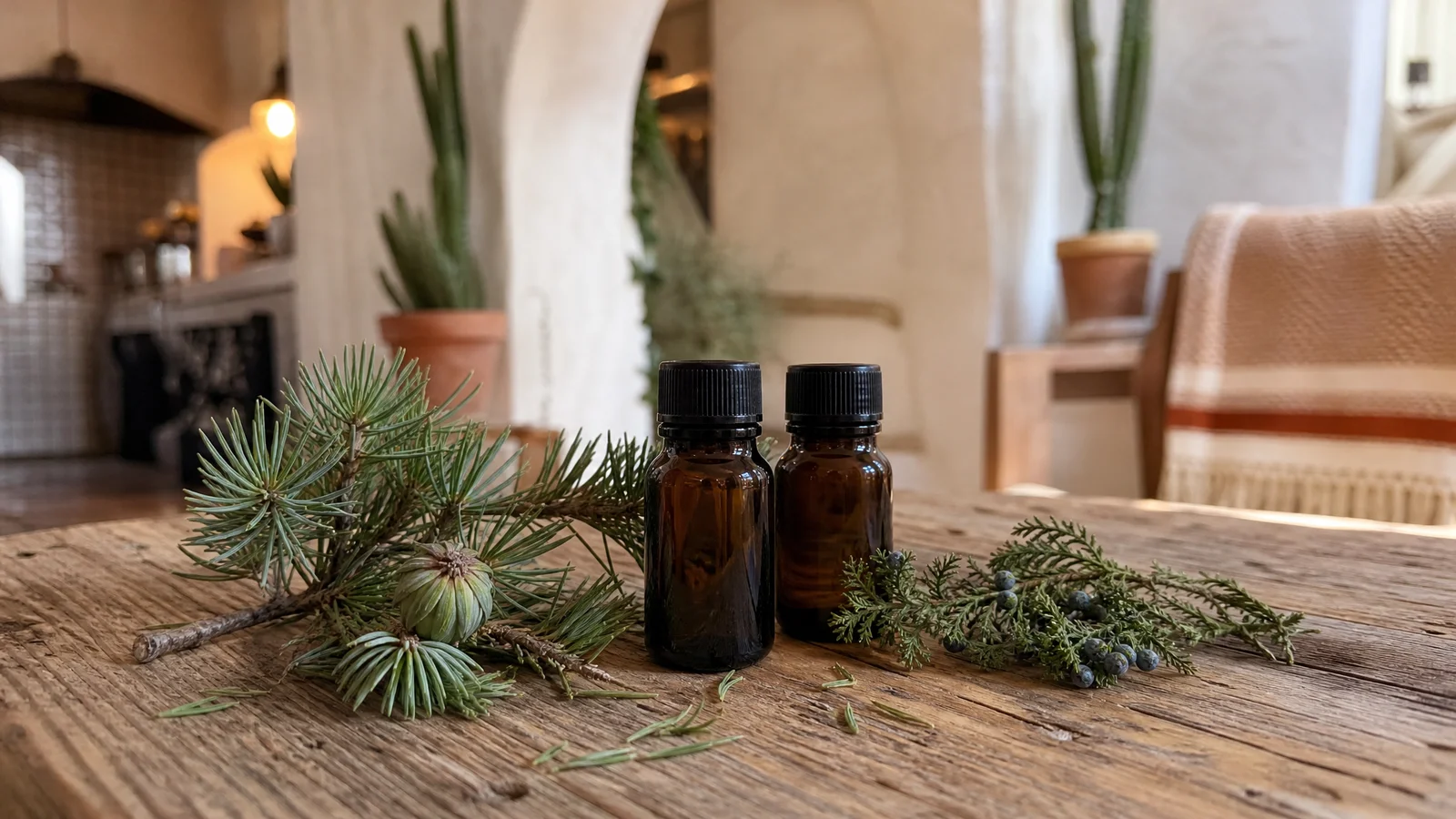
Setting an oil aside is easier than it sounds. If cedarwood is part of a routine you love, such as a drawer sachet or a favourite room scent, you can simply put the bottle in a cupboard for now and rely on other things that smell good to you, like fresh laundry, a real cedar box or a walk in the woods. The bottle will keep, since it is stored tightly capped in a cool, dark place anyway. The pause may well feel smaller than you expect, and the woody scent will still be there when you return to it.
It also helps to tell the people you live with. A partner or relative who decants a blend, wipes down a shelf or runs the diffuser may not know your plan, and a quick word saves a surprise.
Why other pages sound so sure
Online lists of oils to avoid or allow in pregnancy often treat all "cedar" as one thing. Three questions help sort them. Does the list name the species, since cedarwood covers two genera? Does it say whether it means skin, inhalation or swallowing? Does it cite a document you can open, or only another list? A list that fails all three is an opinion in tidy formatting.
We also keep apart oils that sound alike. Cedar leaf oil, from a different tree, is a different material, and a warning written for it does not describe the four cedarwood oils we sell. Our cedarwood versus cedar leaf comparison sets out the names.
Questions worth bringing to your appointment
If you would like a firm answer for your own situation, write your questions down before you go, because appointments move quickly. Useful ones are plain: which oils do you already use, in which form, and how often? Take the bottles or a photo of the labels, with the Latin name showing. A midwife or doctor can weigh that against your history in a way no article can, and we would always put their view ahead of ours.
If you have already used it
Take a breath. Pause the optional use, and mention it at your next appointment, ideally with the bottle so your clinician can see which species it is. Questions about breastfeeding are worth putting to your pediatrician or a lactation consultant, and cedarwood oil on a parent's skin can easily end up on an infant's, which is why our children's article is worth a read too.
We sell cedarwood essential oil as an external-use aromatic, not a pregnancy product, and the woody scent will still be there when the time is right to enjoy it. Your midwife or doctor is the person to decide what counts as right for you.
Cedarwood Essential Oil
Cedarwood Essential Oil from our own shop, in sizes from 0.5 oz to bulk.
From $9.99
Shop Now →