Cedarwood Oil on Skin: Dilution Tips and Patch Testing
Ask what cedarwood does for skin and our honest answer is that it smells wonderful. In a body oil, a balm or a bar of handmade soap, a cedarwood essential oil is a scent ingredient: dry and woody, with real staying power. That is the role we sell it for, and it is a good one.
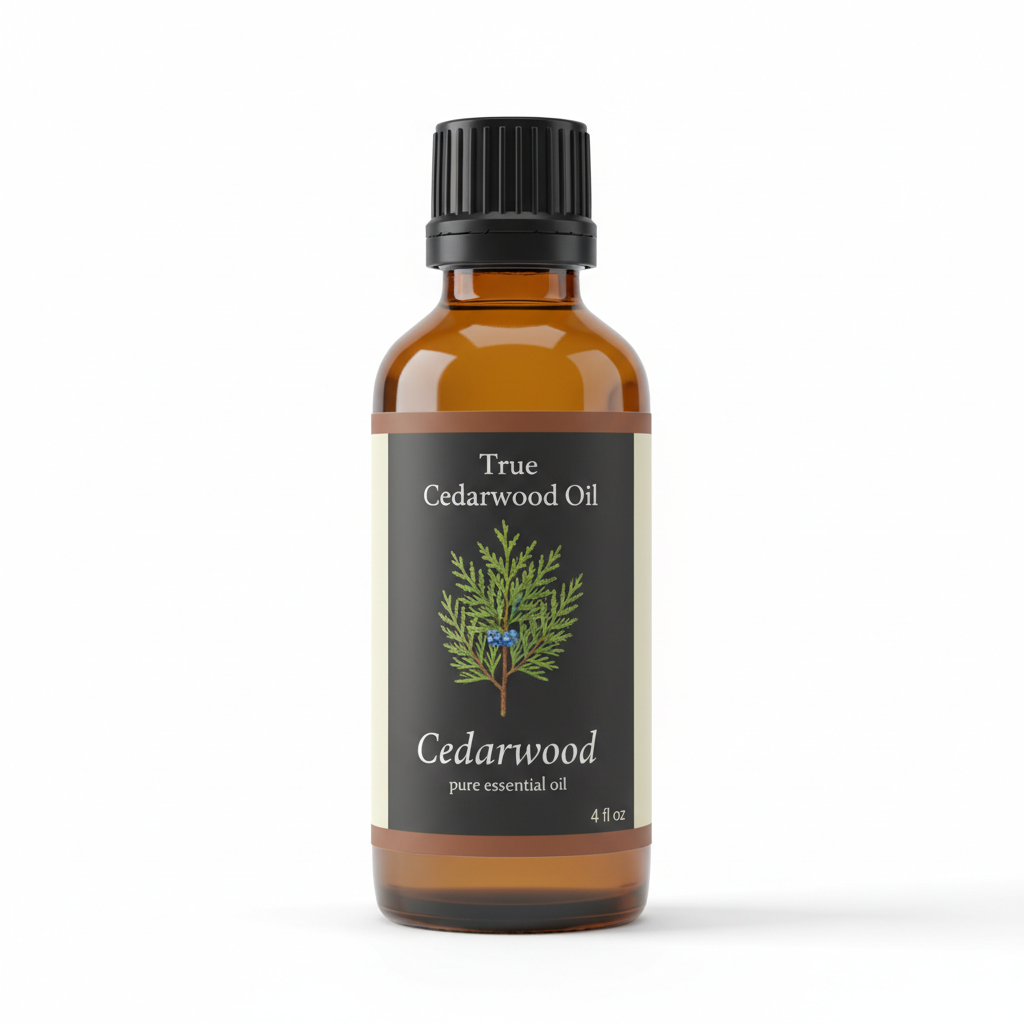
Cedarwood Essential Oil
Our own Cedarwood Essential Oil, in sizes from 0.5 oz to bulk.
From $9.99
Shop Now →Choosing the scent that suits the product
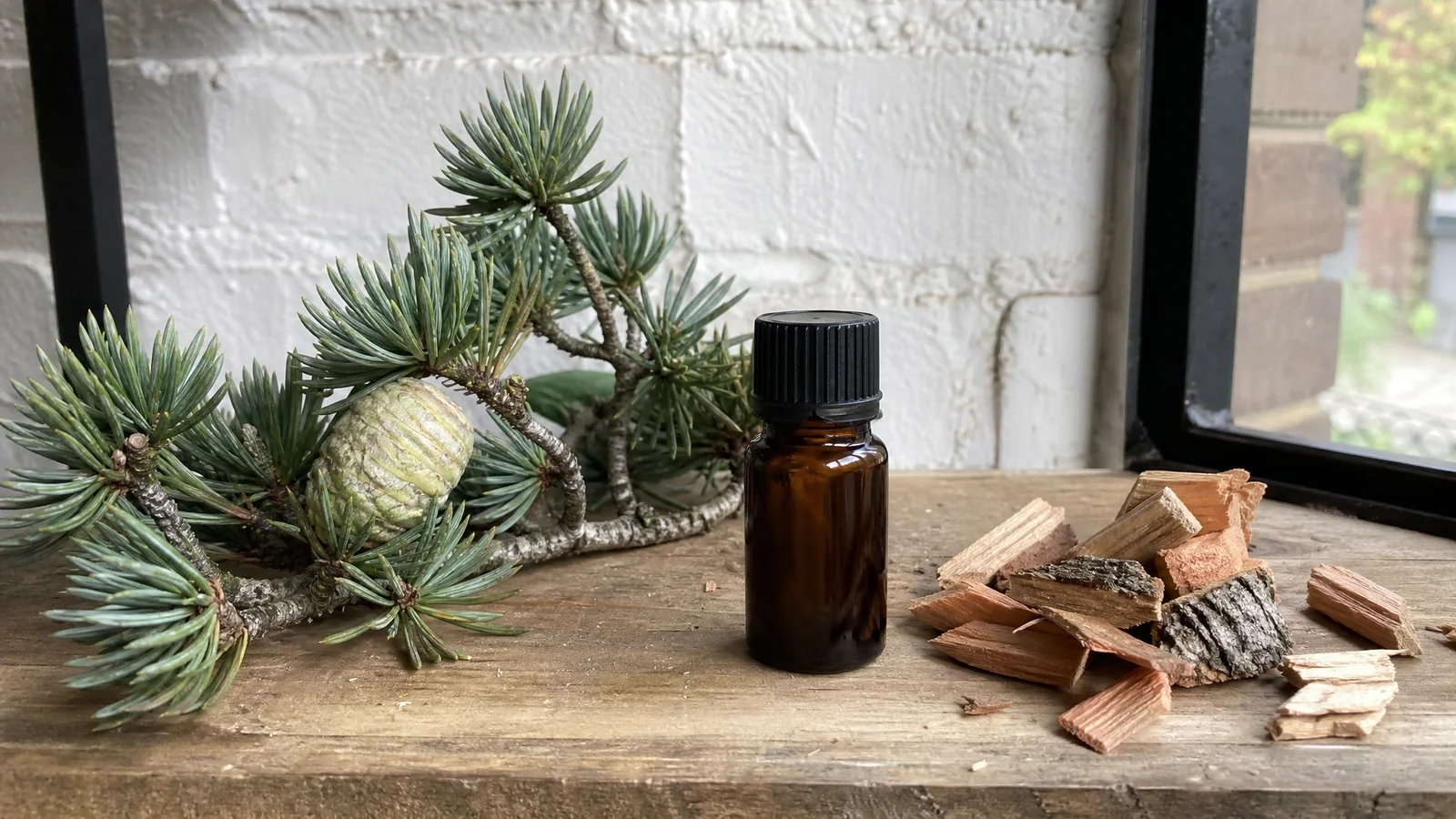
We sell four cedarwood oils, all steam-distilled from wood and all sold neat, and they smell different enough to matter in a skin product. Our Atlas is dry, woody and warmly sweet with a balsamic depth. The Himalayan is warm, sweet and softly resinous, softer than the Virginian, which has the classic pencil-shaving edge of closet drawers and cedar chests. The Texas sits comfortably between those two. For a body oil you plan to wear, the rounder Atlas and Himalayan tend to be the easiest to live with, while the Virginian suits people who love that sharp, clean, dry cedar. That is a matter of taste, so smell before you commit.
Dilution: where we start
Because our oils arrive undiluted, the maths is yours. Our guidance for skin is 0.5 to 2 percent in a carrier oil, which works out to roughly 3 to 12 drops per ounce, and we always say to patch test first. In practice we would begin at the lower end, around 0.5 to 1 percent, and here is the reasoning.
The Tisserand Institute, a respected safety educator, gives general ranges for essential oils as a class: 0.2 to 1 percent where skin is sensitive or impaired, 0.5 to 1.2 percent for facial products and deodorants, and 1 to 3 percent for body oils and lotions. Those are not cedarwood-specific limits, but they show how much room a gentle recipe has. Cedarwood itself has a little extra research behind that caution. A 13-week dermal study of Virginia cedarwood oil in rats and mice found skin changes at the application site, and the authors calculated lower-bound doses between 0.65 and 2.1 percent for the most sensitive findings in female rats, which they noted overlaps with levels used in cosmetic products. It was animal skin, an ethanol vehicle and a single species of cedarwood, so it does not tell you what happens on your forearm. It does tell us not to treat 2 percent as a comfortable default.
A review of cedarwood oils adds a practical point: skin sensitization has been linked to oxidized oil and to concentrations that are too strong. Fresh oil, kept tightly capped in a cool, dark place, and a modest percentage are the simplest ways to look after your skin.
The arithmetic, so you can do it yourself
One ounce is 29.57 ml, and a common estimate is 20 drops to the millilitre, though droppers vary. On those numbers:
- 0.5 percent in 1 oz of carrier is about 0.15 ml, roughly 3 drops.
- 1 percent is about 0.3 ml, roughly 6 drops.
- 2 percent is about 0.6 ml, roughly 12 drops.
In smaller bottles the drops become awkward, so make a larger batch or weigh the oil on a gram scale. Carrier oils, droppers and bottles are things we do not sell, so look for them at a craft supply shop, pharmacy or grocery store.
A patch test worth doing properly
Put a small amount of your finished, diluted blend on the inside of your forearm and leave it alone for a day. Check it, and stop if you see redness, itching or a rash. A home test is a sensible screen rather than a guarantee, because a reaction can build with repeated use, so keep an eye on your skin over the first couple of weeks of any new product. If you have eczema, a known fragrance allergy or any skin condition, talk to a dermatologist or allergist before using a scented product. We suggest setting the oil aside during pregnancy as a precaution and asking your doctor or midwife, and cedarwood oil is for external use only, kept away from eyes, children and pets.
Making a small first batch
When you try cedarwood in a body oil for the first time, make less than you think you need. A small bottle goes a long way, and it lets you decide whether you like the smell on your own skin before you commit to a big jar. Start with a carrier oil you already enjoy the feel of, add the drops, cap and gently roll the bottle between your hands, and write the date and the percentage on the label.
Smell it again the next day. You will notice that the scent of a diluted oil is much quieter than the scent straight from the bottle. That is normal, and it is the whole point: a gentle woody note that sits near the skin rather than filling a room. If you want more scent, we would reach for a different way to enjoy it, such as a sachet, before raising the percentage.
Where to go next
Our dilution guide goes deeper on carriers, and the patch testing article explains what a spot test can and cannot show. If you are building a scented body oil, the massage oil formulation works the numbers through, and the eczema article covers fragrance and sensitive skin.
A cedarwood body oil done well is a small pleasure: a quiet, woody note that reads as clean rather than loud. Keep it light and let it do that.
Cedarwood Essential Oil
Cedarwood Essential Oil from our own shop, in sizes from 0.5 oz to bulk.
From $9.99
Shop Now →Sources & Further Reading
- Tisserand Institute. Dilution for essential oils.
- Catlin NR et al. Dose-response assessment of the dermal toxicity of Virginia cedarwood oil in F344/N rats and B6C3F1/N mice. Food and Chemical Toxicology, 2016.
- Goncalves S. Cedarwood essential oil (Cedrus spp.): a forgotten pharmacological resource with emerging therapeutic potential. Exploration of Drug Science, 2025.