Does Cedarwood Oil Repel Insects? What the Research Shows
Cedarwood and insects go together in almost everyone's mind, thanks to cedar chests and the pencil-shaving smell of a closet. It is a lovely association, and it has some real research behind it. It also has limits worth understanding before you reach for a bottle expecting a bug shield. We sell our four cedarwood oils for their scent, we hold no pesticide registration, and we make no pest claim for any of them.

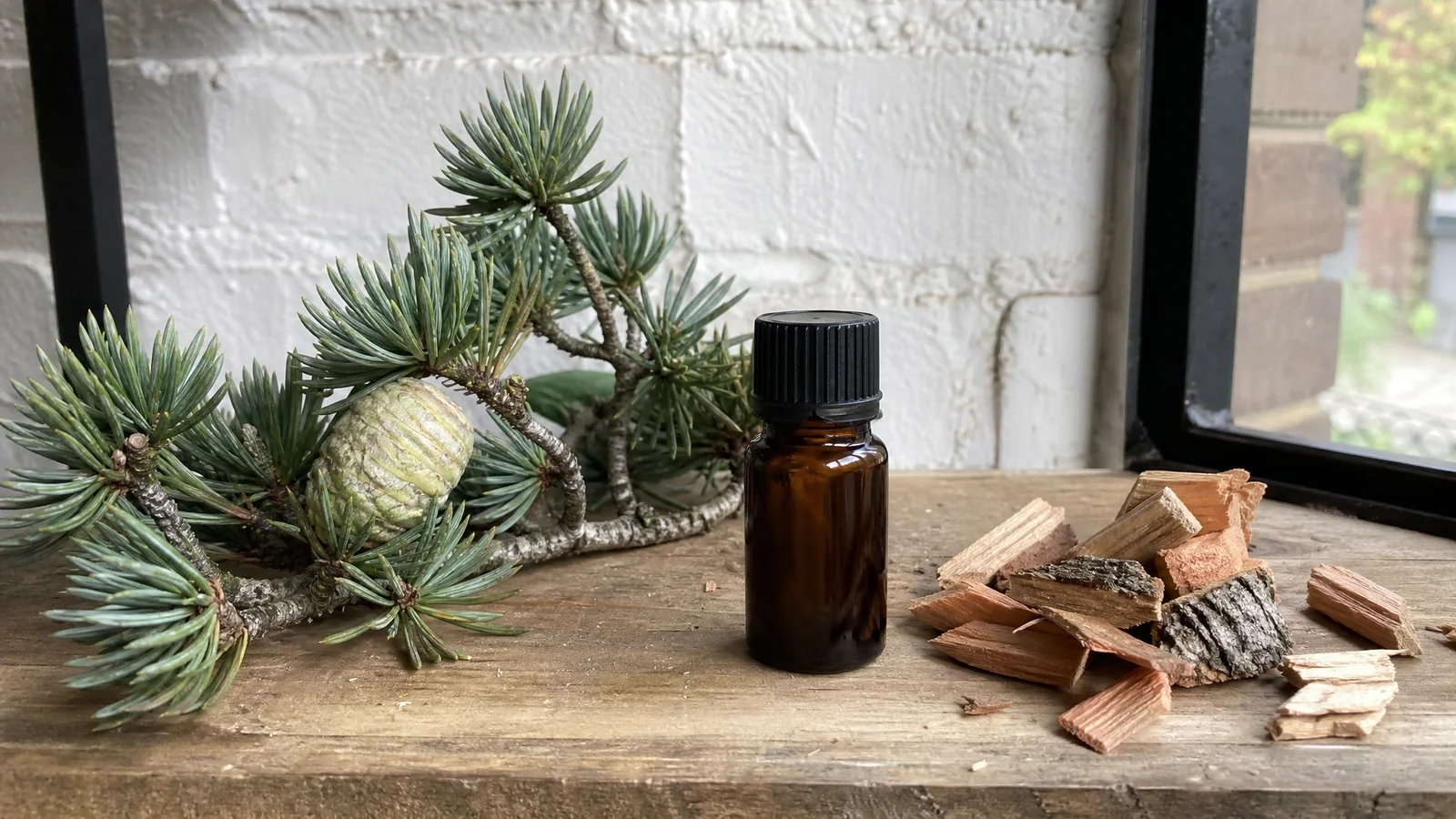
Cedarwood Essential Oil
Our own Cedarwood Essential Oil, in sizes from 0.5 oz to bulk.
From $9.99
Shop Now →What the laboratories tested
Most of the interesting work comes from US Department of Agriculture researchers, and it used a carbon dioxide extract of Virginian juniper heartwood rather than a steam-distilled oil like ours. That distinction matters, because the two preparations are not the same material.
In one study, ants were significantly repelled in an outdoor test when the extract was placed on a pole leading to sugar water, and it acted as a barrier that kept red imported fire ants from finding a food source. The same paper reported that cedrol, one of the main compounds in juniper cedarwood, killed black-legged tick nymphs in a dose-dependent way, reaching 100 percent mortality at the highest dose tested. A later study put the extract on filter paper and tested four hard tick species. The dose that repelled half of the nymphs in an hour varied a lot between species, from about 20 micrograms per square centimetre for the black-legged tick to about 90 for the lone star tick, and the repellent effect faded over time.
What those results tell us is that cedar chemistry is biologically active against some small arthropods in a laboratory dish. What they do not tell us is how a diluted, steam-distilled cedarwood oil would behave on skin, clothing or a doorstep. Dishes and filter paper are not people.
What EPA exemption means
You will sometimes see cedarwood oil described as approved for pest control. The more accurate picture is that the US Environmental Protection Agency exempts certain "minimum risk" pesticides from registration because it has determined they pose little to no risk to human health or the environment. That is a statement about low risk, not about how well a product works. A registered product is different: it carries a registration number, which means the company has given EPA technical information on effectiveness.
Where bites can carry disease
This is the one place we would be firm. The CDC says it does not know how effective non-registered repellents are, including some natural ones, and recommends an EPA-registered repellent to protect against mosquito-borne illness. It lists DEET, picaridin, IR3535, oil of lemon eucalyptus, para-menthane-diol and 2-undecanone as the registered active ingredients. If you are walking in tick country or travelling somewhere mosquitoes carry disease, a pharmacy repellent from that list is the right tool. A cedarwood essential oil is a fragrance and craft ingredient, and we would not ask it to do that job.
What cedarwood is good for around the house
As a scent, it is hard to beat. A few drops of a diluted blend in a linen spray, a cedar sachet freshened with a little of the Virginian oil, or a woody note in a room spray all do what they say: they make a space smell clean and dry and forested. Those are cosmetic and aroma uses, and they stay on the right side of the line. For actual household pests, we would start by fixing the cause, with cleaning and sealed storage, and call a licensed pest professional for something like bed bugs.
Because essential oils concentrate quickly, keep the bottle away from children and pets, and do not apply the oil to skin undiluted. Our guidance for skin is 0.5 to 2 percent in a carrier, patch tested first, and we suggest setting it aside during pregnancy as a precaution. Cats in particular are sensitive to essential oils, so ask your vet before scenting a space they share.
If you simply love the closet smell
The old cedar chest is really about two things: a smell people trust and a habit of keeping clothes clean and dry. If it is the smell you are after, a drop or two on a cotton pad tucked into a small cloth bag is an easy way to bring it back. Keep the oil off the clothes themselves, because oil can mark fabric, and let the sachet sit on a shelf or in a drawer where the scent can drift out gently.
Open the drawer after a day and you will notice a quiet, dry, woody smell rather than a loud one. That restraint is exactly what makes cedar so pleasant in a wardrobe. For this job we like to point people to our Virginian oil, because its sharp pencil-shaving character is the one most people recognise as the classic closet scent.
Our honest recommendation
Enjoy the oil for what it smells like, and keep the real pest work for the tools made for it: tidy storage, regular cleaning, and a professional when the problem is bigger than a cupboard. Cedar has long kept good company with those habits, and the scent is a nice thing to add once the basics are done.
More on specific pests
If you are curious about a particular creature, we have gone through each one: cedarwood and mosquitoes, ticks, fleas, clothes moths and ants and garden pests. For a scented spray recipe, see our cedarwood spray article.
Cedar's reputation in the closet is built on centuries of woody scent and good housekeeping, and the scent is the part we are glad to supply.
Cedarwood Essential Oil
Cedarwood Essential Oil from our own shop, in sizes from 0.5 oz to bulk.
From $9.99
Shop Now →Sources & Further Reading
- Eller FJ et al. Bioactivity of cedarwood oil and cedrol against arthropod pests. Environmental Entomology, 2014.
- Flor-Weiler LB et al. Repellency and toxicity of a CO2-derived cedarwood oil on hard tick species (Ixodidae). Experimental and Applied Acarology, 2022.
- US EPA. Minimum Risk Pesticides Exempted from FIFRA Registration.
- CDC. Preventing Mosquito Bites.