Cedarwood Oil for Acne: What the Research Shows
When skin is breaking out, it is tempting to reach for something from the pantry or the aromatherapy shelf. We understand the impulse. With cedarwood oil, though, we would rather point you toward a better plan, and keep the oil for what it does best: smelling wonderful somewhere else.
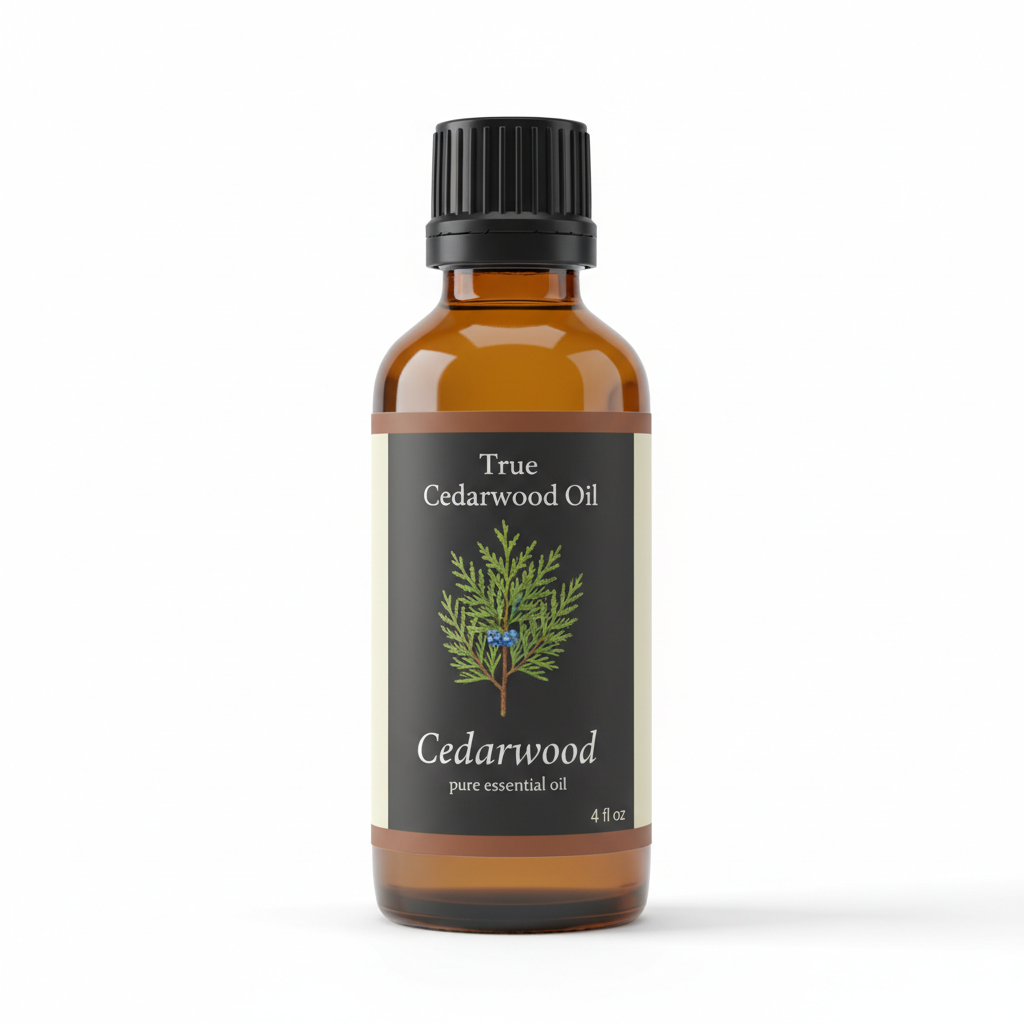
Cedarwood Essential Oil
Our own Cedarwood Essential Oil, in sizes from 0.5 oz to bulk.
From $9.99
Shop Now →What the research on cedarwood and acne amounts to
The one paper we know of that links the two is a 2016 case report in the Journal of Alternative and Complementary Medicine, titled “Cedarwood Oil as Complementary Treatment in Refractory Acne.” Its abstract describes a single patient in whom adding cedarwood oil was helpful. The abstract does not name the species of cedarwood or give a concentration, and as the title says, the oil was complementary, meaning it was added to other care. A case report like this can raise a question for researchers. It cannot show that an oil works, because one person's skin changes for many reasons, including the passing of time.
For that reason we do not sell cedarwood oil for acne, and nothing here is advice to put any of our oils on a breakout.
What dermatologists point to
The American Academy of Dermatology lists retinoids, benzoyl peroxide, topical antibiotics, salicylic acid and other options, with procedures and prescription medicines for harder cases. Essential oils do not appear on that page. Its guidance for everyday breakouts is encouraging: one retinoid, adapalene, is available without a prescription, and treatment should be given six to eight weeks to work. If you do not see results in that time, or the breakouts are deep nodules and cysts, it recommends seeing a dermatologist.
That timeline is the useful takeaway. Acne rises and falls on its own, so patience and a consistent plan matter more than any single product, and a professional can offer options a shop cannot.
Why we keep scented oils off inflamed skin
This part is our reasoning rather than a finding about acne. Sindle and Martin estimate that about 80 essential oils have been reported to cause contact allergy, with cedar oil among those patch-tested, and describe how air exposure turns oils into compounds that are stronger sensitisers. A cedarwood review likewise links irritation to oxidised or poor-quality oil.
Skin that is already red and being treated with retinoids or benzoyl peroxide is a hard place to spot a new reaction. Is it the acne, the treatment or the oil? Keeping the routine simple makes it easier for you and your dermatologist to see what is going on. So if you are being treated for acne, we suggest checking with the clinician managing it before adding a scented oil to that area.
It also helps to know that acne has several causes at once, which is why dermatologists usually combine approaches rather than relying on one. Benzoyl peroxide, for example, is described by the AAD as reducing acne-causing bacteria and works best alongside another option. A bottle of scented oil is an easy thing to add, but it rarely addresses what is going on under the surface, and it can muddy the picture.
Keeping your routine simple
If you are working with a dermatologist, simple habits make their job easier. Change one thing at a time, and jot down a short note each time you start or stop a product, with the date. Bring that note to your appointments. It is plain and unglamorous, and it gives the person treating you a much clearer picture than memory alone. It also helps you notice if something you add is followed by a change, which is exactly the kind of clue a busy routine hides.
We would rather you spent your money on a visit to a professional than on a bottle of oil, and we mean it. That is why this article ends with the plan above, not a recipe.
Questions to bring to an appointment
A short list makes a short visit go further. Write down how long the breakouts have been going on, what you have already tried and for how long, and anything else on your skin that you apply every day, such as sunscreen, makeup or moisturizer. Add any scented products you use, essential oils included, so the clinician can see the whole picture. Then ask what to expect and when to check back. Having those answers in your own words is calming in the plainest sense: you leave with a plan instead of a pile of guesses.
Where cedarwood fits happily
Give your skin a break from experiments and let cedar scent your space instead: a drop on a cotton pad in a drawer, a sachet, a short session in a diffuser. Our closet refresh article has ideas. If you do plan to use any essential oil on skin, our skin article and dilution guide are good places to start. Our own guidance is 0.5% to 2% in a carrier with a patch test, and we prefer the low end; our patch test article explains what a test can miss.
When you do bring cedar into your home, notice how it behaves in a room. Open a bottle and breathe in slowly: dry, woody, a little sweet or a little sharp depending on which of our four you choose. A single drop on a cotton pad tucked into a drawer is enough to scent it for days, and it keeps the bottle, the oil and your skin well apart.
If you are pregnant, we suggest setting the oil aside as a precaution and asking your clinician about any skin product. For sensitive or acne-prone skin, a dermatologist is the right person to ask.
Clear, comfortable skin is worth a proper plan. Cedarwood, meanwhile, can simply keep making your home smell lovely.
Cedarwood Essential Oil
Cedarwood Essential Oil from our own shop, in sizes from 0.5 oz to bulk.
From $9.99
Shop Now →Sources & Further Reading
- Cedarwood Oil as Complementary Treatment in Refractory Acne, Hassoun, Ornelas and Sivamani, Journal of Alternative and Complementary Medicine, 2016
- Acne: Diagnosis and treatment, American Academy of Dermatology
- American Academy of Dermatology, acne guidance on types of breakouts
- Art of Prevention: Essential Oils - Natural Products Not Necessarily Safe, Sindle and Martin, International Journal of Women's Dermatology
- Cedarwood essential oil (Cedrus spp.): a forgotten pharmacological resource with emerging therapeutic potential, Gonçalves, Exploration of Drug Science, 2025