Flaky Scalp and Cedarwood Oil: What to Try First
A woody, balsamic oil sounds like it ought to be good for a scalp, and a few lab papers about essential oils and yeast have helped that idea along. But if flakes are what is bothering you, the quickest route to a straight answer runs through the pharmacy aisle rather than a bottle of cedarwood oil, and it is worth seeing why.
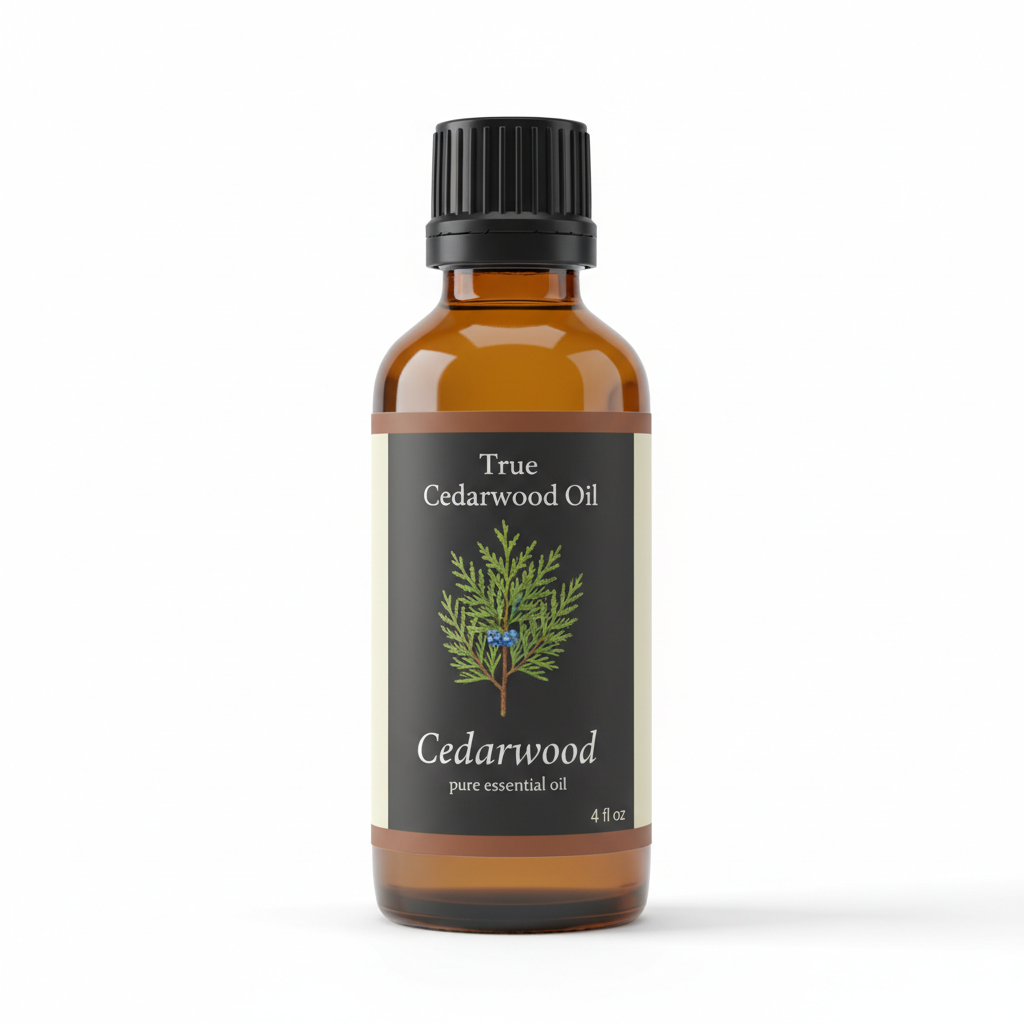
Cedarwood Essential Oil
Our own Cedarwood Essential Oil, in sizes from 0.5 oz to bulk.
From $9.99
Shop Now →What the NHS suggests first
The NHS describes dandruff as common and harmless, not caused by poor hygiene, and possibly linked to a yeast that lives naturally on skin or to conditions such as eczema. Stress and cold weather can make it worse. Its advice is simple: use an anti-dandruff shampoo that contains ketoconazole, coal tar or salicylic acid, give it up to four weeks, and see a GP if you still have symptoms after that, if the scalp is red or swollen or very itchy, or if flaky patches turn up on your face or body. A pharmacist can help you pick one.
Why a shampoo and an oil are not in the same category
In the United States, the FDA has a monograph that names the active ingredients allowed in over-the-counter dandruff products and the strengths they are used at, among them coal tar, pyrithione zinc, salicylic acid, selenium sulfide and sulfur. Cedarwood oil is not on that list. A product sold for dandruff is making a drug claim, and the FDA looks at a product's intended use to decide whether it is a cosmetic or a drug. That is why we describe our oils by their aroma and craft uses and do not present them as a scalp remedy.
The lab papers, in plain English
Cedarwood does turn up in laboratory research on microbes. A 2025 review of cedarwood oil reports activity against yeasts and fungi, but it is candid that most of this data comes from test-tube work using different extraction methods and poorly standardised concentrations. A paper that shows an oil slowing yeast growth in a dish is a fair reason for scientists to look further. It tells us little about what happens on a person's scalp, where a product sits for a few minutes and is rinsed away. When we searched the research for a human trial of cedarwood oil on dandruff, we did not find one, and we would rather say so than stretch a lab result into a promise.
A note about fragrance and an irritated scalp
Because cedarwood oil is rich in fragrance compounds, skin sensitivity is worth a thought. A dermatology review in the International Journal of Women's Dermatology lists cedarwood oil among essential oils with case reports of allergic contact dermatitis and as an item clinicians can patch test. The practical point is that a scalp that is already itchy and flaky is a poor place to experiment: if a rash follows a new oil, it is hard to tell it from the original problem.
So if flakes are the issue, we would put cedarwood oil to one side for now. If your scalp is in good shape and you simply love a woody scent in a hair oil, our guidance is the same as for any use on skin. Dilute to 0.5 to 2 percent in a carrier oil, and we would begin at the low end, which works out to about 3 drops per ounce of carrier at 0.5 percent (our arithmetic, at around 20 drops per millilitre). Patch test first, keep it away from eyes, children and pets, and skip it on broken, inflamed or weeping skin. Because the species differ, our guide to the four cedarwood oils will help you choose a scent you like.
Keep the scent separate from the problem
A flaky scalp can be frustrating, and when you are trying to fix it, the last thing you want is to guess which of five new products made it worse. A tidy approach is to change one thing at a time. Use the shampoo you have chosen with your pharmacist for the full time, and leave the scented oils on the shelf until the scalp feels calm again.
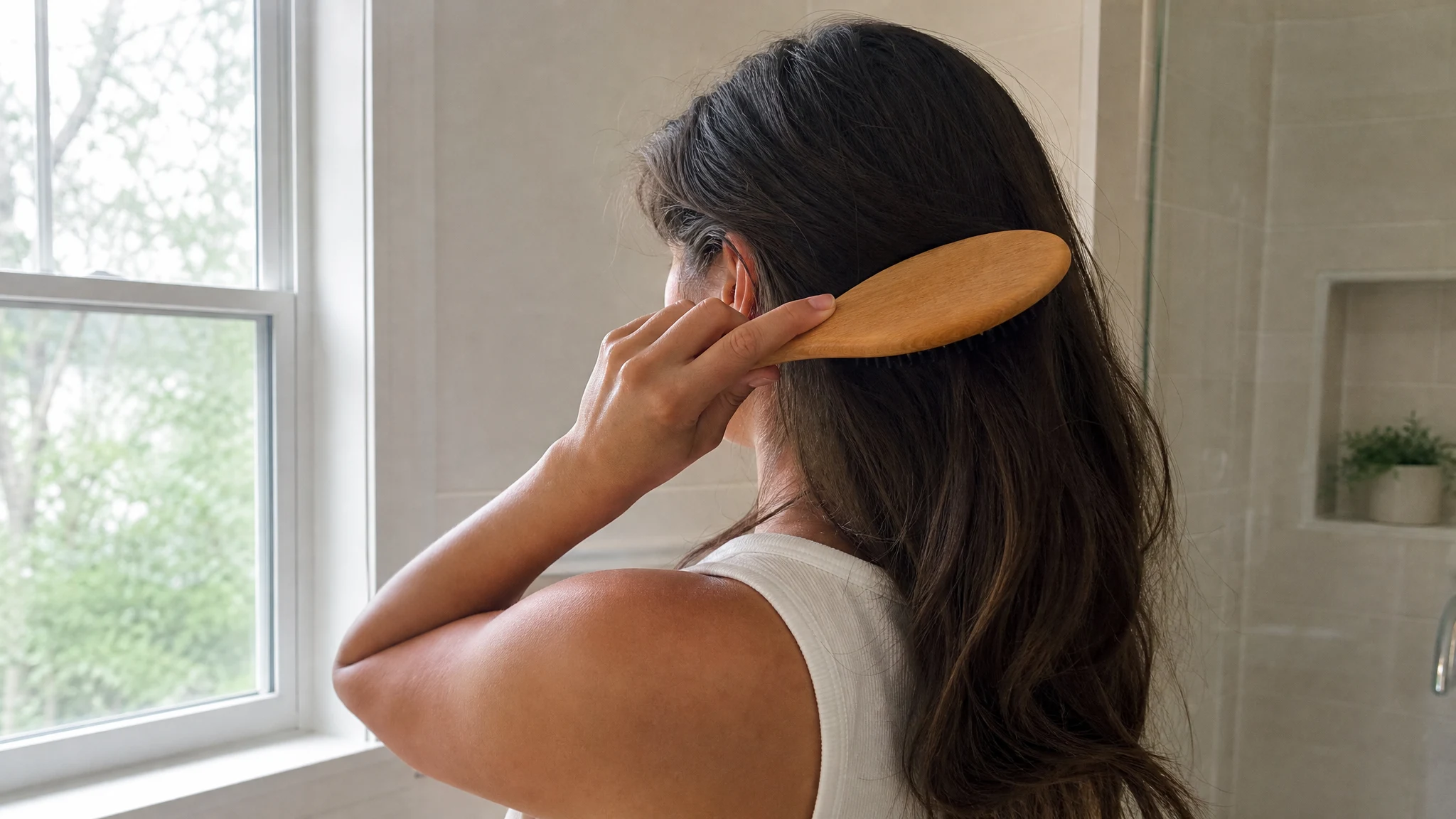
Then, if you want the woody smell back in your routine, there are gentle ways to bring it in. Smell a bottle of Virginian or Atlas oil when you open it, and enjoy it in the room, or at the end of a day on a cotton pad in your drawer. When you do try a hair oil, make a small batch, keep the amount low and put it on the lengths of the hair before you let it near the scalp.
Putting it in order
- Flakes only: try a shampoo with one of the recognised actives for up to four weeks.
- No change, or redness, swelling, strong itching, or patches elsewhere on the body: see a GP or dermatologist.
- Scaling on an infant's scalp: ask a pediatrician.
- Scent for your hair care once the scalp is calm: a diluted, patch-tested cedarwood oil is a pleasant option.
For more on getting dilution right, we cover it in our dilution guide and our patch testing article. There is also a look at scalp massage and grooming if you want the scent side of cedarwood and hair.
A scalp that flakes for weeks is a job for the right shampoo and, if needed, a doctor, and cedarwood oil is there for the pleasure of the aroma afterward.
Cedarwood Essential Oil
Cedarwood Essential Oil from our own shop, in sizes from 0.5 oz to bulk.
From $9.99
Shop Now →Sources & Further Reading
- NHS, "Dandruff - NHS." nhs.uk/conditions/dandruff
- Legal Information Institute, "21 CFR § 358.710 - Active ingredients for the control of dandruff, seborrheic dermatitis, or psoriasis." law.cornell.edu
- US Food and Drug Administration, "Is It a Cosmetic, a Drug, or Both? (Or Is It Soap?)" fda.gov
- Goncalves S, 2025. "Cedarwood essential oil (Cedrus spp.): a forgotten pharmacological resource with emerging therapeutic potential." Exploration of Drug Science. explorationpub.com
- Sindle A, Martin K, 2021. "Art of Prevention: Essential Oils - Natural Products Not Necessarily Safe." International Journal of Women's Dermatology. PMC8243157