Fake Cedarwood Oil: What Home Tests Can and Can't Tell
Everyone has a favorite kitchen test for essential oil: a drop on paper, a drop in water, a long sniff. With cedarwood they catch less than people hope, and it is worth knowing why before you trust one. The short version is that home tests can spot clumsy cheating, but the cheating that matters most in cedarwood happens at the level of the tree.
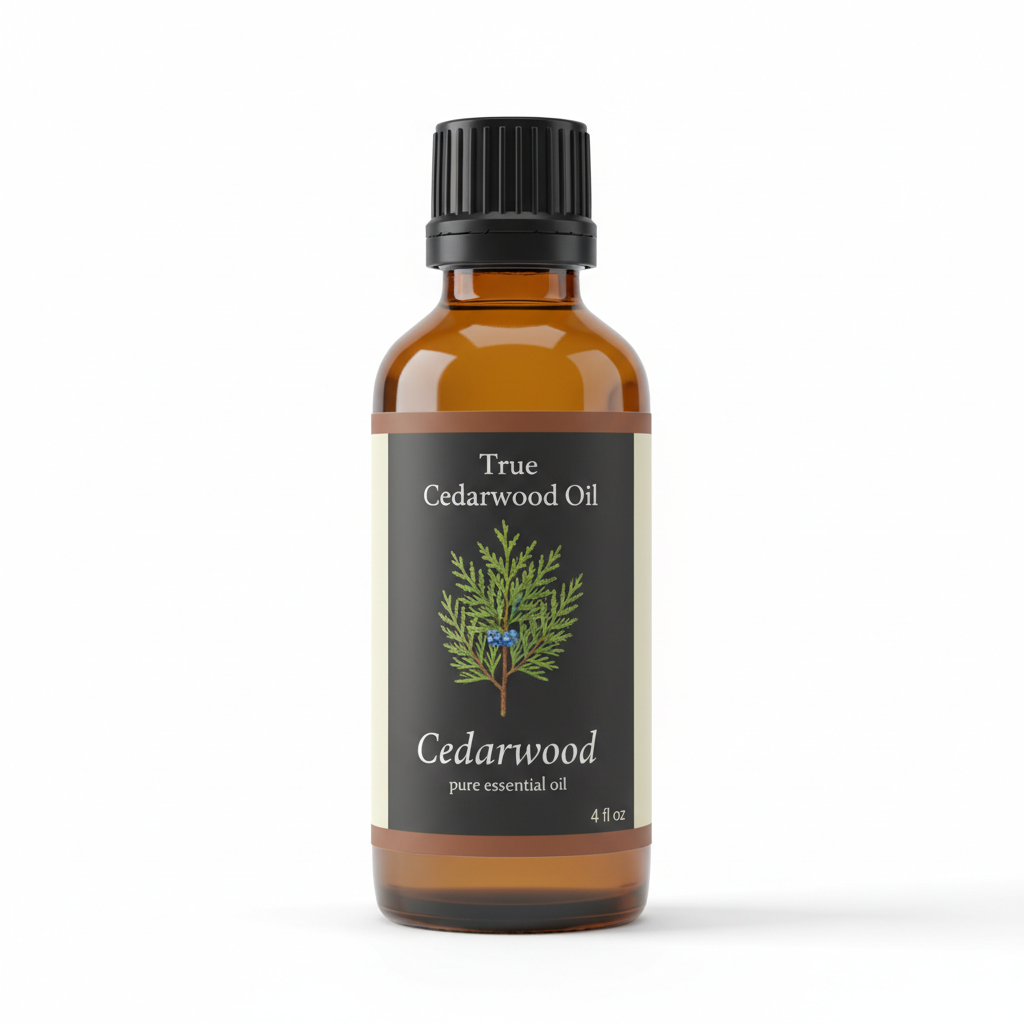
Cedarwood Essential Oil
Our own Cedarwood Essential Oil, in sizes from 0.5 oz to bulk.
From $9.99
Shop Now →Three ways a cedarwood oil can disappoint
The first is dilution, where an oil is stretched with a cheap, heavy vegetable oil. The second is substitution, where a pricier oil is topped up with a cheaper relative. The third is a mix-up of names: "cedarwood" on a label can mean a true cedar or a juniper, and there are at least five different oils sold under that one word, as the Tisserand Institute points out.
Substitution is the one the research literature keeps returning to. A 2026 review of cedarwood oil compositions notes that Atlas cedar oil, the rarer and pricier one, is frequently adulterated with Himalayan cedar oil. The two are close cousins, and that is precisely why a kitchen test struggles with them.
What the paper and water tests can tell you
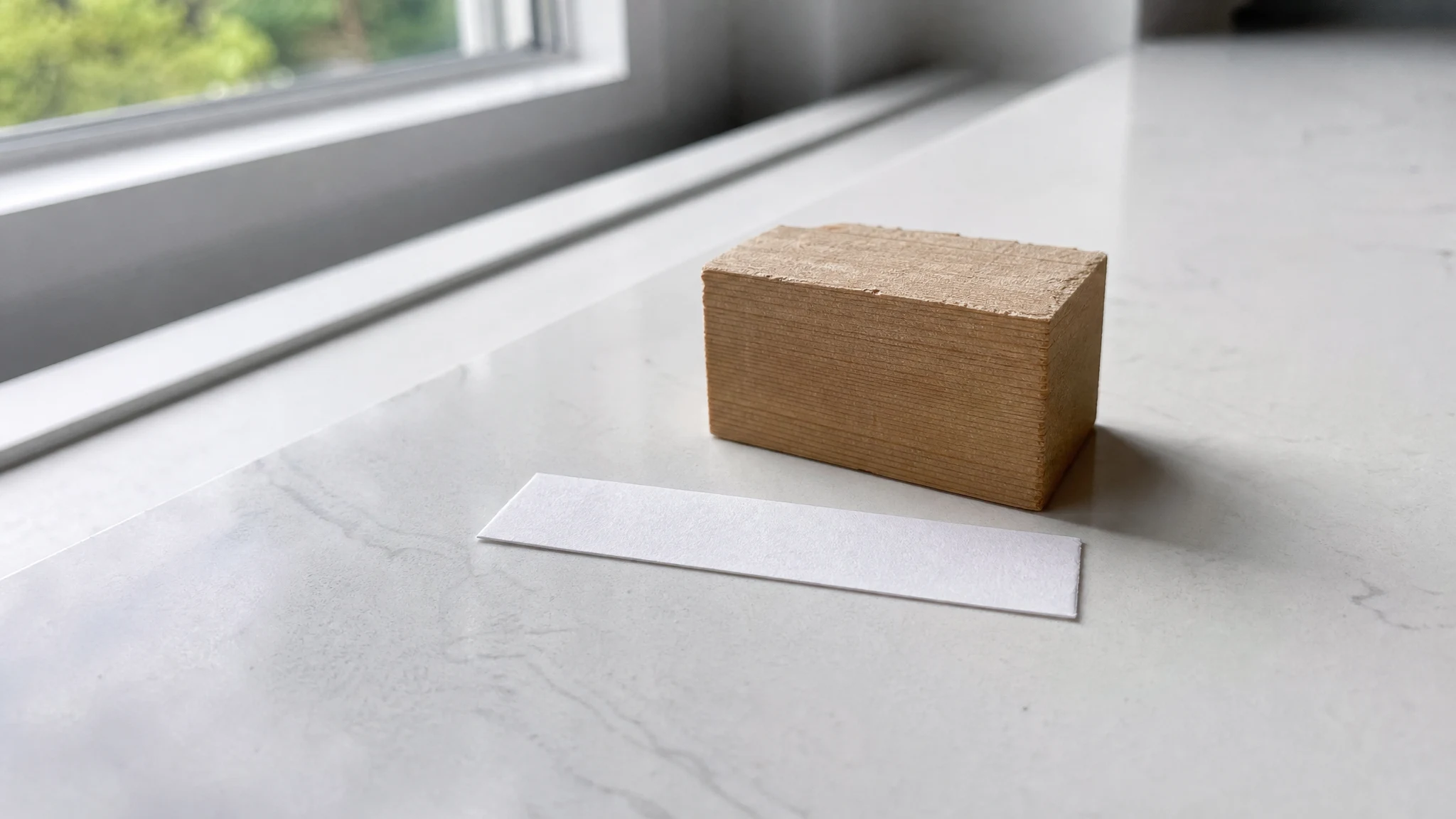
The paper test is a real method. Put a drop on filter paper and see whether a translucent spot is left behind once the scent has faded. A 2021 study of lavender, lemon and tea tree oils used it to flag one lavender sample cut with a fatty oil. It is aimed at heavy, non-volatile oils, so it can point to a vegetable oil stretch. It cannot tell you that one cedar oil has been swapped for another, because both evaporate the same way. We also do not have a reference for how an unadulterated cedarwood oil should look on paper, so a mark or no mark on its own is hard to interpret.
The water test is even blunter. Water is about 1 gram per millilitre, and the batch of our Atlas oil on our Certificate of Analysis measured 0.934, so it floats. Wood oils in general are likely to float too, whichever tree they came from, so floating only tells you an oil is lighter than water.
Smell and price
Your nose is good at big differences. We describe our Virginian oil as dry, sharp and like fresh pencil shavings, and our Himalayan oil as warm, sweet and softly resinous, so a juniper and a true cedar do announce themselves. But the two true cedars overlap heavily in chemistry, and a modest top-up of one into the other is unlikely to register by smell alone.
Price is a fair prompt to ask questions. A figure far below the going rate for a rare oil deserves curiosity. It cannot tell you what is in the bottle, though, and a high price does not prove it either.
What a certificate adds, and what it does not
The Certificate of Analysis we publish covers one batch of our Atlas oil. It lists a relative density of 0.934 and a refractive index of 1.513 at 20 C, both inside the ranges printed on the sheet. Those two numbers are quick for a lab to measure and they catch a gross mix-up, such as an entirely different material.
They are poor at catching a close relative. As arithmetic for scale only: if a substitute oil differed from the batch by 0.020 in density, which is the full width of the density range printed on our certificate, then replacing 30% of the batch with it would shift the blend by just 0.3 x 0.020 = 0.006, about a third of that range. Real oils differ by amounts we cannot know, so take this as a picture of the problem, not a measurement.
What a laboratory can do
Gas chromatography with mass spectrometry, usually called GC-MS, separates an oil into its compounds and reports how much of each is there. Compared with published averages, it can show whether an oil is built like a Cedrus or like a juniper, since himachalenes lead in the cedars while cedrenes and thujopsene lead in the junipers. Our guide to reading a GC-MS report walks through how.
The same lavender, lemon and tea tree study adds two useful points. Chromatographic profiles catch the addition of cheaper oils quite easily, but a vegetable oil leaves no volatile peaks, so dilution needs a different, quantitative approach. Their work did not involve cedarwood, so for cedarwood this is an inference, but a sensible one.
What you can do at home
The most useful home habit is not a test but a record. When a bottle arrives, read the oil name and Latin name on the label, smell it on a paper strip in good light, and keep a photo of the label. Note anything the seller sends along about the batch. When you reorder, smell the two side by side. If the new bottle smells noticeably different from the last, ask the seller about it in writing.
Questions worth asking any seller, us included
- Which botanical name is on the bottle, and which of the four types is it: Atlas, Himalayan, Virginian or Texas?
- Is there a GC-MS report that matches the batch number on my bottle, with the laboratory and method named?
- What is it compared against: a standard, a paper, or the seller's own specification?
- Is anything blended into it or added to it?
Our own answer is that the certificate we publish covers one Atlas batch and reports two physical constants, and that the other three oils do not have a document on the site. If you need composition, species confirmation or origin for a particular oil, ask us in writing through the contact page before you order, and get the answer in writing before you rely on it. For more on telling the four apart, see the four-oil family overview and our buying guide.
A certificate is best treated as the start of a conversation about what is in a bottle, and a good seller is happy to have that conversation.
Cedarwood Essential Oil
Cedarwood Essential Oil from our own shop, in sizes from 0.5 oz to bulk.
From $9.99
Shop Now →Sources & Further Reading
- Cedarwood Oils: The Wood Essential Oil Compositions from Trees Known as "Cedar" (Setzer and Satyal, Plants, 2026)
- Adulteration of Essential Oils: A Multitask Issue for Quality Control. Three Case Studies: Lavandula angustifolia Mill., Citrus limon (L.) Osbeck and Melaleuca alternifolia (Maiden & Betche) Cheel (Capetti et al., Molecules, 2021)
- What’s in a name? (Tisserand Institute)