Which Cedarwood Oil Fits Your Project? A Simple Guide
If you have ever typed "cedarwood essential oil" into a search box and found a dozen bottles that look the same, here is the thing to know first: they are not all the same oil. The name covers several trees, and the one you choose changes the scent more than any label or price. Our advice is to start with the job, not the bottle.

Cedarwood Essential Oil
Our own Cedarwood Essential Oil, in sizes from 0.5 oz to bulk.
From $9.99
Shop Now →Four oils, two kinds of tree
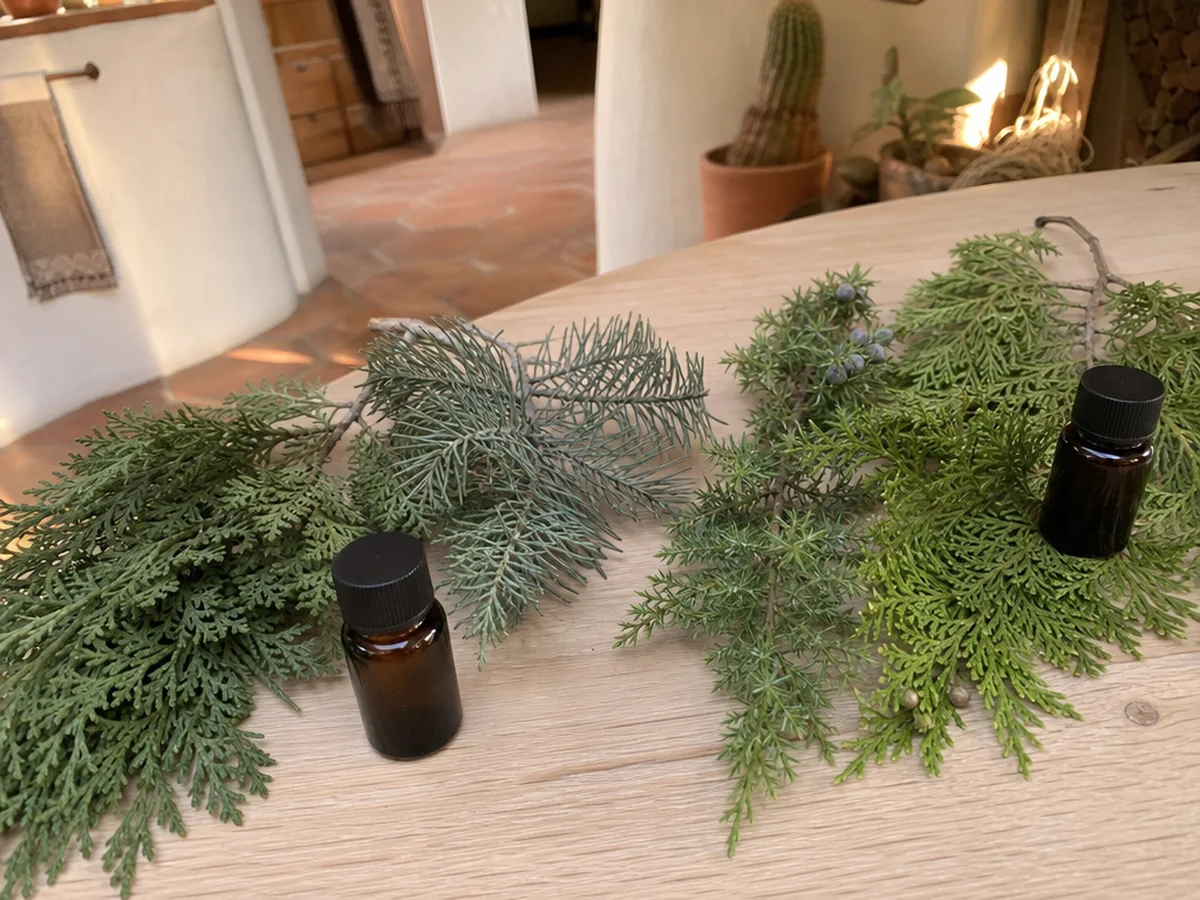
We sell four cedarwood oils, each steam-distilled from wood. Two come from true cedars, which belong to the genus Cedrus: Atlas (Cedrus atlantica) and Himalayan (Cedrus deodara). Two come from junipers, which carry the cedar name through habit rather than botany: Virginian (Juniperus virginiana) and Texas (which we list as Juniperus mexicana). A 2026 composition review found that the true cedars are dominated by himachalene compounds, while the junipers are rich in cedrene, cedrol and thujopsene. Those are the molecules behind the difference you smell.
It also explains the trade's confusion. Even the Tisserand Institute notes that there are at least five different cedarwood oils out there, which is why botanical names are the useful part of any label. We state the tree for each of ours, and our product pages say plainly which are cedars and which are junipers.
Matching the oil to the job
| If you want | Try | How we describe it |
|---|---|---|
| The classic closet, drawer and cedar chest smell | Virginian | Dry, sharp and classically like fresh pencil shavings |
| A rounder, sweeter woody base for blends | Atlas | Dry, woody and warmly sweet, with a balsamic depth |
| A softer, more resinous wood | Himalayan | Warm, sweet and softly resinous, softer than the Virginian |
| Something in between | Texas | Soft, smooth and gently sweet, between Virginian and Himalayan |
The four are not interchangeable in a recipe, and that is worth taking seriously. A formulation tuned on one oil will smell different on another, and the sensible dilution can differ too. If a recipe says only "cedarwood oil", pick the one whose scent matches what you imagine, and note it down. If you are blending, our list of woody partners helps, and the scent guide goes oil by oil.
Smelling your way to a decision
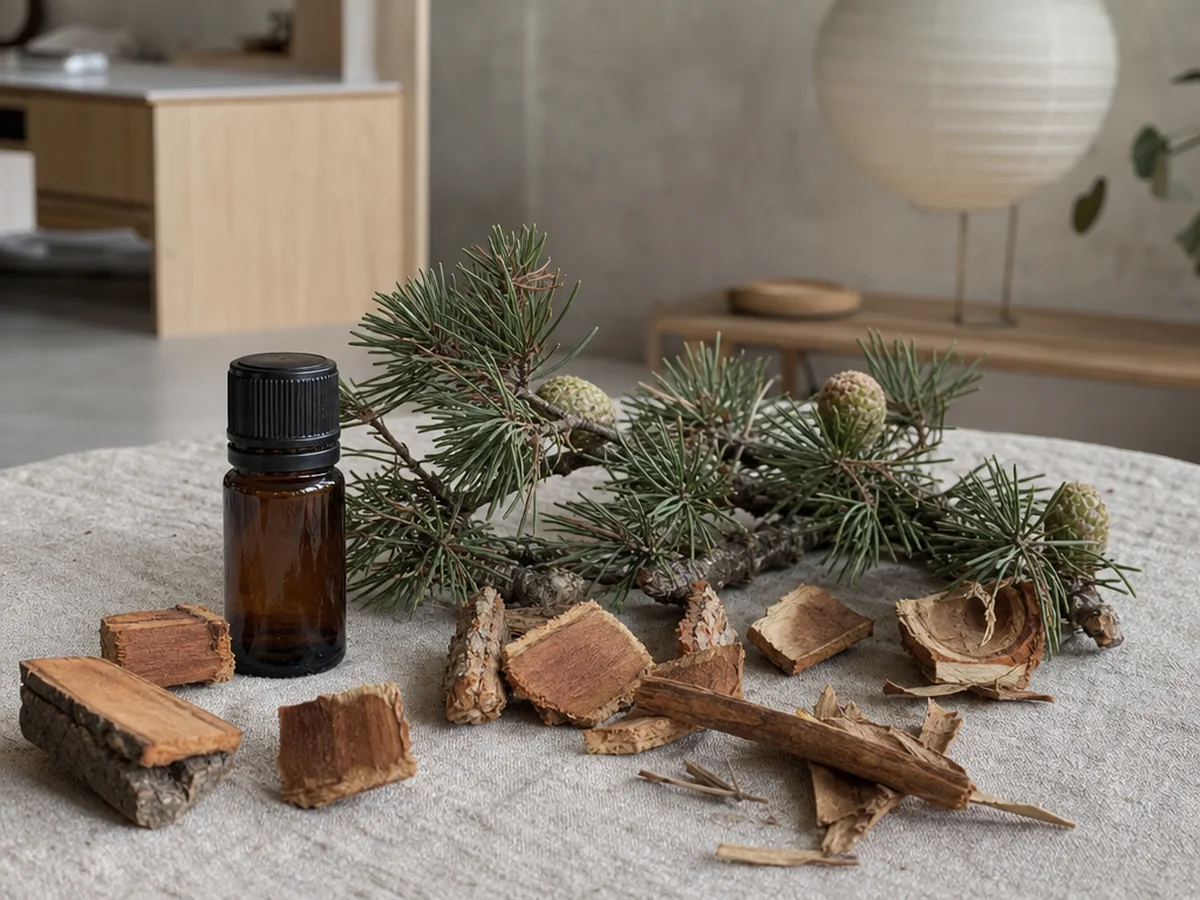
Charts help, but noses decide. If you can, smell more than one cedarwood before you commit. Hold each one a few inches from your face, not directly under it, and take a slow, gentle breath. Pay attention to the first second and to what remains a few minutes later. Some people love the crisp, dry edge of a pencil shaving. Others prefer something rounder and more resinous. Neither is the right answer, only the one you enjoy living with.
What to ask any seller, us included
The same review points out that Atlas oil, because it is rarer and costs more, is frequently adulterated with Himalayan oil, and that the two have only subtle differences in aroma. Smell alone will not settle which one is in the bottle. A few simple questions will:
- Does the listing name the tree in Latin?
- Is there a lot number you can match to a document?
- Does the document say what it measured?
The certificate of analysis we publish covers one batch of our Atlas oil and lists its relative density and refractive index. If you need a GC-MS report or species confirmation for a particular lot of any of our four oils, ask us in writing through our contact page before you order and get the answer in writing. Our GC-MS explainer shows how to read such a report once you have it.
One more naming trap: western red cedar (Thuja plicata) oil is sometimes mislabelled as cedarwood, and a 2025 review notes it contains thujone and is excluded from the cedarwood group for safety reasons. We do not sell it. Our piece on cedarwood versus cedar leaf oil explains why the names differ.
If you are still undecided
Here is our plain recommendation. For a closet or drawer scent, the Virginian is the classic choice. For a blend where you want a steady woody base with a touch of sweetness, try the Atlas. For something softer and more resinous, reach for the Himalayan. If none of those quite fits, the Texas is the middle path. Pick one, write down what you thought, and let your next order follow your notes.
Sizes, handling and first orders
All four oils are sold neat and undiluted, so the dilution is yours. Our guidance for skin is 0.5 to 2 percent in a carrier oil with a patch test first, and we would begin at the lower end; the research on cedarwood skin tolerance is limited and differs by species. Store the bottle tightly capped in a cool, dark place, away from children and pets. If you are buying for the first time, a small size of the one oil your project names is a sensible start, and our size guide covers the rest, including wholesale for larger quantities.
A tip for your first bottle
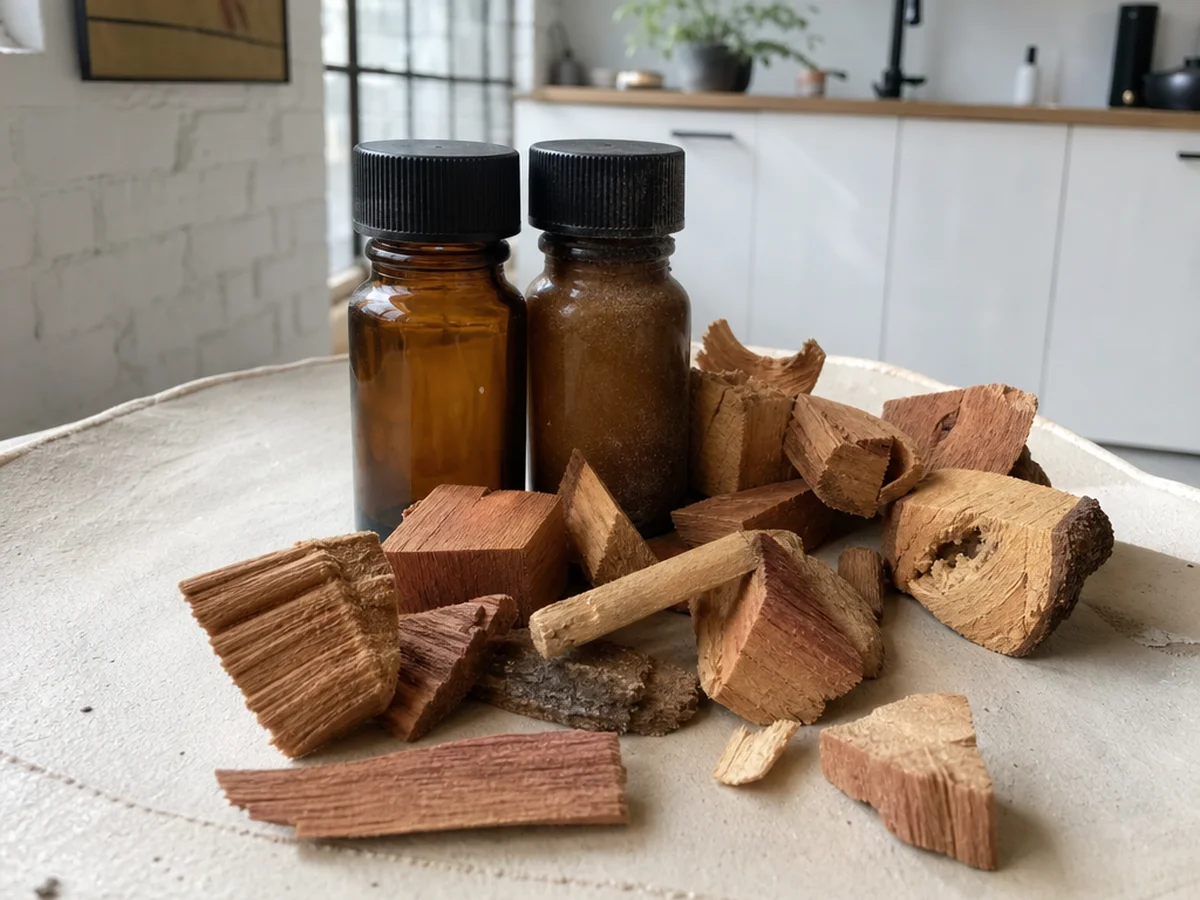
Whichever oil you pick, open the cap, smell it from a little distance, and write down your first impressions before you read anything else about it. Then smell it again an hour later from a paper strip. Your own notes, in your own words, will be more useful than any chart the next time you plan a project, and they give you a baseline if you ever add a second cedarwood to the shelf.
Choose the tree, check the paperwork, and the right cedarwood tends to be the one you are happiest to smell.
Cedarwood Essential Oil
Cedarwood Essential Oil from our own shop, in sizes from 0.5 oz to bulk.
From $9.99
Shop Now →Sources & Further Reading
- Setzer WN, Satyal P. Cedarwood Oils: The Wood Essential Oil Compositions from Trees Known as "Cedar". Plants (Basel), 2026.
- Tisserand Institute. What's in a name?
- Goncalves S. Cedarwood essential oil (Cedrus spp.): a forgotten pharmacological resource with emerging therapeutic potential. Exploration of Drug Science, 2025.