Cedarwood Oil Sizes: Which Bottle to Start With
The smallest bottle of cedarwood oil is usually the right first order, and the reason is simple arithmetic. A half-ounce bottle holds enough oil for dozens of home batches, so the real question is not "how much can I get?" but "how many batches will I make before the oil is old?" Bigger sizes earn their place for a different kind of buyer, and we will get to them.
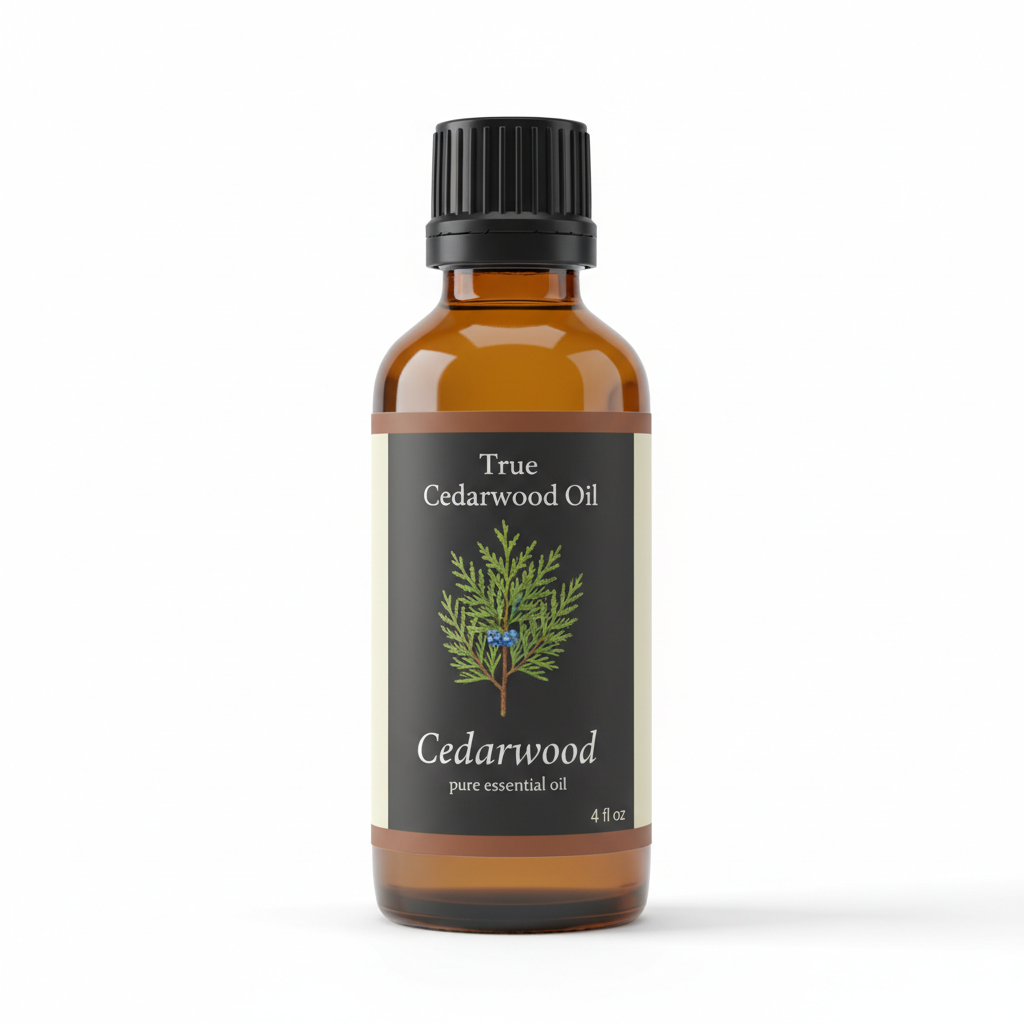
Cedarwood Essential Oil
Our own Cedarwood Essential Oil, in sizes from 0.5 oz to bulk.
From $9.99
Shop Now →What a half ounce really covers
We sell four cedarwood oils, Atlas and Himalayan (both Cedrus, the true cedars) and Virginian and Texas (both junipers), each in ten sizes from 0.5 oz up to 400 lb. They arrive neat, with nothing added, so you do the dilution yourself. We recommend 0.5% to 2% in a carrier oil, with a patch test first, and we start at the low end for reasons covered below.
Here is the arithmetic, using 29.57 ml to the ounce and a rough 20 drops to the millilitre (droppers vary). A 30 ml batch of body or beard oil at 1% needs 0.3 ml of cedarwood oil. A 0.5 oz bottle holds about 14.8 ml, which is roughly 49 such batches. At 0.5% it is nearer 98 batches, and even at 2% it is about 24. Someone who makes one batch a month will take around four years to finish that little bottle at 1%.
That lines up neatly with shelf life. We describe our oils as typically keeping 3 to 5 years (Himalayan and Virginian) or 4 to 6 years (Atlas and Texas) when capped tightly and stored cool and dark. A monthly maker finishes the half ounce inside that window, while a 16 oz bottle will still be mostly full when it closes.
Why a bigger bottle is not automatically a better deal
All essential oils change with time. The Tisserand Institute puts it plainly: even the best quality essential oils deteriorate over time, with oxygen, light and heat doing the work. A bottle that is opened often and emptied slowly spends most of its life with more air than oil inside it. We have not found a cedarwood-specific measurement of how fast that happens, so treat this as sensible reasoning rather than data. The practical habit is easy: if you do buy large, pour a working amount into a small bottle and keep the rest sealed. That is exactly what we suggest on our bulk pages too.
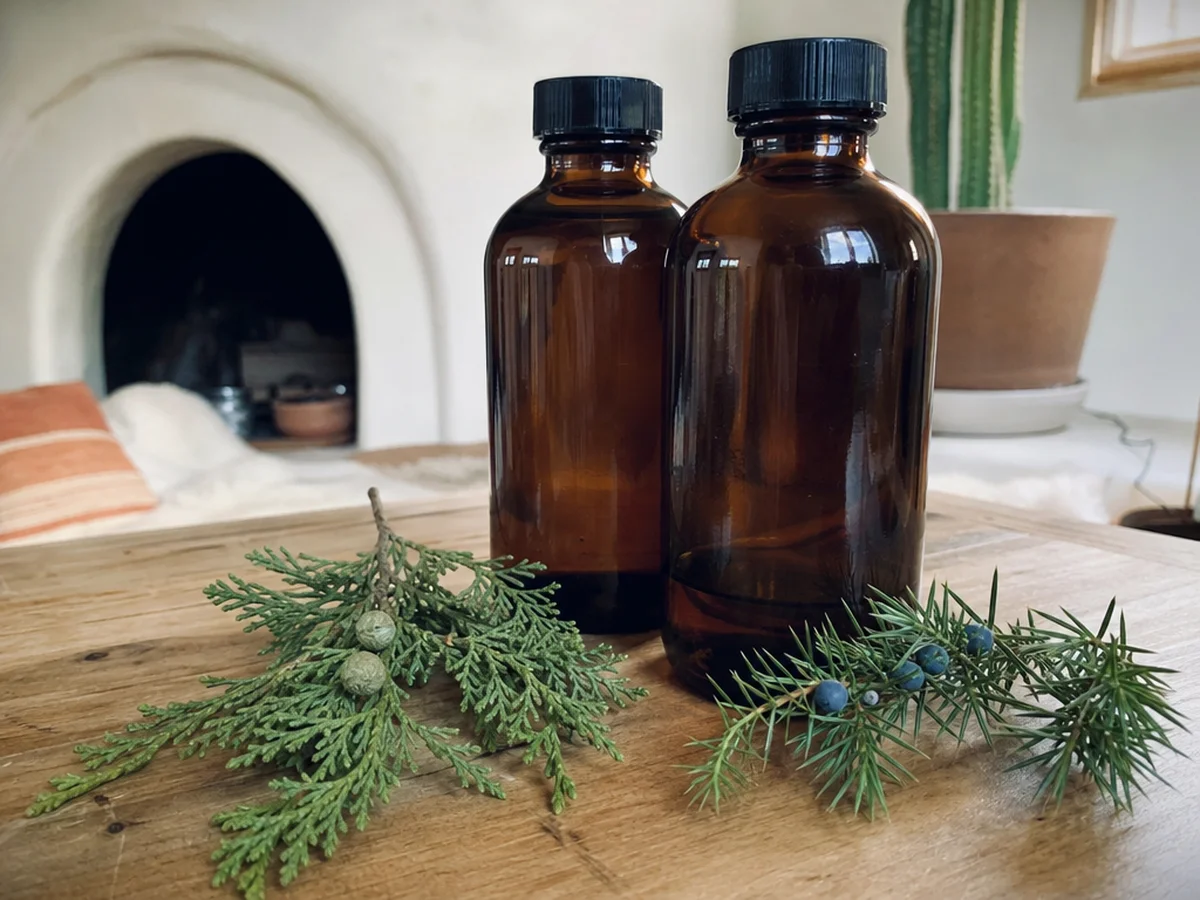
Freshness matters on skin as well. A 2025 review of cedarwood oil notes that skin sensitization has been associated with it, particularly when the oil is oxidized or used too concentrated (Cedarwood essential oil (Cedrus spp.): a forgotten pharmacological resource with emerging therapeutic potential). Fresh oil, small batches and a gentle percentage all point the same direction.
Why we start low
Our 0.5% to 2% range is a general guideline, not a verified safe ceiling. In a 13-week rodent study, Virginia cedarwood oil applied to skin in an ethanol vehicle produced skin changes, and the benchmark dose lower limits worked out at 0.65 to 2.1% in female rats and 1.2 to 4.4% in male rats (Dose-response assessment of the dermal toxicity of Virginia cedarwood oil in F344/N rats and B6C3F1/N mice). Animal data is not a human limit, and it covers only one of our four oils. Still, it is a good reason to plan at 0.5% to 1%, and that happens to make a small bottle stretch even further. If you are pregnant or nursing, have a medical condition, or are buying for a child, check with your physician or pharmacist first. Our safety article goes through each group.
When pounds make sense
The 5 lb sizes and up are for people who pour candles, cut soap or fill bottles to sell. Their quantities are a different scale from home dilution, and our candle article and soap article show the math. One conversion helps: a pound is a weight and a bottle is a volume. The one Atlas batch on our Certificate of Analysis measured a relative density of 0.934 at 20 C, so on that batch a pound is about 486 ml, a little over 16 fl oz. We publish no density for the other three oils, so weigh a measured volume of whichever you buy.
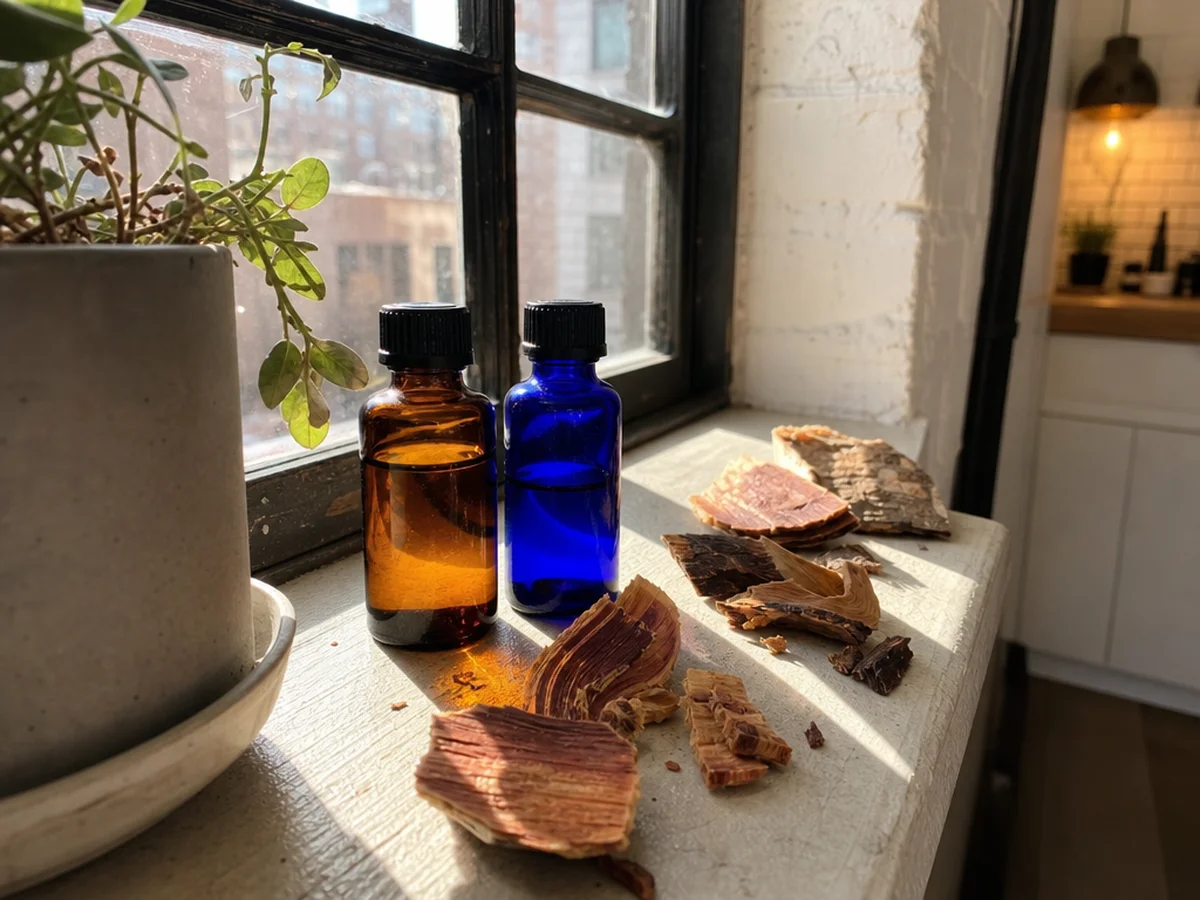
That certificate lists density and refractive index for one Atlas batch. If you need GC-MS, species confirmation or origin for a larger order, ask us in writing through the contact page before ordering and get the answer in writing. Our wholesale page also offers sample bottles for buyers who want to try before they commit.
A quick way to decide
If you are still unsure, ask yourself two plain questions. How often will I really make something with it? And will I still be making it in a few years? A person who enjoys a weekly sachet or a monthly body oil is well served by a small bottle, and can move up later with no harm done. We would always rather you reorder than let a large bottle sit half empty.
Picking the oil before the size
The four oils smell different, so settle the scent first. We describe the Virginian as dry and sharp, like pencil shavings, and recommend it for closets and sachets. The Atlas is dry, woody and warmly sweet, the Himalayan is warm and softly resinous, and the Texas sits comfortably between the Virginian and the Himalayan. Our family guide compares all four, and the storage article covers keeping the oil well.
One safety habit applies to every size: keep the bottle where children and pets cannot reach it. America's Poison Centers advise keeping essential oils locked up and out of sight and reach, and list 1-800-222-1222 as the number to call after a swallow. A small bottle simply gives a curious toddler less to spill.
So start small, do the dilution sum before the box arrives, patch test the first batch, and let your own usage tell you whether a bigger bottle is ever worth it.
Cedarwood Essential Oil
Cedarwood Essential Oil from our own shop, in sizes from 0.5 oz to bulk.
From $9.99
Shop Now →Sources & Further Reading
- Tisserand Institute. Oxidation and the Shelf Life of Essential Oils. tisserandinstitute.org
- Gonçalves, 2025. Cedarwood essential oil (Cedrus spp.): a forgotten pharmacological resource with emerging therapeutic potential. Exploration of Drug Science. explorationpub.com
- Catlin et al., 2016. Dose-response assessment of the dermal toxicity of Virginia cedarwood oil in F344/N rats and B6C3F1/N mice. Food and Chemical Toxicology. Europe PMC 27769849
- Poison Control. Essential oils: Poisonous when misused (America's Poison Centers). poison.org