Atlas, Himalayan, Virginian, Texas: Cedarwood Oils Compared
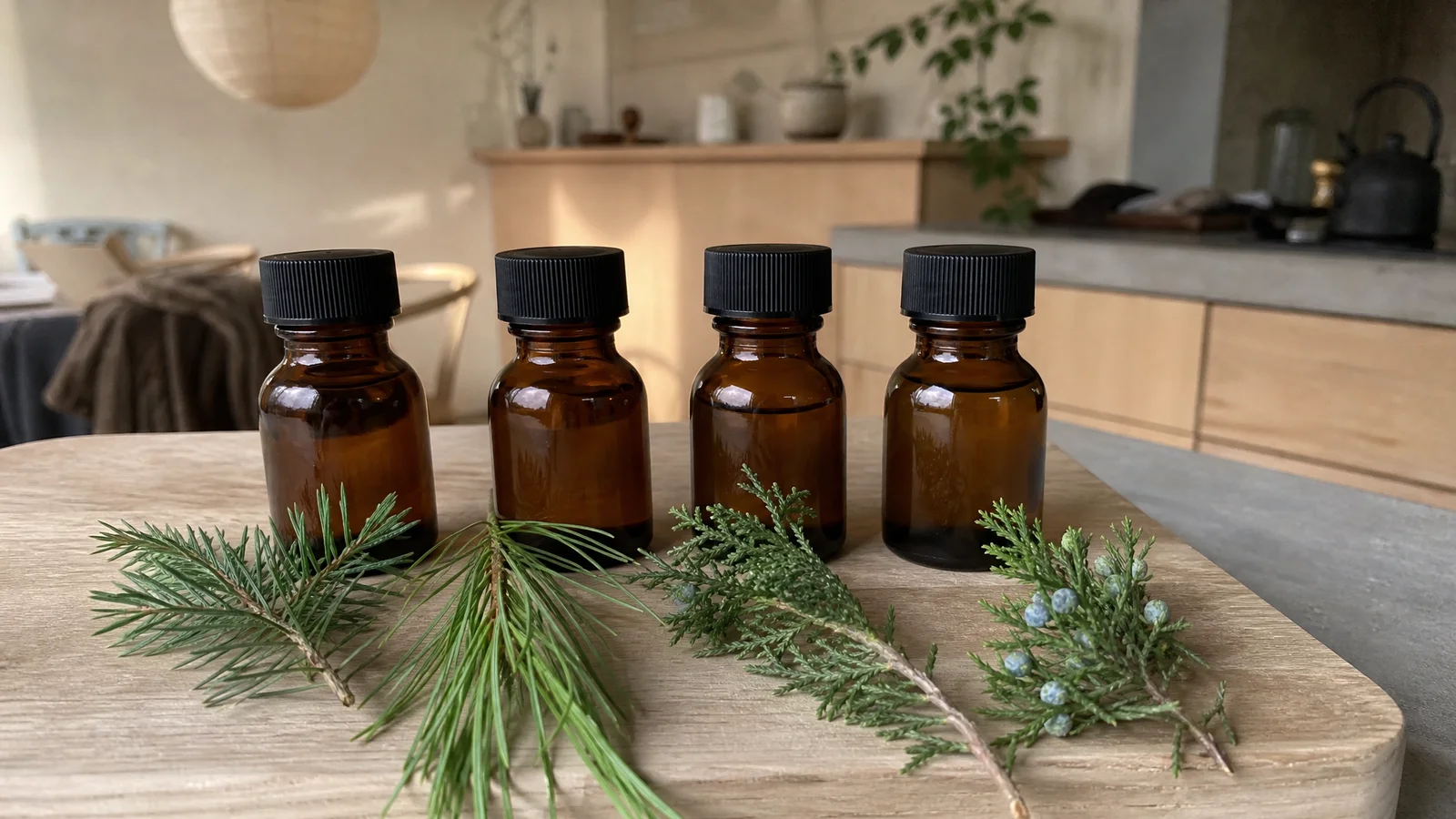
Four bottles can all say cedarwood and still smell and behave differently, and the reason starts with the tree. Two of our oils come from true cedars, and two come from junipers that borrowed the cedar name. Once you know which is which, choosing becomes a pleasure rather than a puzzle.
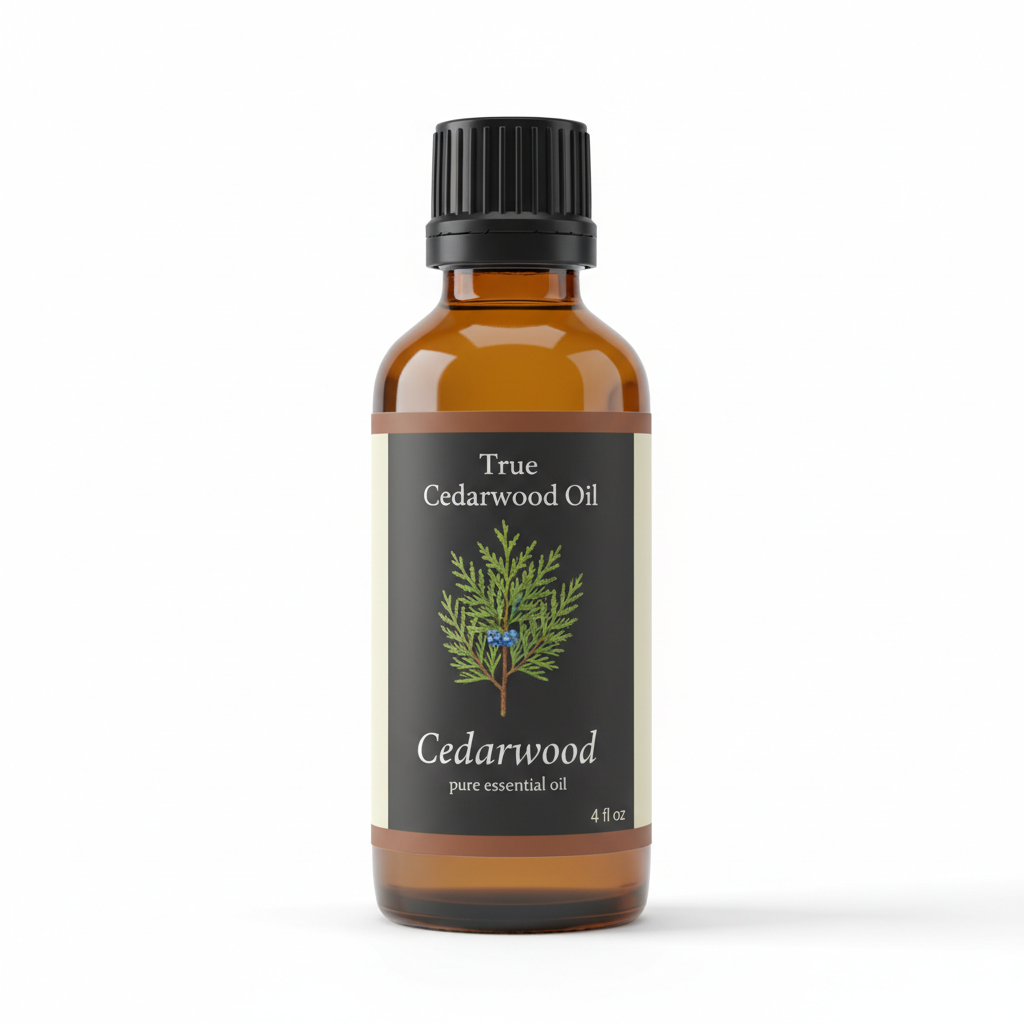
Cedarwood Essential Oil
Our own Cedarwood Essential Oil, in sizes from 0.5 oz to bulk.
From $9.99
Shop Now →Start with the Latin name
We sell Atlas (Cedrus atlantica), Himalayan (Cedrus deodara), Virginian (Juniperus virginiana) and Texas, which we list as Juniperus mexicana. The Tisserand Institute observes that there are at least five different cedarwood oils and that botanical names clear up the confusion. We agree, and that is why we put the Latin name on every product page. It also means the four are not interchangeable in a recipe, and our pages say so.
How we describe them
Here is how we would introduce each one across the counter.

- Atlas is dry, woody and warmly sweet, with a balsamic depth that settles in as a steady base note. It blends beautifully with bergamot, lavender, vetiver, rose, sandalwood and clary sage.
- Himalayan is warm, sweet and softly resinous, with a rounded depth. It is softer than the dry pencil-shaving edge of Virginian, and pairs well with sandalwood, patchouli and sweet orange.
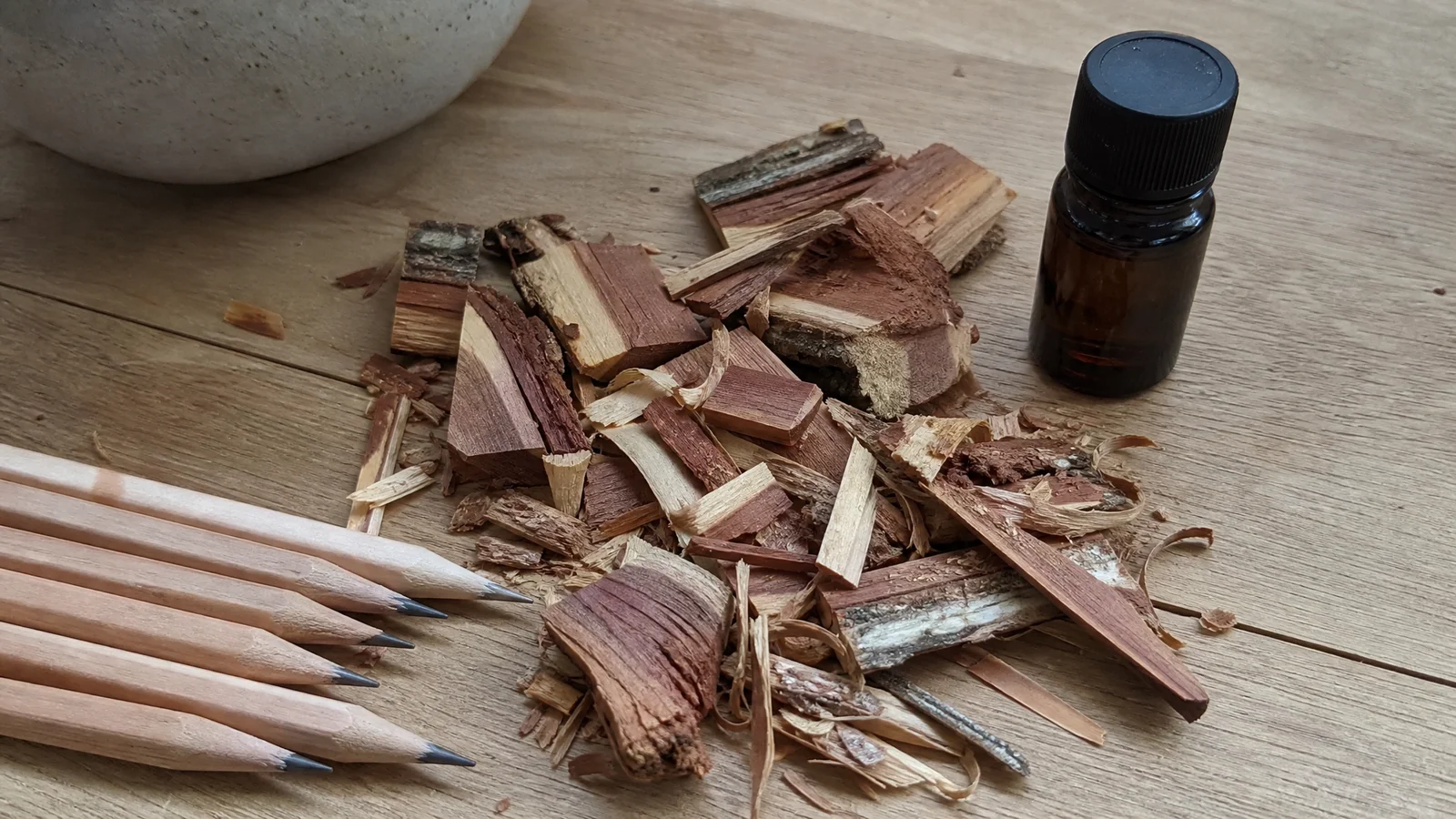
- Virginian is dry, sharp and classically like fresh pencil shavings, the clean cedar of closet drawers and chests. It is the one we point people to for drawers and sachets.
- Texas is soft, smooth and gently sweet, sitting comfortably between Virginian and Himalayan.
Why they smell different
A 2026 review of commercial cedarwood oils offers a neat explanation. The true cedars are dominated by himachalenes and atlantones, while the Virginian juniper is led by cedrenes, thujopsene and cedrol. In other words, they are built from different families of molecules. In that review, the Atlas oils averaged about 40% beta-himachalene, the Himalayan about 35%, and the Virginian was about 32% alpha-cedrene.
The two true cedars sit close together, with the deodar carrying more atlantones, which the authors link to subtle differences in aroma. The juniper side is a different world, which fits what you smell: the crisp, dry pencil-shaving note of Virginian versus the rounder warmth of the cedars. Those figures describe oils in general, not ours. If you want to go deeper, our chemistry article and our guide to reading a GC-MS report explain the molecules in plain terms.
Meeting them one at a time
If you can, open the bottles one after the other and rest between them. Your nose gets used to a smell quickly, so after two or three, sniff your sleeve or a coffee bean to reset. On a paper strip you will notice the Virginian arrives crisp and dry right away, the Atlas takes a moment to warm up and turn sweeter, and the Himalayan feels rounded and soft almost at once. Come back to the strips after an hour and compare again, since woody notes change as they settle. Writing a word or two beside each name is a nice habit that pays off when you reorder.
A note on the Texas name
Texas cedar is a good example of how names wander. Our Texas oil is listed as Juniperus mexicana, the review writes about Texas cedar as Juniperus ashei, and a European Food Safety Authority opinion calls its “cedarwood Texas oil” Juniperus deppeana, with Juniperus mexicana as a synonym. The trade name covers more than one botanical name in the literature, so if the exact species matters to your project, ask us in writing.

Choosing among the four
Decide what you want to smell like first.
- A drawer, closet or sachet: Virginian is our suggestion.
- A warm, sweet woody base for a blend or perfume accord: Atlas or Himalayan, with the partners listed above. Our perfumery article explores the idea further.
- Something in between: Texas.
Whichever you pick, check that the Latin name matches the recipe you are following, since recipes and safety guidance are usually written for a particular species. For a helpful overview of the category, see what cedarwood oil is, and for the oil people often confuse with it, cedar leaf oil.
Which one we reach for
It is a matter of taste, but here is a stated recommendation. For a drawer, a closet or a sachet, we would start with the Virginian, because that pencil-shavings smell is the one most people associate with a cedar chest. For a warm blend with something floral or citrus, the Atlas or Himalayan has the softer, sweeter character that sits well with those partners. If you cannot decide, Texas is the middle path.
Using them sensibly
All four are for external use, and we suggest diluting to between 0.5% and 2% in a carrier oil with a patch test first; our dilution guide shows the arithmetic. Safety findings differ by species. Animal skin work on Virginia cedarwood oil found changes at fairly low concentrations, and the EFSA opinion describes its Texas oil as a skin and eye irritant and skin sensitiser, so starting low is a good habit with any of them. For pregnancy, children and medical conditions, check with a physician, midwife or pediatrician, and ask a veterinarian about pets.
If you need a constituent profile, species confirmation or origin for a specific oil, ask for it in writing through the contact page before ordering. Otherwise, follow your nose: all four are lovely, and each has a corner of the home where it feels right.
Cedarwood Essential Oil
Cedarwood Essential Oil from our own shop, in sizes from 0.5 oz to bulk.
From $9.99
Shop Now →Sources & Further Reading
- What's in a name?, Tisserand Institute
- Cedarwood Oils: The Wood Essential Oil Compositions from Trees Known as "Cedar", Setzer and Satyal, Plants, 2026
- Safety and efficacy of a feed additive consisting of an essential oil obtained from the wood of Juniperus deppeana Steud. (cedarwood Texas oil) for use in all animal species (FEFANA asbl), EFSA FEEDAP Panel, EFSA Journal, 2024
- Dose-response assessment of the dermal toxicity of Virginia cedarwood oil in F344/N rats and B6C3F1/N mice, Catlin et al., Food and Chemical Toxicology, 2016