Cedrol vs Atlantones: What Sets Cedarwoods Apart
Ask around about cedarwood chemistry and you will often hear that cedrol is the compound that makes a cedar oil a cedar oil. It is a tidy story, and it is not quite right. Cedrol is a signature of the junipers, while the true cedars are marked by a different set of compounds, and once you know which belongs to which, a lot of cedarwood writing suddenly makes more sense.
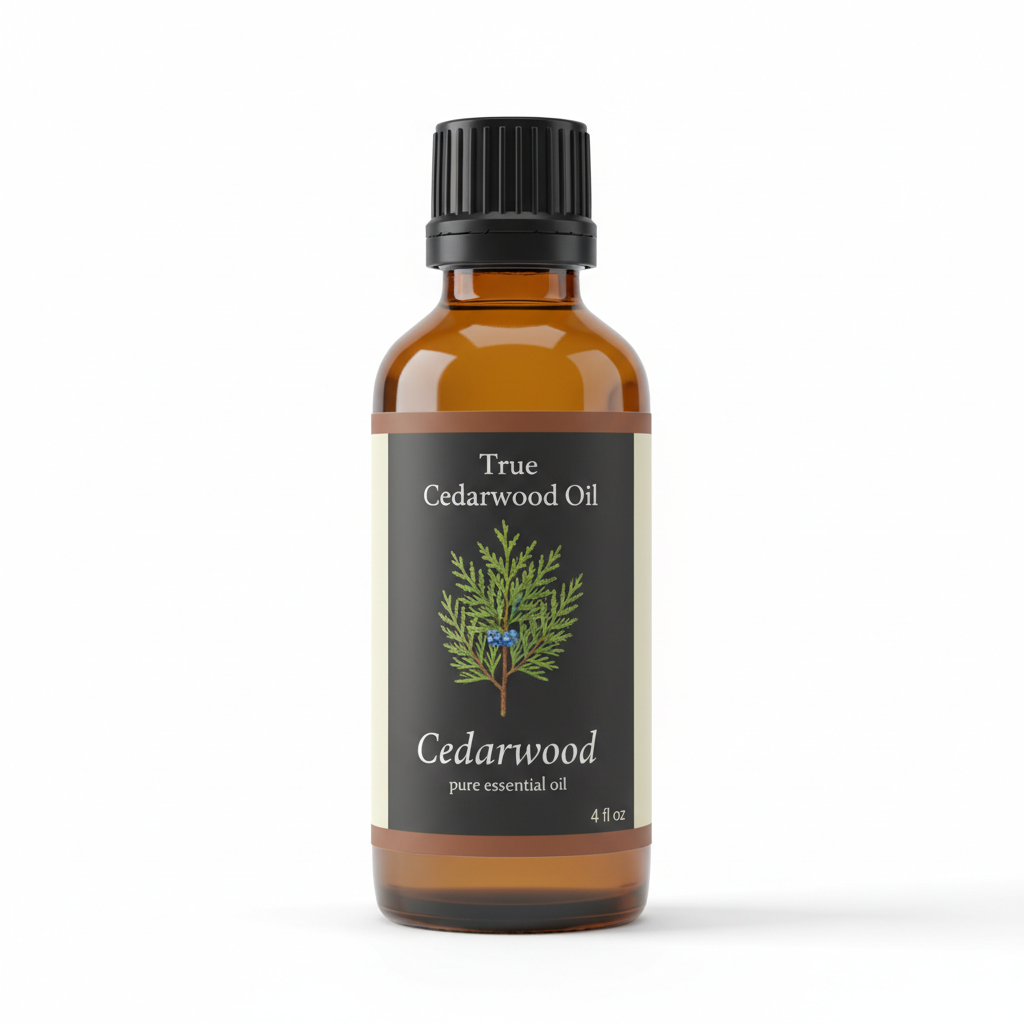
Cedarwood Essential Oil
Our own Cedarwood Essential Oil, in sizes from 0.5 oz to bulk.
From $9.99
Shop Now →Cedrol: a juniper compound
Cedrol is a sesquiterpene alcohol, and in the 2026 review of cedarwood compositions by Setzer and Satyal, it sits on the juniper side. Commercial Virginian oils (56 samples) averaged about 13 percent cedrol, alongside alpha-cedrene near 32 percent and cis-thujopsene near 19 percent. EFSA's description of its Texas oil, based on the applicant's batches, puts cedrol at 22 percent. Cedrol does not appear among the major components the review lists for the true cedars, so the common line that Atlas cedar is the richest source of cedrol is not one we can support from the sources we read, and we do not repeat it.
The practical lesson is that whenever a study credits "cedarwood oil" with something to do with cedrol, it is really talking about oils rich in cedrol, which on this evidence means the junipers. That is useful when you read about the cedrol studies that get quoted for sleep.
Himachalenes and atlantones: the true cedar signature
The Atlas and Himalayan cedars share a family of compounds called himachalenes. In 48 commercial Atlas oils, beta-himachalene averaged around 40 percent, with alpha- at about 15 and gamma- at about 10. In 43 commercial Himalayan oils the same three came in at roughly 35, 14 and 9. Then come the atlantones, which are ketones, and here the two true cedars differ most: the review says Atlas oil is typically very low in them, while Himalayan oil usually carries them at 20 percent or more, which is part of what makes the two distinguishable. It also notes that Atlas oil, being scarcer and dearer, is frequently adulterated with Himalayan, so atlantones are among the figures a careful laboratory would look at.
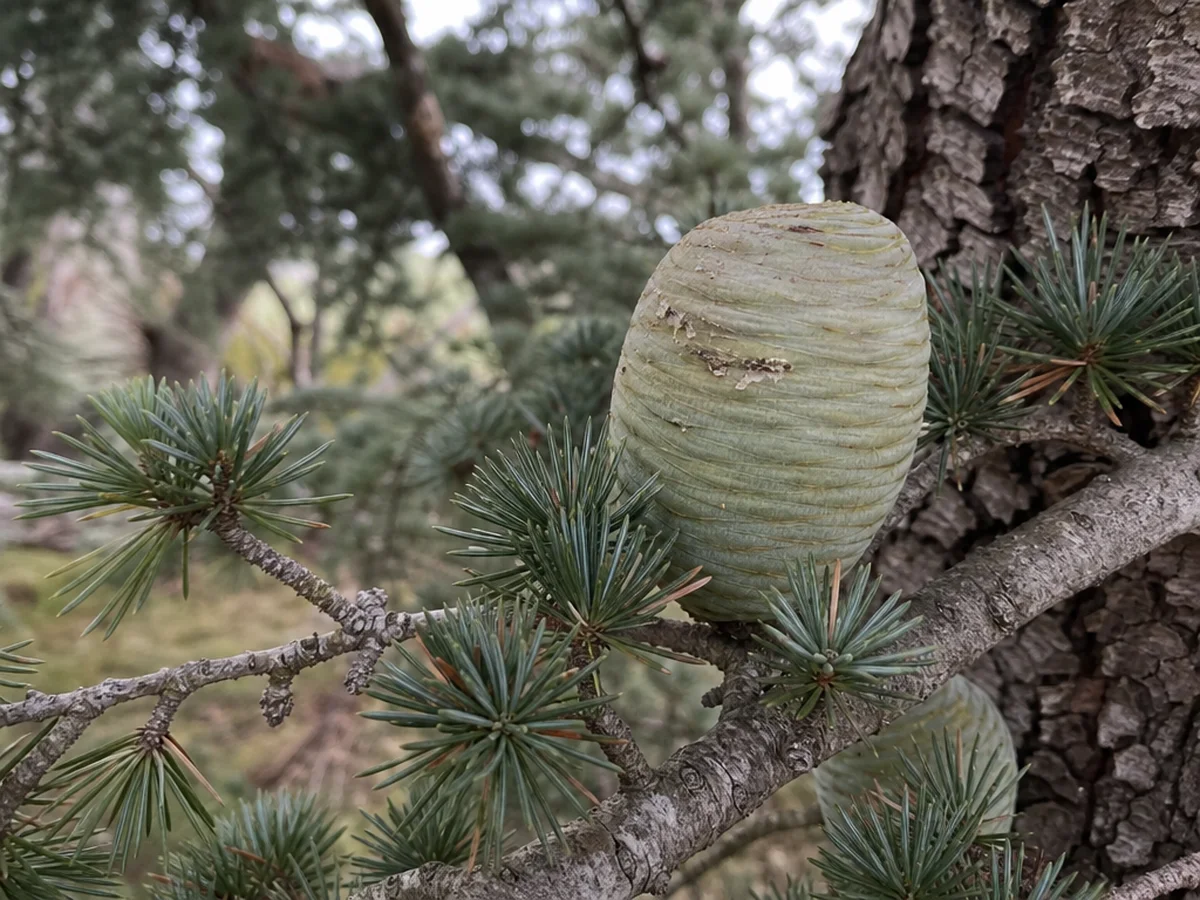
We would not go as far as saying any one compound is what you smell. Our Atlas oil is dry, woody and warmly sweet with a balsamic depth, and our Virginian is the dry, sharp pencil-shaving cedar of closet drawers, and those are descriptions of aroma, not claims about a single molecule.
Why the junipers feel different on the nose
Pick up a Virginian and a Himalayan one after the other and you will probably notice it right away: one is crisp and dry, the other rounder and more resinous. That contrast lines up neatly with the two families discussed here, though we offer it as a pleasant coincidence to explore and not as proof that one compound makes one smell.
Why one number never settles it
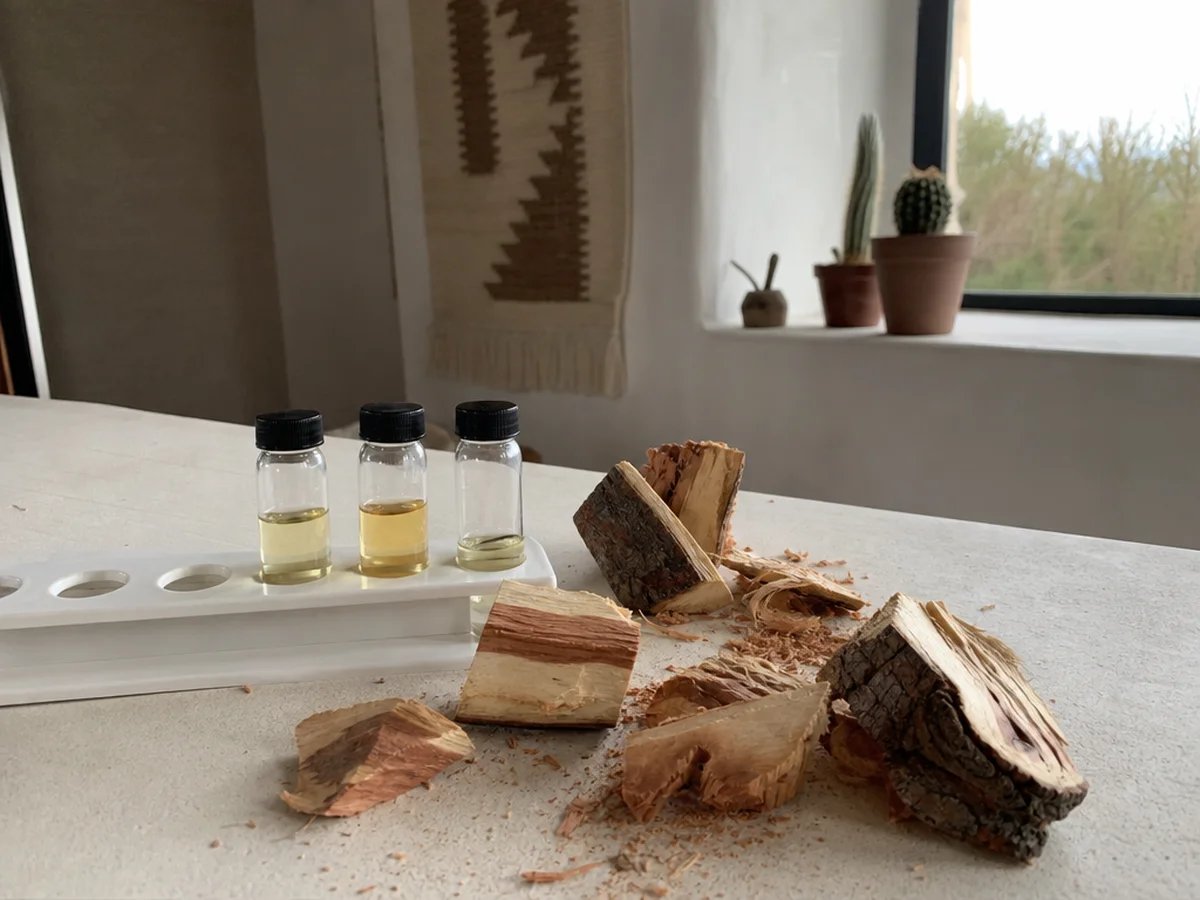
It is tempting to treat a percentage as a constant, but natural oils vary with the tree, the part of the wood, the place and the distillation. The Setzer and Satyal tables for Atlas oil include published reports ranging from under 2 percent beta-himachalene in a Corsican sample to about 51 percent in a Moroccan one, which the review does not try to reconcile. These figures are also shares of the total signal in a run, which EFSA states as percent of GC area, so they are not weights or potencies. When two sources disagree, the gap usually tells you something about the sample or method and is not a mistake to be averaged away.
A simple way to remember it
If a table of percentages makes your eyes glaze, keep this in your pocket instead. Cedars lean on himachalenes, with atlantones as the thing that tells Atlas and Himalayan apart. Junipers lean on cedrene, thujopsene and cedrol. When you read a label or an article, find the tree first, then see whether the compounds mentioned fit that tree. If they do not, you have found a good question to ask.
Reading with a pencil in hand
Next time you read about cedarwood, jot down the species and the compound being praised. You will quickly spot pages that credit a juniper compound to a cedar, or the other way round. We enjoy this little game, and it makes chemistry-heavy pages much less intimidating, because you stop trying to remember numbers and start checking whether the story hangs together.
What we can offer on our own oils
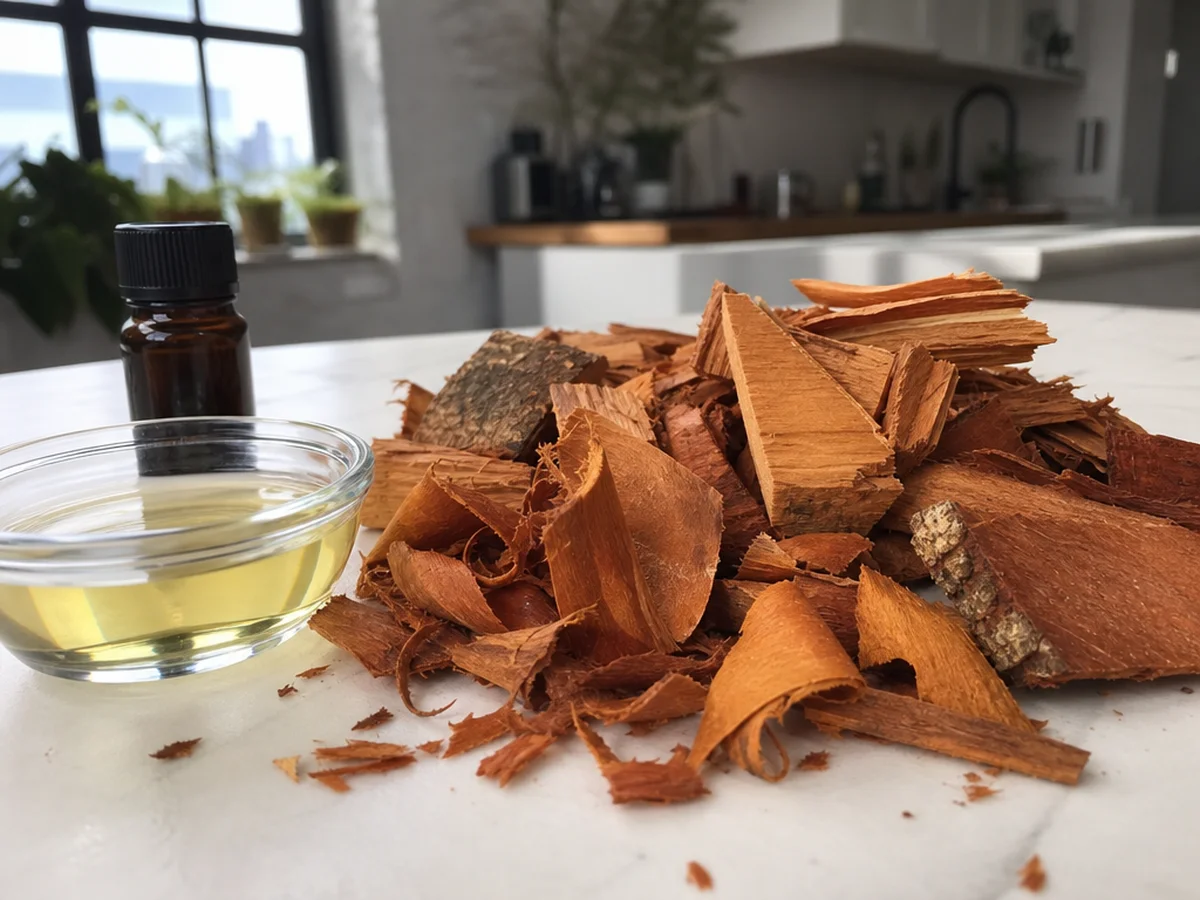
We sell all four: Atlas and Himalayan, the true cedars, and Virginian and Texas, the junipers. The Certificate of Analysis we publish covers one batch of our Atlas oil and lists a relative density of 0.934 and a refractive index of 1.513 at 20 C, each within the standard printed beside it. It does not include constituent percentages such as himachalenes, atlantones or cedrol, and we do not have a document of that kind for the other three oils. If a composition report matters to your project, ask us in writing through the contact page before ordering, and confirm what it covers before relying on it.
A quick caution on density and refractive index: they are handy checks but weak tools for telling species apart. EFSA's Texas oil specification for refractive index (1.500 to 1.510) overlaps the range printed on our Atlas certificate (1.509 to 1.517) at 1.509 to 1.510, which is our own reading of the two figures. Telling oils apart reliably takes GC/MS, and our guide to reading a GC/MS report shows how. For the wider picture, our family overview of the four oils sets them side by side.
Once you know that himachalenes and atlantones belong to the cedars and cedrol and thujopsene to the junipers, cedarwood labels stop being confusing and start being informative.
Cedarwood Essential Oil
Cedarwood Essential Oil from our own shop, in sizes from 0.5 oz to bulk.
From $9.99
Shop Now →Sources & Further Reading
- Setzer WN, Satyal P, 2026. "Cedarwood Oils: The Wood Essential Oil Compositions from Trees Known as "Cedar"." Plants. PMC12944130
- EFSA Panel on Additives and Products or Substances used in Animal Feed, 2024. "Safety and efficacy of a feed additive consisting of an essential oil obtained from the wood of Juniperus deppeana Steud. (cedarwood Texas oil) for use in all animal species (FEFANA asbl)." EFSA Journal. PMC11096998