Cedarwood Oil Benefits: Why Scent Comes First
Ask what cedarwood oil is good for and the best answer is also the simplest: it smells wonderful. Warm, dry and woody, it is a favourite for diffusing, for closets and sachets, and for building into blends. Beyond scent, the internet has a lot to say, so here is a friendly tour of what the research does and does not offer.
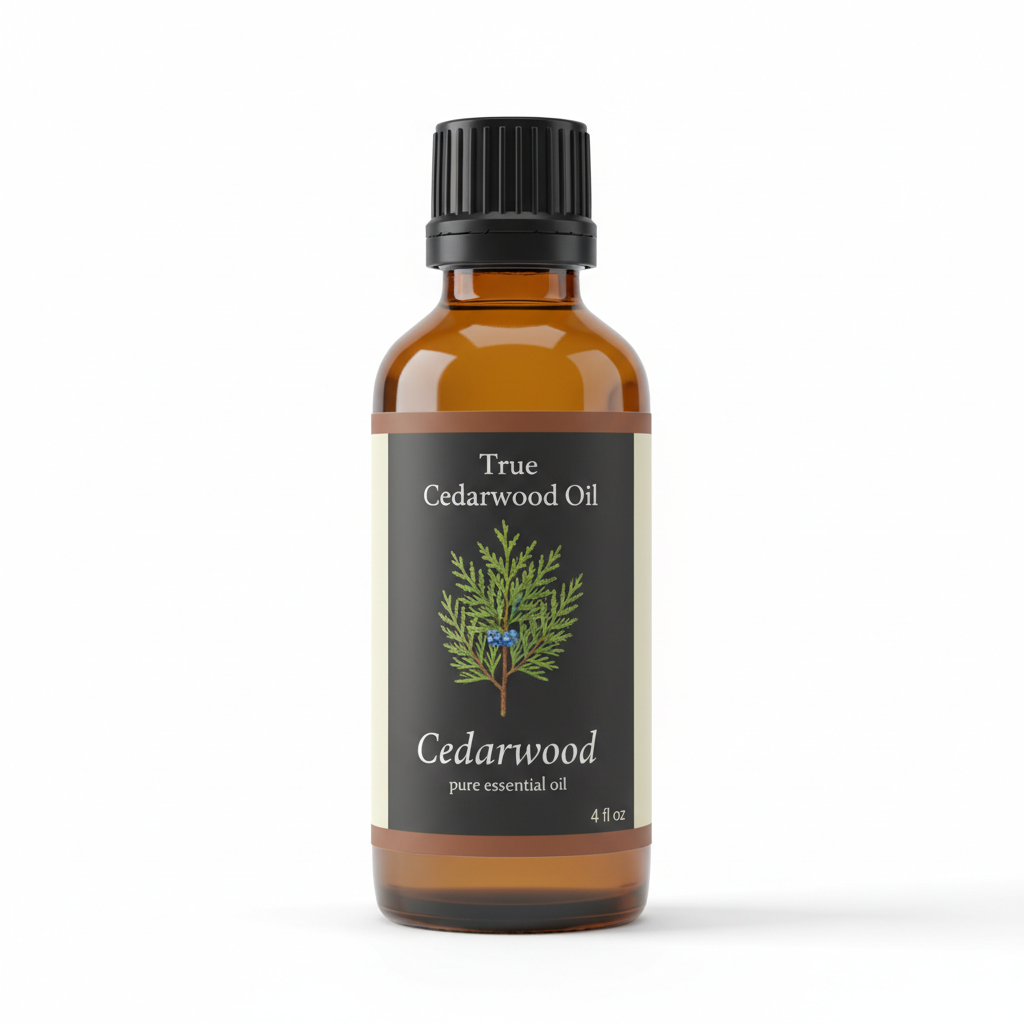
Cedarwood Essential Oil
Our own Cedarwood Essential Oil, in sizes from 0.5 oz to bulk.
From $9.99
Shop Now →Where cedarwood shines
Aroma is the honest centre of this oil. A 2026 composition review points out that sesquiterpenoids, which cedarwood oils are rich in, are generally responsible for woody fragrances. That is the whole appeal: depth, warmth and a grounded, forest-floor character that makes a room feel settled.
Each of our four oils has its own voice. Atlas is dry, woody and warmly sweet; Himalayan is warm and softly resinous; Virginian is crisp like fresh pencil shavings; Texas is soft and smooth. Our smell guide walks through them, and our uses guide collects the everyday ways to enjoy them. Diluted, they also make a pleasant scent for a body oil, which our dilution guide explains.
What each of our four smells like when you open the bottle
If you have only ever met cedarwood as a pencil shaving, the others can be a surprise. Open the Virginian and the first thing you notice is that dry, crisp edge, like a freshly sharpened pencil or a cedar drawer. The Atlas feels warmer and slower, with a dry woodiness and a sweetness that lingers on the cap. The Himalayan is rounder again, softly resinous and smooth, and the Texas lands in the middle, easy and gentle.
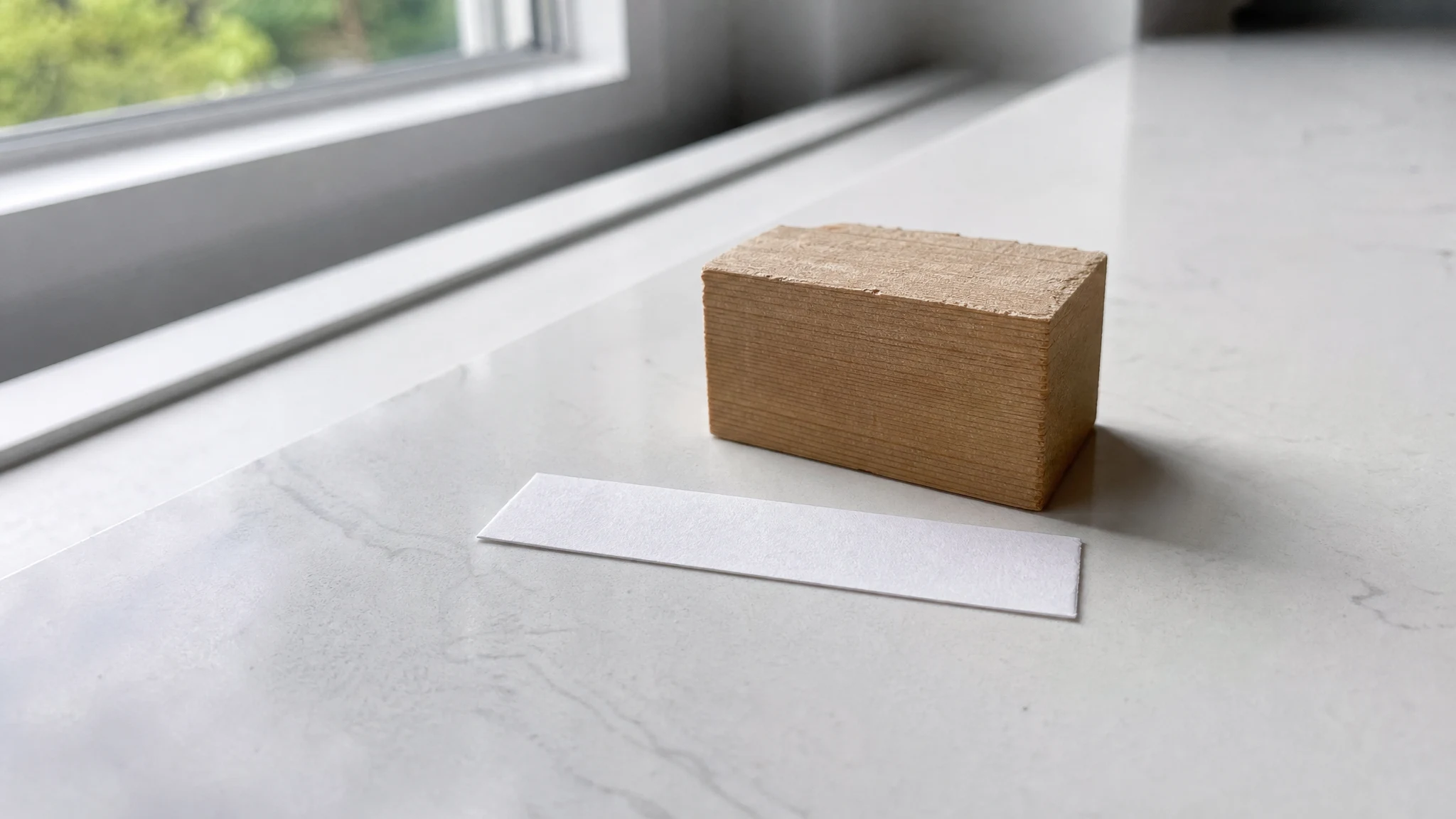
A good habit is to smell each one on a paper strip or a cotton pad, then come back after a few minutes. Cedarwood oils are base notes, so the opening impression softens and settles, and the later stage is the one you will actually live with.
Ways to enjoy it at home
- In a drawer or closet: a drop on a cotton pad inside a small cloth bag, kept away from the clothes themselves.
- In a diffuser: a short session in a ventilated room is plenty, because cedar is rich and a little goes a long way.
- In a blend: cedar makes a steady foundation under brighter oils, which is why it appears on so many blending lists.
- In a diluted body oil: as a scent, following the dilution guidance below.
What the studies are about
Cedarwood has attracted real scientific curiosity, and it helps to know what each type of study is.
Single compounds. Much of the wellbeing research uses cedrol, one molecule found in juniper-type cedarwoods, rather than the oil itself. In Japan, rats breathing cedrol moved less in a 2003 experiment, and a 2007 study in three countries measured a change in the pupil's light reflex in women who inhaled it. These are interesting physiology studies, and they did not test a bottle of cedarwood oil or measure outcomes in daily life. Our cedrol article goes through them.
Laboratory dishes. A 2025 review of cedarwood oil describes activity against bacteria and fungi in the lab, and also notes that the data come from assays with poorly standardised concentrations and lack clinically relevant models. Results on a plate tell us the oil is chemically active; they do not tell us what happens on a person.
Insects and ticks. Studies of cedarwood on pests are laboratory studies too, and we do not sell cedarwood oil as a repellent or pest product. Our insect article explains the status.
The general picture from the National Center for Complementary and Integrative Health is similar for aromatherapy overall: on topics like insomnia, it says we do not know whether it helps because little rigorous research has been done. We think that is a fair and useful summary.
Choosing by scent, not by story
Because these oils differ so much in smell, the most useful question is which character you like. If you love the dry, sharp edge of a pencil sharpener, Virginian is the one. If you prefer something rounder and sweeter, the Himalayan or Atlas will feel more like a warm sweater. Texas sits between. None of our oils is sold for a health purpose, so scent is the right basis for choosing, and our family guide lines the four up side by side.
How we suggest using it
Enjoy cedarwood for what it is. Put a drop on a cotton pad in a drawer, diffuse it for a short while, or blend it into a woody accord. Our oils are cosmetic and aroma products for external use only, and we make no health claims for them. Dilute to 0.5% to 2% in a carrier before skin contact, with a patch test first; reviewers link irritation to oxidised or poor-quality oils, so keep the bottle capped, cool and dark. We suggest beginning at the low end, especially for the face.
If you are pregnant, have a skin condition, or are thinking about the oil for a child or pet, talk to your physician, dermatologist, pediatrician or veterinarian first. And if sleep, mood or attention are a worry, those are questions for a health professional rather than a bottle.
That may sound modest, but a good woody scent is a real pleasure, and cedarwood delivers it beautifully.
Cedarwood Essential Oil
Cedarwood Essential Oil from our own shop, in sizes from 0.5 oz to bulk.
From $9.99
Shop Now →Sources & Further Reading
- Cedarwood Oils: The Wood Essential Oil Compositions from Trees Known as "Cedar", Setzer and Satyal, Plants, 2026
- Cedarwood essential oil (Cedrus spp.): a forgotten pharmacological resource with emerging therapeutic potential, Gonçalves, Exploration of Drug Science, 2025
- The sedative effects and mechanism of action of cedrol inhalation with behavioral pharmacological evaluation, Kagawa et al., Planta Medica, 2003
- Overseas survey of the effect of cedrol on the autonomic nervous system in three countries, Yada et al., Journal of Physiological Anthropology, 2007
- Aromatherapy, NCCIH