What Does Cedarwood Oil Smell Like? Four Oils Compared
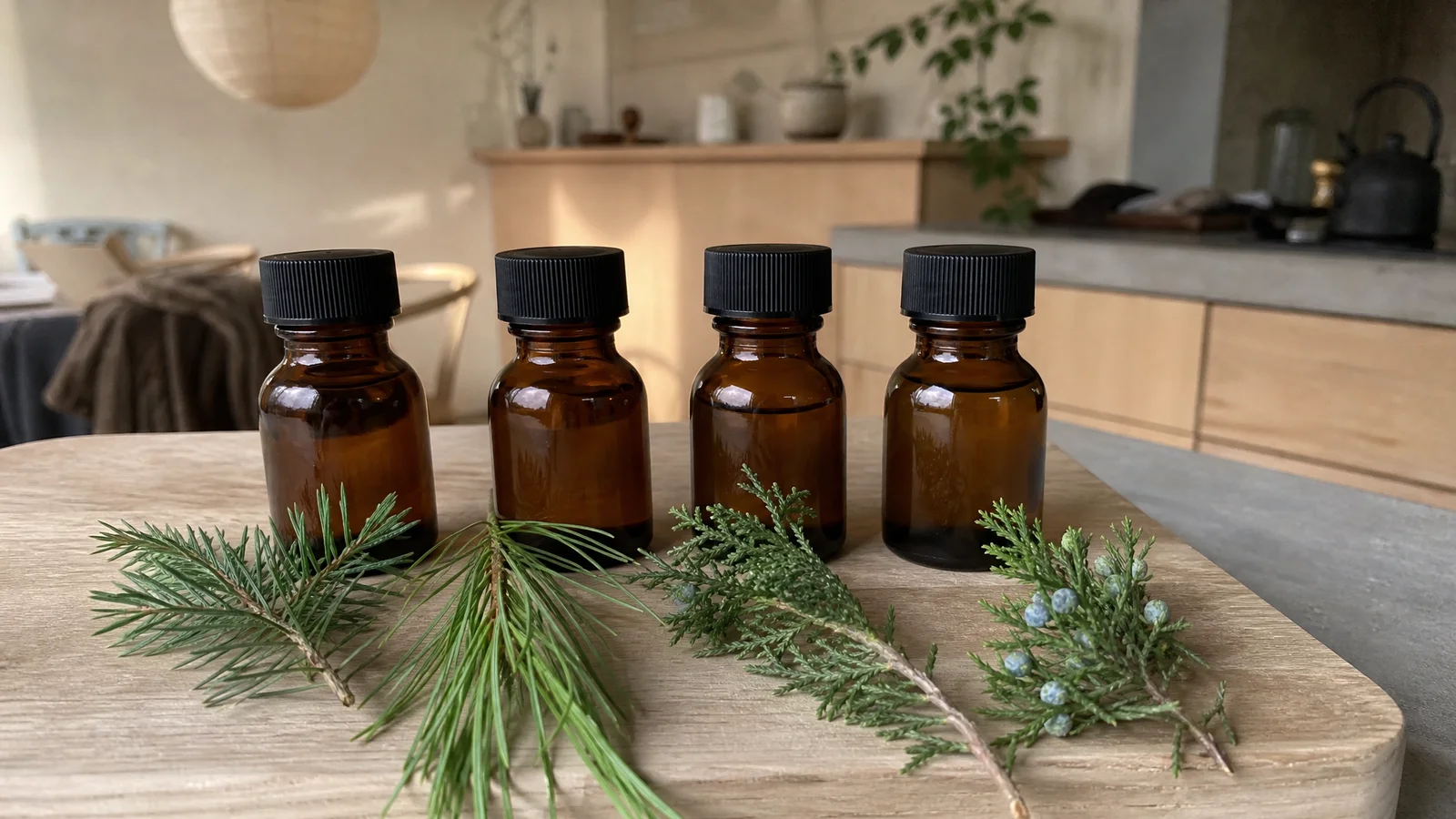
Ask what cedarwood oil smells like and you will get one answer from a web page and four from a bench. That is because "cedarwood" is a family of oils, and the family splits cleanly in two: Atlas and Himalayan come from true cedars, while Virginian and Texas come from junipers that picked up the cedar name. Once you know which one you are holding, the scent makes a lot more sense.
Cedarwood Essential Oil
Our own Cedarwood Essential Oil, in sizes from 0.5 oz to bulk.
From $9.99
Shop Now →Start with the tree
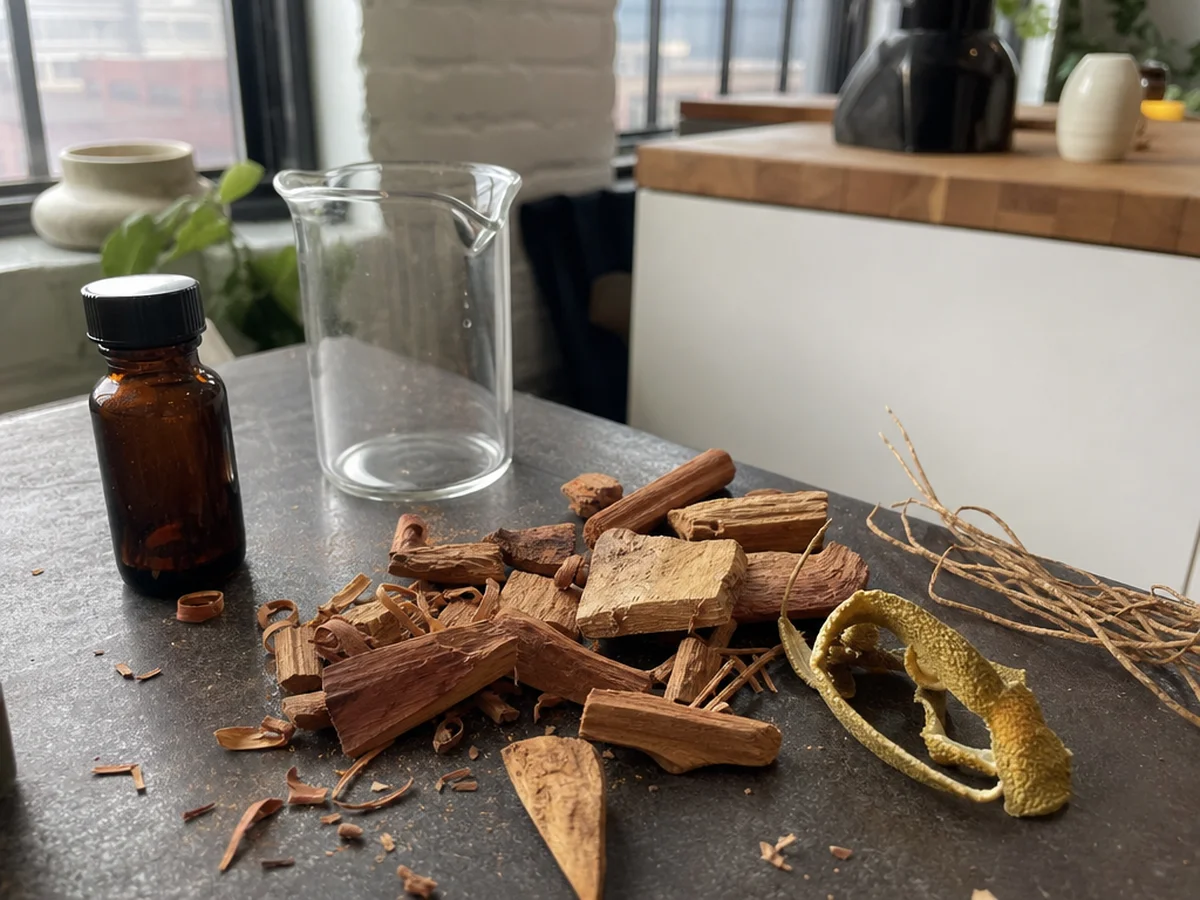
The Tisserand Institute makes the point bluntly: there are at least five different cedarwood oils. A label that says only "cedarwood" has not told you much. We sell four and name the species for each on its page, so you can choose by character rather than guesswork.
The Texas oil comes with a naming tangle. We list it as Juniperus mexicana. A 2024 European Food Safety Authority assessment of a "cedarwood Texas oil" names Juniperus deppeana, and a 2026 composition review discusses Texas cedar as J. ashei. If the exact species matters for your work, ask us in writing for the lot you are buying.
A ladder from sharp to soft
Here is how we describe each of our four.
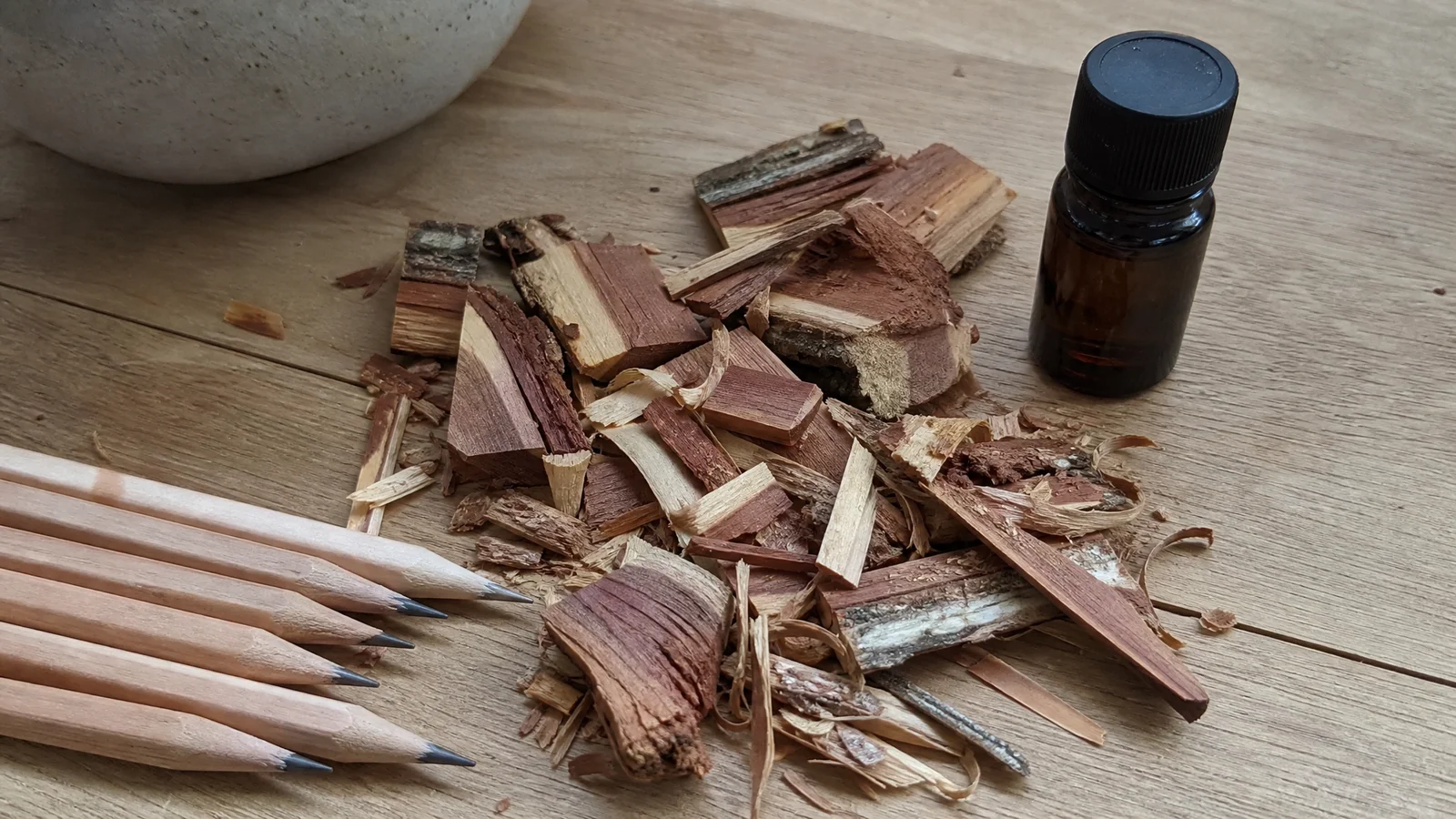
- Virginian is the classic. It is dry, sharp and like fresh pencil shavings, the clean woody smell of closet drawers and cedar chests.
- Texas is soft, smooth and gently sweet, sitting comfortably between Virginian and Himalayan.
- Himalayan is warm, sweet and softly resinous with a rounded depth, softer than the dry pencil-shaving edge of Virginian.
- Atlas is dry and woody but warmly sweet, with a balsamic depth that settles in as a steady base note, and a touch of animalic warmth.
Read top to bottom, that is a walk from the sharpest and driest oil to the softest and most resinous, with Atlas as the one that is both dry and sweet. All four are base notes, which means the character you notice at first fades into something deeper and longer lasting on a blotter.
Why they smell different
A 2026 review of published compositions says sesquiterpenoids are generally responsible for the woody fragrance of cedarwood oils, and that the two families reach it with different molecules. In commercial Atlas and Himalayan wood oils the leading compounds are himachalenes, with atlantones adding to the mix. In Virginian wood oils the lead goes to cedrenes and thujopsene, with cedrol and widdrol following. Those are averages across many producers, not measurements of our bottles.
What we can reasonably conclude is simple: oils built from largely different aroma molecules would be surprising if they smelled alike, and the pencil-shavings edge of the Virginian against the resinous softness of the Himalayan fits that. It is an inference, though. We would not claim that any one molecule equals any one smell word.
What our certificate says about scent
The Certificate of Analysis we publish covers one batch of our Atlas oil. Its smell line reads "Complies" against a printed standard of "Woody, Sweet", alongside a relative density of 0.934 and a refractive index of 1.513 at 20 C. That is a pass against a two-word standard, and the descriptions above are ours, offered as a guide to character.
Words you might reach for
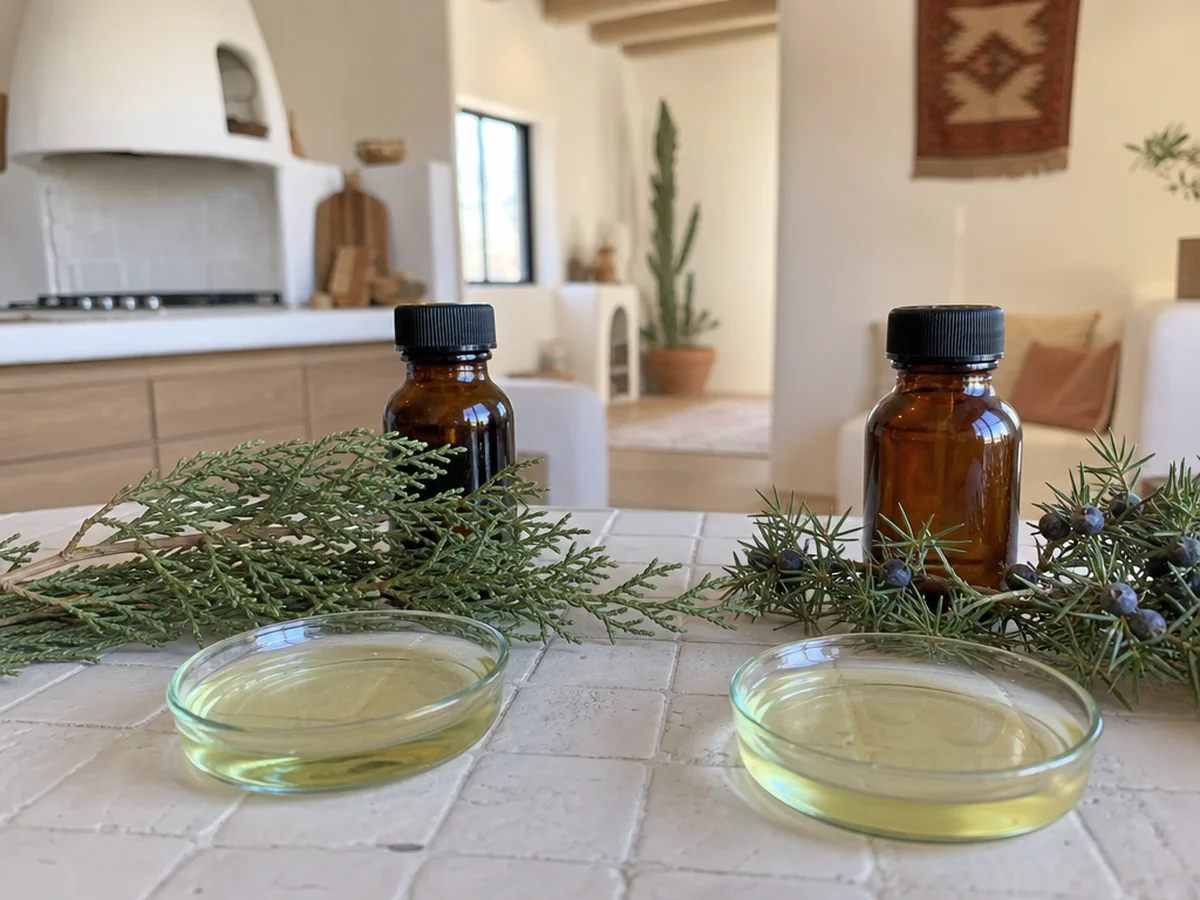
When you smell cedarwood, give yourself permission to be specific. Is it pencil shavings, a hope chest, a sunlit plank, warm resin, a hint of sweetness, or something a little leathery? People describe the same oil in surprisingly different ways, and there is no wrong answer. Writing your own words next to each species is the quickest way to learn which one suits your taste, and you will find your vocabulary grows as you go.
What moves the smell besides the tree
Age and storage matter. The Tisserand Institute notes that even good essential oils deteriorate over time, with oxygen, light and heat as the causes, so a bottle that has been opened often will not smell on day 300 the way it did on day one. Our shelf-life article goes deeper. What the oil sits next to matters too, because a base note shows itself in the dry-down and in blends. Our perfumery article covers that role, and our sandalwood comparison covers the oil people most often hold it against.
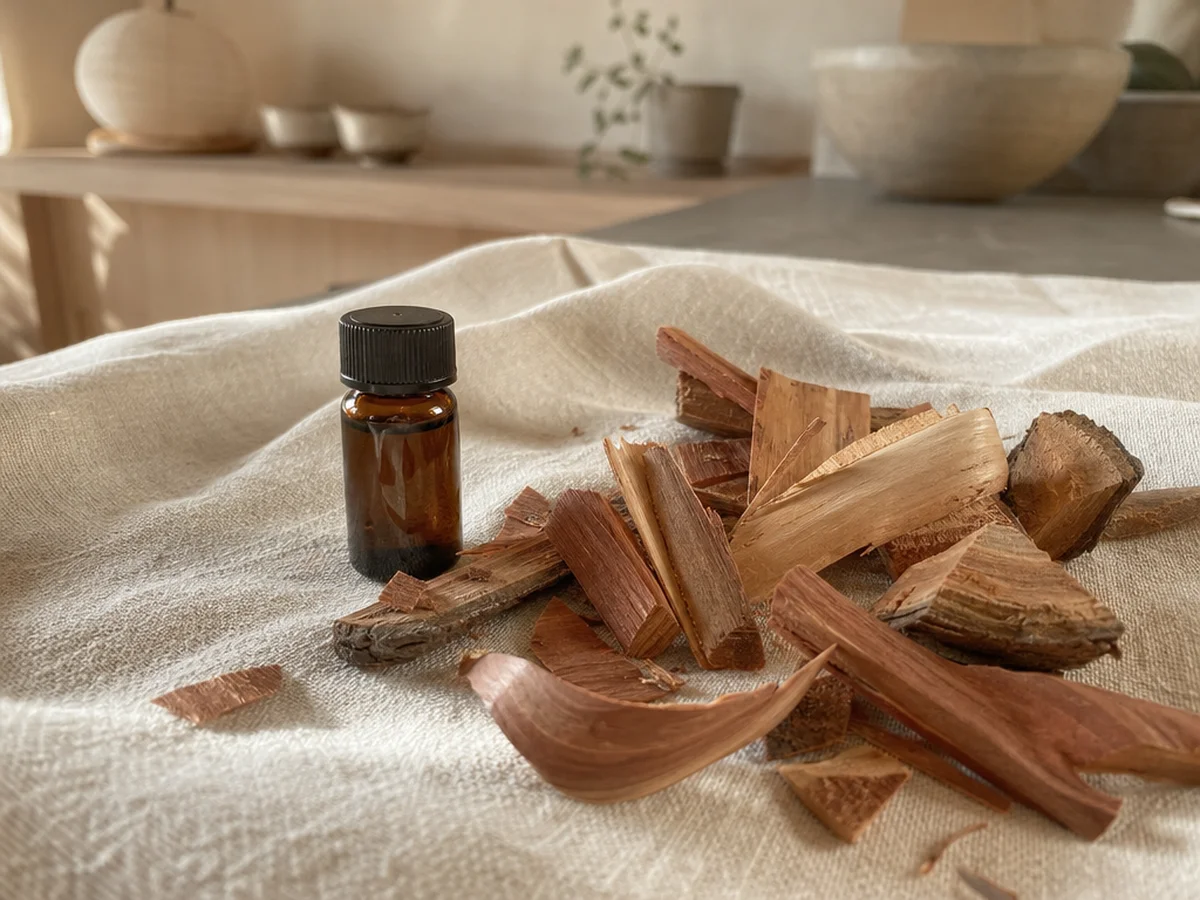
How to compare them by nose
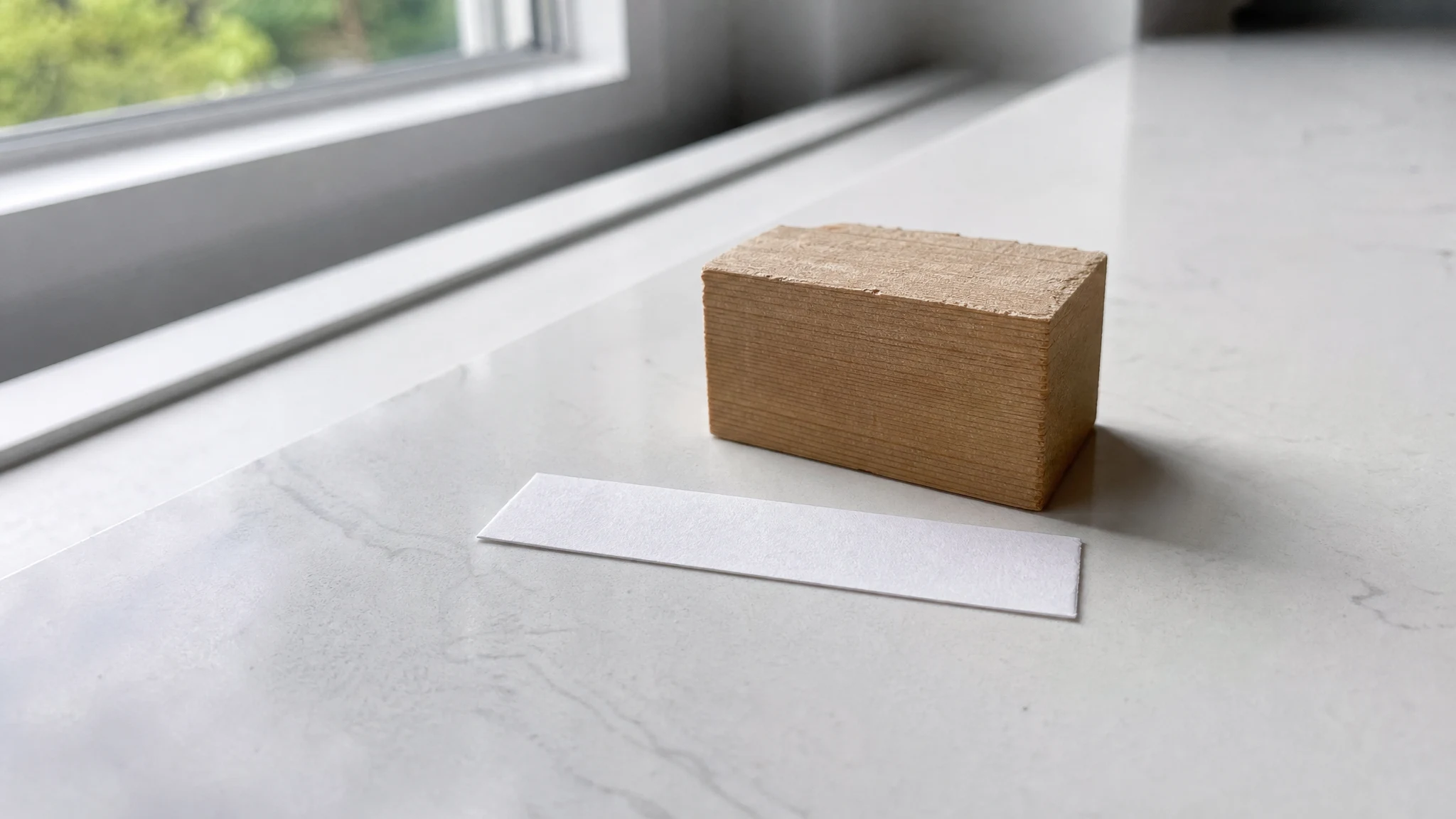
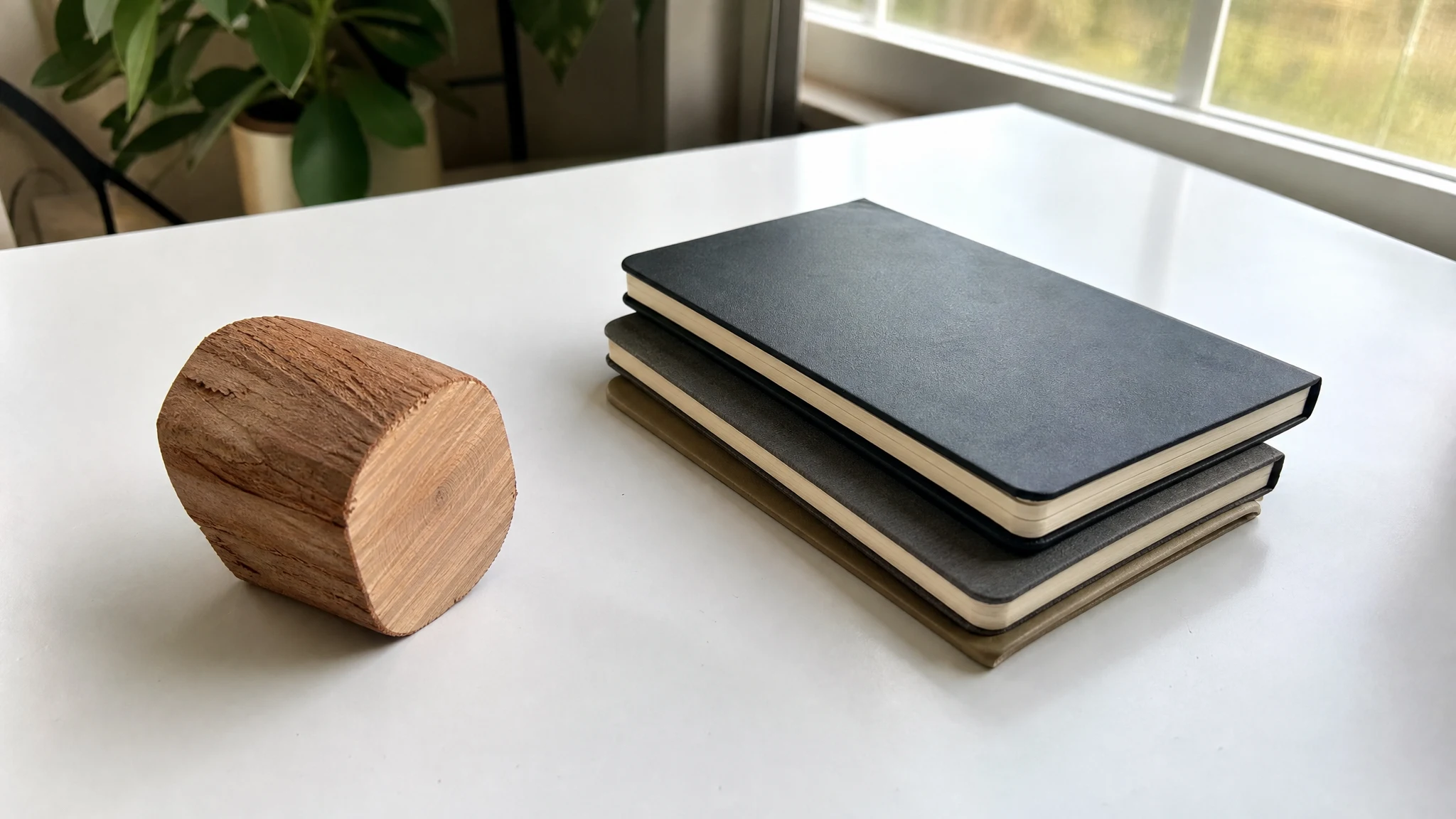
Here is a method reasoned from the points above. Smell one oil at a time from a paper blotter instead of the bottle neck, wait a few minutes between samples, and return to each blotter after an hour, since a base note is defined by what remains. Write down the species on each label first so you are comparing trees and not brand names. If you compare against a cedar object you know, like a pencil or a chest, keep in mind that those woods are not necessarily the same species as the oil. A 0.5 oz bottle is a sensible size for this kind of side-by-side.
Keep it on the blotter. Our cedarwood oils are sold neat and undiluted, and our dilution guidance for skin is 0.5% to 2% in a carrier oil with a patch test first. Published toxicology gives a reason for care: in a 13-week study, Virginia cedarwood oil applied to rat and mouse skin in ethanol caused skin lesions at the application site, and the authors noted that their lower dose estimates overlapped with reported cosmetic use levels. That was an animal study of one oil, and we do not regard 2% as a safe figure. If you plan to put it on skin, start low and use our dilution guide.
If you want a one-line answer, cedarwood smells dry and woody in every case, sharper and more pencil-like in the junipers, softer and more resinous in the cedars. Beyond that, your nose will settle it faster than any description.
Cedarwood Essential Oil
Cedarwood Essential Oil from our own shop, in sizes from 0.5 oz to bulk.
From $9.99
Shop Now →Sources & Further Reading
- What’s in a name? (Tisserand Institute)
- Cedarwood Oils: The Wood Essential Oil Compositions from Trees Known as "Cedar" (Setzer and Satyal, Plants, 2026)
- Dose-response assessment of the dermal toxicity of Virginia cedarwood oil in F344/N rats and B6C3F1/N mice (Catlin et al., Food and Chemical Toxicology, 2016)
- Safety and efficacy of a feed additive consisting of an essential oil obtained from the wood of Juniperus deppeana Steud. (cedarwood Texas oil) for use in all animal species (FEFANA asbl)