How to Dilute Cedarwood Oil: Simple Ratios and Tips
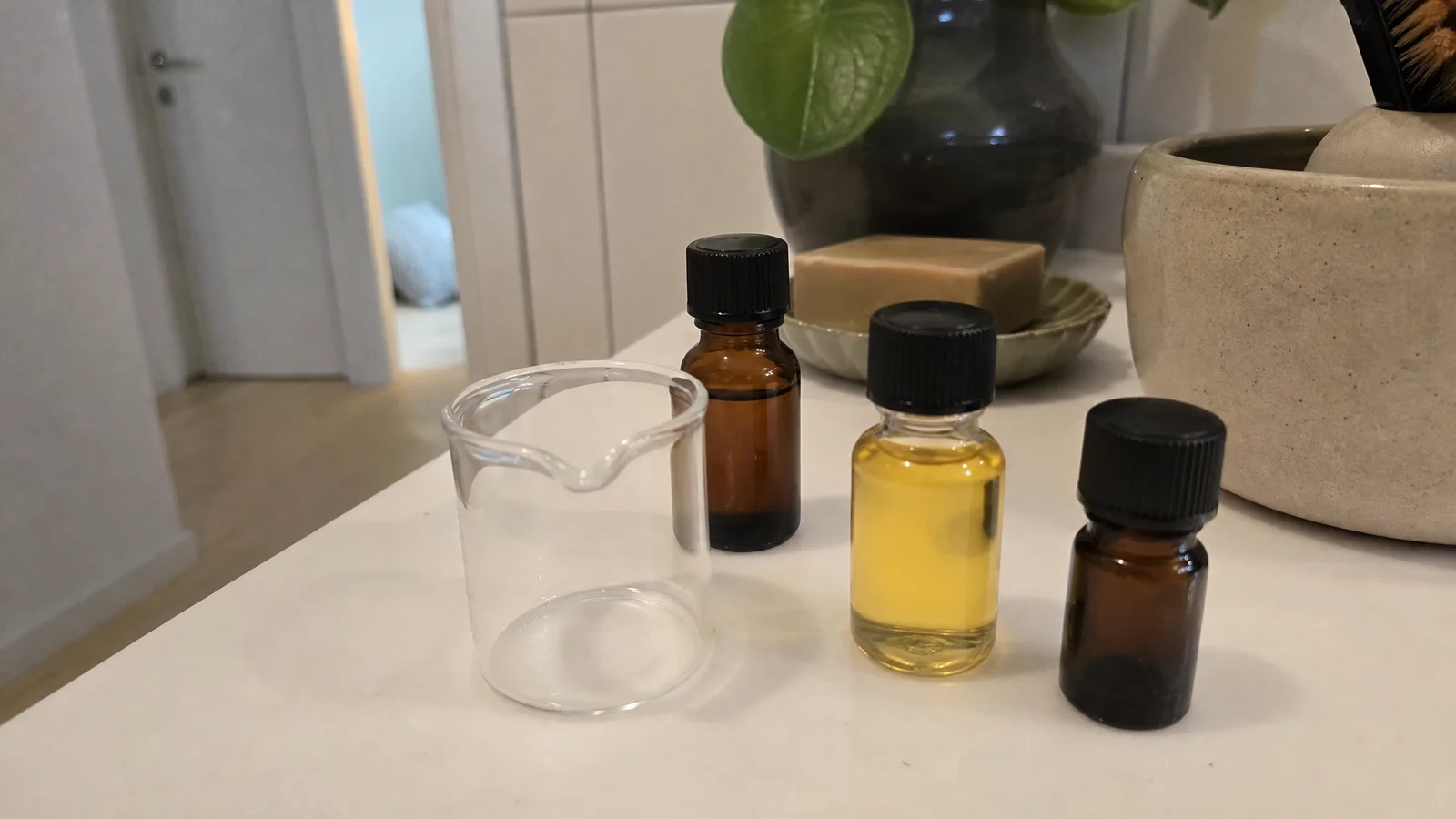
Cedarwood oil arrives in the bottle at full strength, and almost everything you will do with it on skin starts with one small act: stirring a little of it into a lot of something gentler. Get that ratio comfortable and the rest is easy.
Cedarwood Essential Oil
Our own Cedarwood Essential Oil, in sizes from 0.5 oz to bulk.
From $9.99
Shop Now →What a percentage really means
A dilution percentage is simply the share of your finished blend that is essential oil. At 1%, one part in a hundred is cedarwood and ninety-nine parts are carrier. Because we sell our four cedarwood oils neat, the mixing is yours, and that is a good thing: you decide exactly how strong your blend smells.
Drops are the everyday way to measure, though a loose one. The Tisserand Institute points out that drop conversions are always approximate, because no two drops are quite the same. As a working convention, many people count about 20 drops to a millilitre. That is a rule of thumb and our arithmetic, not a measurement of any particular dropper. On that basis, one ounce of carrier (about 30 ml) comes out like this:
| Strength | Per 10 ml | Per 30 ml (1 oz) |
|---|---|---|
| 0.5% | about 1 drop | about 3 drops |
| 1% | about 2 drops | about 6 drops |
| 2% | about 4 drops | about 12 drops |
Those ends line up with our own guidance: dilute to 0.5% to 2% in a carrier oil, which is roughly 3 to 12 drops per ounce. Notice how tiny the amounts are in a small bottle. A single drop is hard to dose precisely, so if you like using a little at a time, mix a bigger batch at a fixed ratio, weigh it on a kitchen scale if you have one, and enjoy it while it is fresh.
Why we begin at the low end
Our range is wide, and we like to begin at its bottom. The reason is simple and practical. A lower percentage costs you nothing but a quieter scent, and cedarwood is a persistent, woody aroma that shows up nicely even when it is subtle.
There is also some published guidance worth knowing about. In a 13-week study, Virginia cedarwood oil (a juniper, like our Virginian and Texas oils) was applied to the skin of rats and mice in ethanol, and the researchers calculated that skin changes appeared at levels as low as 0.65% to 2.1% in the most sensitive group (Catlin and colleagues, 2016). That was animal skin, a different vehicle and a single oil, so it is not a human limit. We take it as a good reason to keep our recipes modest rather than to chase the top of any range.
For orientation by use, the Tisserand Institute lists 0.2% to 1% for sensitive skin, 0.5% to 1.2% for facial cosmetics and deodorants, and 1% to 3% for body oils and lotions. Those are general ranges, not cedarwood-specific, and for your own product the current IFRA standard for the oil you are using is the place to check. Our own habit is to treat 2% as the ceiling, never the goal.
Mixing a small batch the easy way
A tidy routine keeps dilution pleasantly simple. Start with a clean, dry bottle and measure your carrier oil first. Add the cedarwood drops, cap the bottle, and roll it gently between your palms for a few seconds so the oils mix evenly. Then write the date and the percentage on a label right away, because a week from now you will not remember what you made. If you are experimenting, make two tiny bottles at different strengths and label them clearly, so you can compare rather than guess.
What you will notice at different strengths
At the low end, cedarwood is a quiet background: a dry, woody note you catch when you lift your hand, not when you walk into the room. As you go up, the scent becomes more present and lingers longer. Because it is a base note, it usually keeps its character even at modest amounts, which is another reason we are happy to stay near the bottom of the range.
Choosing what to dilute into
We do not sell carrier oils, so pick one from a grocery, craft or soap-making supplier. The best advice is dull but sound: choose an oil your skin already likes, buy a small bottle so it stays fresh, and store your finished blend in a dark bottle away from heat. Oxidised oil is one of the things reviewers link to irritation, so freshness matters. Our storage article covers how long to expect a bottle to last.
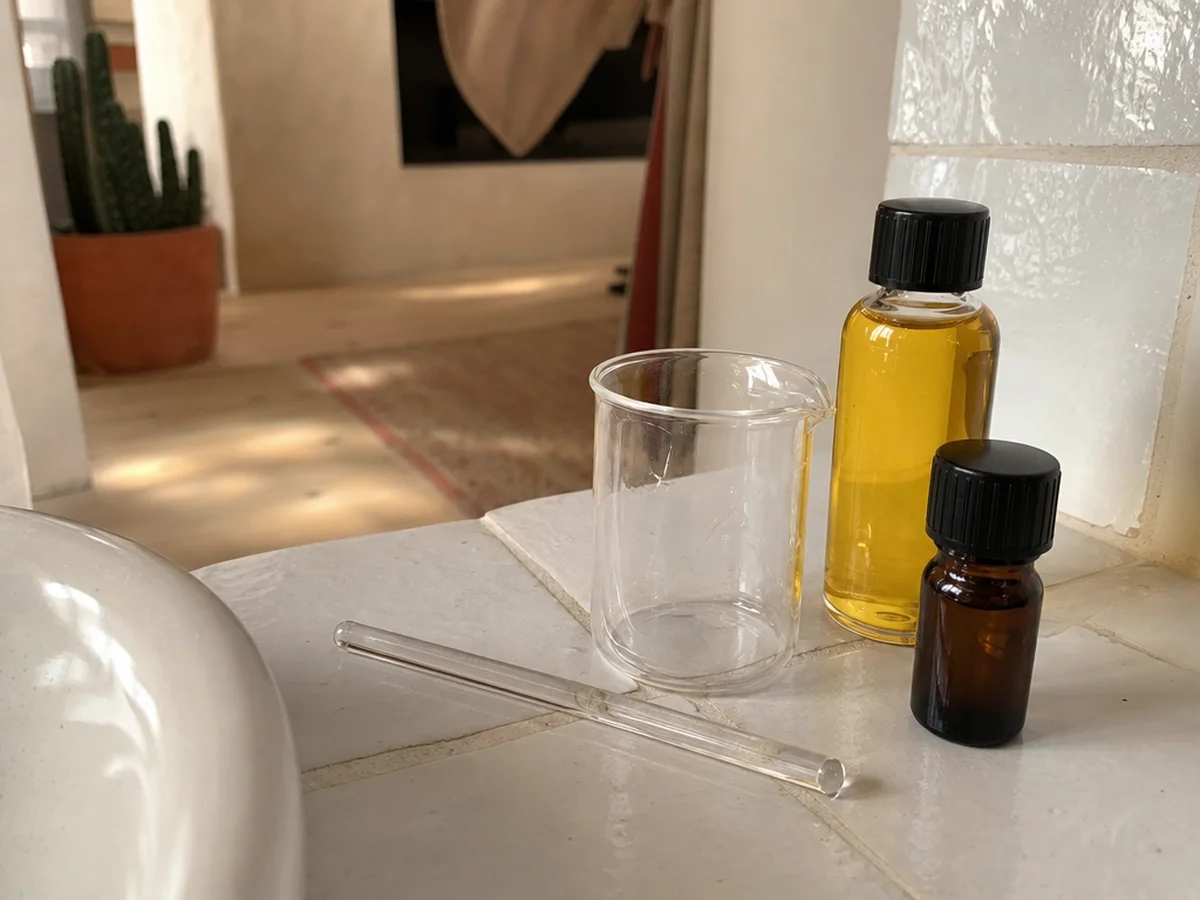
An oil-only blend is the simplest route. Anything with water in it, such as a spray or lotion, needs a proper preservative and is a bigger project.
Test a little first
Before you use a new blend widely, dab a little on the inner forearm and wait a day or two. If you see redness, itching or swelling, wash it off and stop. It is a sensible habit, with one honest limit: a test checks your skin on one day, and sensitivity can develop later with repeated use. The Tisserand Institute notes that after an allergic reaction you may never be able to use that oil again without a similar one. Our patch test article goes into what a test can and cannot tell you.
Making something for a specific purpose? Our massage oil blend and soap making articles work through the numbers for those, and our shop page lists the four oils and their sizes.
When to ask someone first
If your skin is broken, inflamed or being treated for a condition, ask a dermatologist before adding any scented oil. For pregnancy, ask your physician or midwife; we suggest setting the oil aside during pregnancy as a precaution. For children, ask a pediatrician, and keep every bottle out of reach, as America's Poison Centers advises. Pets are a question for a veterinarian. In the US, Poison Help is 1-800-222-1222 if a bottle is ever swallowed.
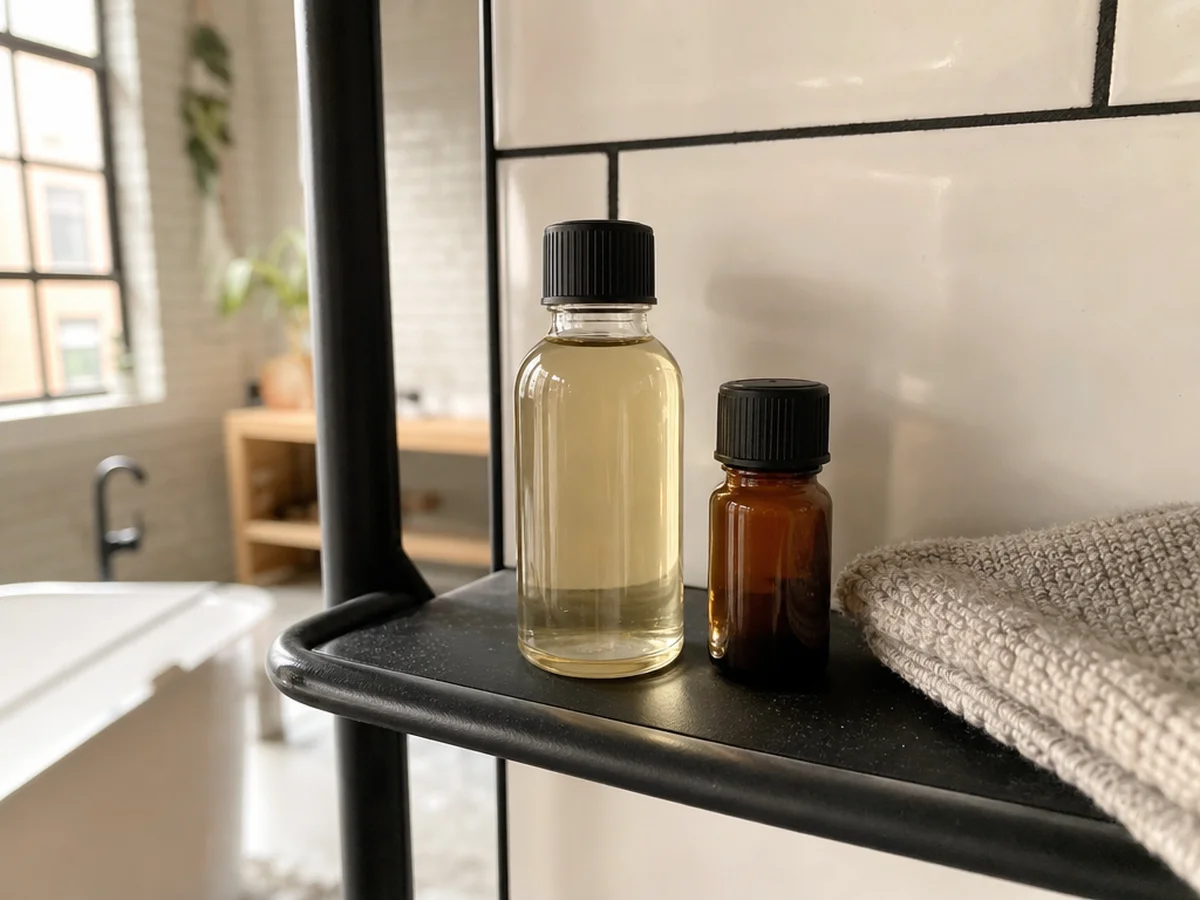
Our oils are cosmetic and aroma oils for external use. Mixed thoughtfully and kept light, they make a lovely, quiet woody scent to work with. If you mix regularly, larger sizes are listed on our bulk page, and our guide to buying cedarwood essential oil in bulk covers what to check first.
Cedarwood Essential Oil
Cedarwood Essential Oil from our own shop, in sizes from 0.5 oz to bulk.
From $9.99
Shop Now →Sources & Further Reading
- Dilution for essential oils, Tisserand Institute
- Dose-response assessment of the dermal toxicity of Virginia cedarwood oil in F344/N rats and B6C3F1/N mice, Catlin et al., Food and Chemical Toxicology, 2016
- Essential oils: Poisonous when misused, Poison Control