Does Cedar Stop Clothes Moths? What Really Protects Wool
The holes in a favourite wool sweater are made by caterpillars, not by the small pale moths you see fluttering out of the wardrobe. That one fact changes how to protect your clothes, and it puts cedar in an honest, supporting role. Cedar smells wonderful in a closet, and a few clear steps do the real protecting.

Cedarwood Essential Oil
Our own Cedarwood Essential Oil, in sizes from 0.5 oz to bulk.
From $9.99
Shop Now →Who is eating the sweater
Mississippi State University Extension's Bug-Wise newsletter, written for homeowners, explains that the common webbing and casemaking clothes moths are only about a quarter inch long and "do not eat clothes; it is the small caterpillars that cause the damage." Those caterpillars feed on wool, mohair, fur, silk, feathers and other animal-based materials, and will also go after blends of wool and synthetic fibre. Carpet beetles, the other usual suspect, respond to many of the same precautions (Bug-Wise, No. 1, February 22, 2005 (Mississippi State University Extension)).
So the first job is a bit of detective work. Holes with tiny webbing or cases mean caterpillars are present now. A tidy closet with no holes is a question of prevention. Those need different responses.
The steps that do the work
The same newsletter puts these first:
- Clean before you store. Clothing soiled with sweat, oils and skin flakes is much more attractive to these pests, so wash it or have it cleaned first.
- Brush and air what cannot be washed. Hang it in bright sun for a few days after brushing inside and out; brushing dislodges eggs and larvae.
- Freeze it. Seal items in a plastic bag with the air pressed out and leave them in the freezer for four to seven days. This controls the insects but does not clean the garment.
- Store in tight containers. Plastic boxes with snug lids for sweaters, sealed garment bags for coats, and a check now and then for holes, shed skins or small light moths.
Our arithmetic for a spring storage week: an afternoon to wash and dry, up to seven days in the freezer for the pieces that cannot be washed, then everything into sealed boxes. If damage keeps appearing, a pest professional is the next call.
What the extension source says about cedar
The newsletter addresses cedar chests directly. It says that while cedar "certainly smells good," its insect-deterring properties "can be over rated," and that studies show cedar "does not really repel clothes moths, but high concentrations of cedar oils can cause mortality of small caterpillars." It adds that cedar can help "only when it is very fresh or when it has been rejuvenated by the application of cedar oil," and that the chest has to seal tightly so the vapours can build up, which cedar-lined closets do not usually manage.
Reading those conditions together, our reasoning is that the effect reported is about small caterpillars, in a closed space, with fresh wood, which is quite different from a bottle opened in a roomy wardrobe. The source gives no concentration or schedule, so we have no drop count to offer, and we sell our oils as fragrance, not as a pest product. Cedar is a wonderful addition to a stored-clothes routine, and the washing, freezing and sealing steps are what protect the wool.
Setting up a storage day
A small bit of organisation makes the whole job feel lighter. Clear a table or a bed, and make three piles before you start: wash, brush and air, and freeze. Pull out the pieces you have not worn all winter and give each a quick look in good light, turning pockets and cuffs inside out, since that is where trouble tends to start. Label each box with what is inside and the date you packed it, so that next autumn you are not unpacking blind. It is a slightly dull afternoon, but it is the one that saves the sweaters, and a cup of tea helps.
Cedar in the closet for the scent
A closet that smells of cedar is a pleasure in itself, and there are easy ways to get there:
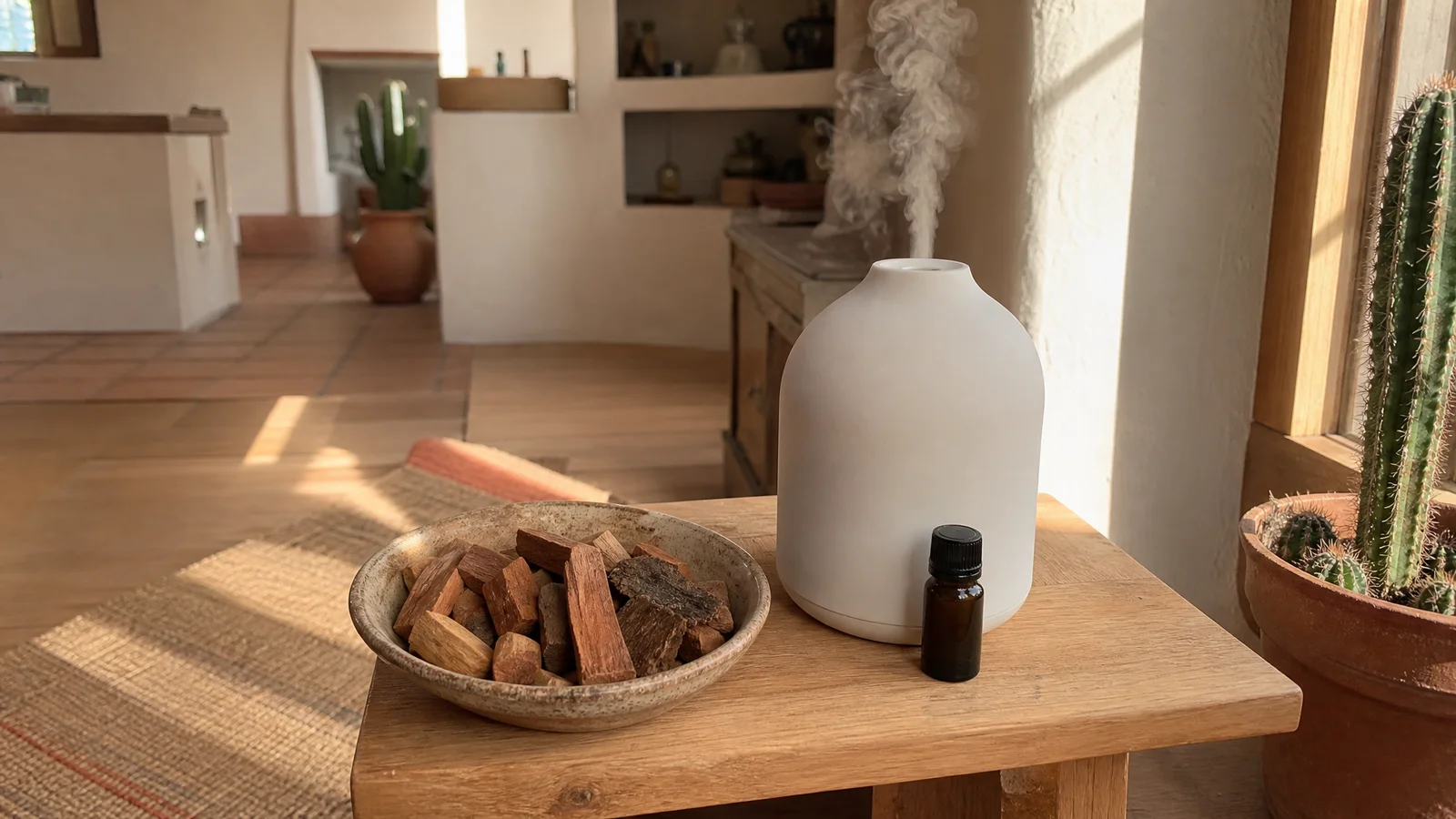
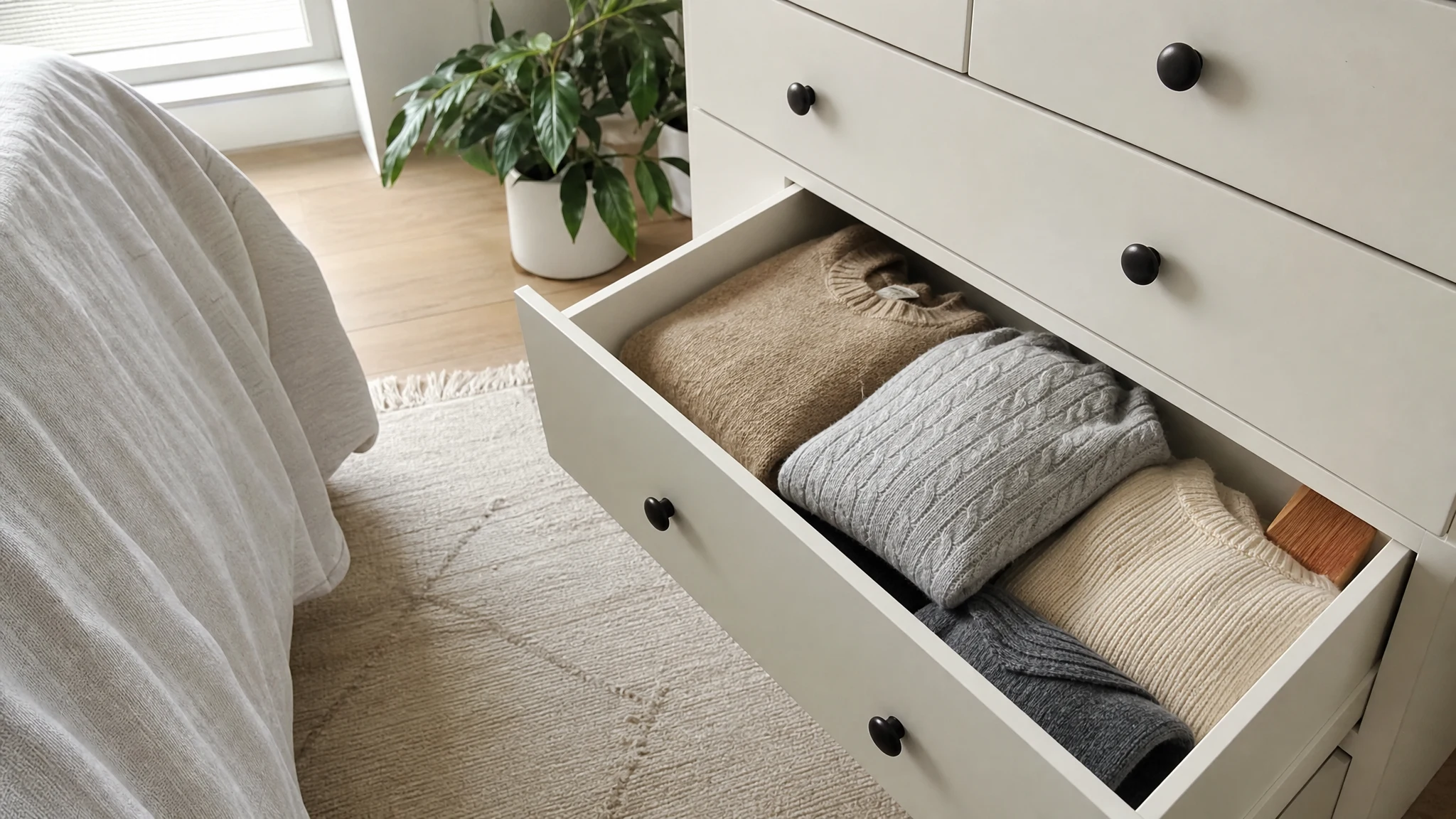
- Put the oil on a wooden block, a cotton pad in a small open container or a sachet, not directly on clothes. That is a precaution of ours, since oils can mark delicate fabrics like silk or wool.
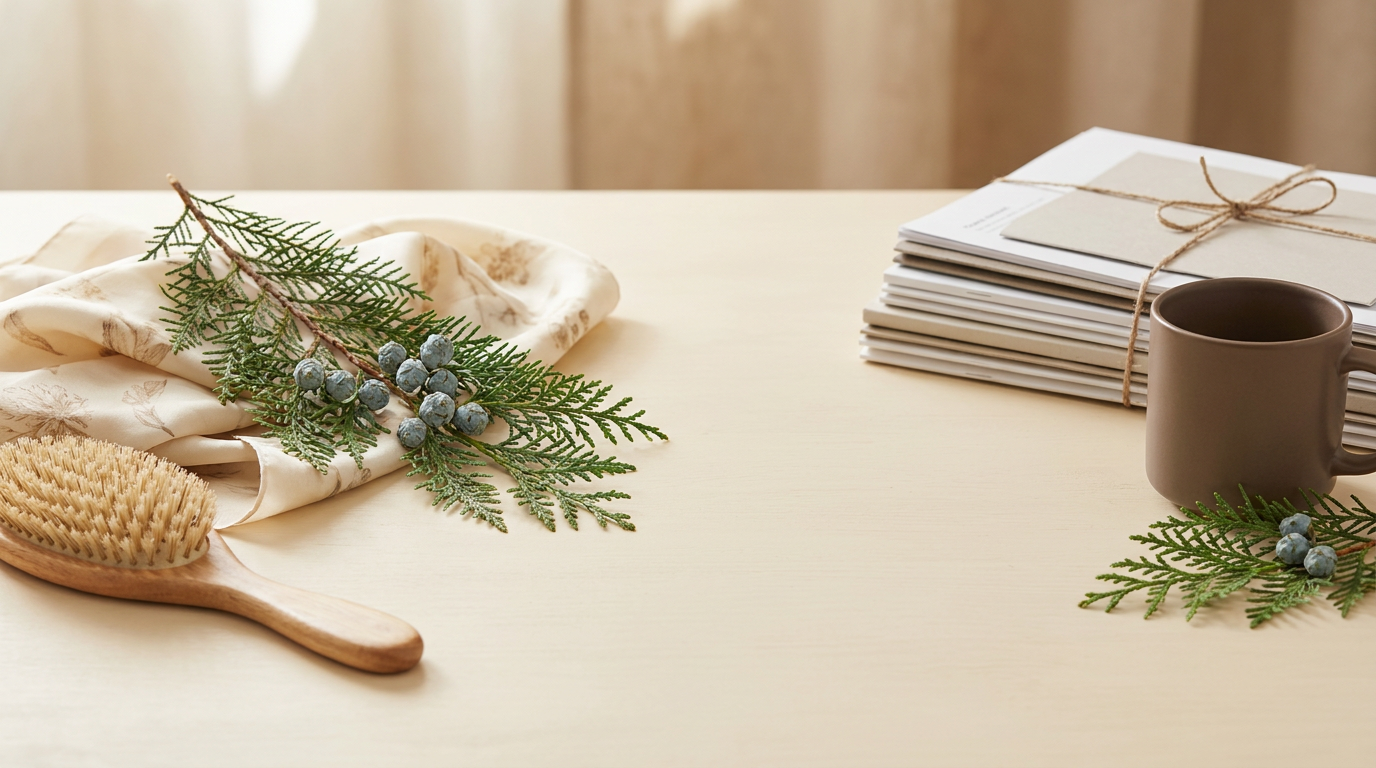
- Choose the oil for the smell. Our Virginian (Juniperus virginiana) is dry, sharp and classically like fresh pencil shavings, the clean cedar of closet drawers and chests. We position it for closets and sachets. Atlas is dry, woody and warmly sweet, Himalayan is warm and softly resinous, and Texas is soft and smooth.
- Keep it out of reach of pets and children. Our guidance is to keep the oils away from both, and an open dish in a wardrobe a cat can enter is a good example of what to avoid. Our cat guide explains why.
When you open the closet door, you will notice the cedar scent is softest right after the oil goes on and gradually quietens over the following days. That is normal for a woody base note. If you like the smell stronger, add a little more to the block or pad rather than putting it on fabric, and keep it modest, because a closet full of wool holds a scent well. We would rather you refresh a little and often than overdo it once.
Cedar blocks, sachet bags, storage boxes and wool wash all come from hardware, housewares or grocery stores, since we sell only the oils. Our closet refresh article walks through the scent side, and our cedar chest article covers the wood itself.
Wash, freeze, seal, check, and let the cedar make the closet smell lovely. That order of priorities is the one the extension entomologists recommend, and it works for any wardrobe.
Cedarwood Essential Oil
Cedarwood Essential Oil from our own shop, in sizes from 0.5 oz to bulk.
From $9.99
Shop Now →