Cedarwood Oil for Closets: Bring Back the Cedar Smell
Open an old cedar chest and the smell is unmistakable: dry, clean, a little like pencil shavings. Over the years that smell fades as the wood's surface dries out, and a few drops of cedarwood oil can bring it back to a block, a drawer liner or a small sachet.

Cedarwood Essential Oil
Our own Cedarwood Essential Oil, in sizes from 0.5 oz to bulk.
From $9.99
Shop Now →Pick the oil by the smell you want
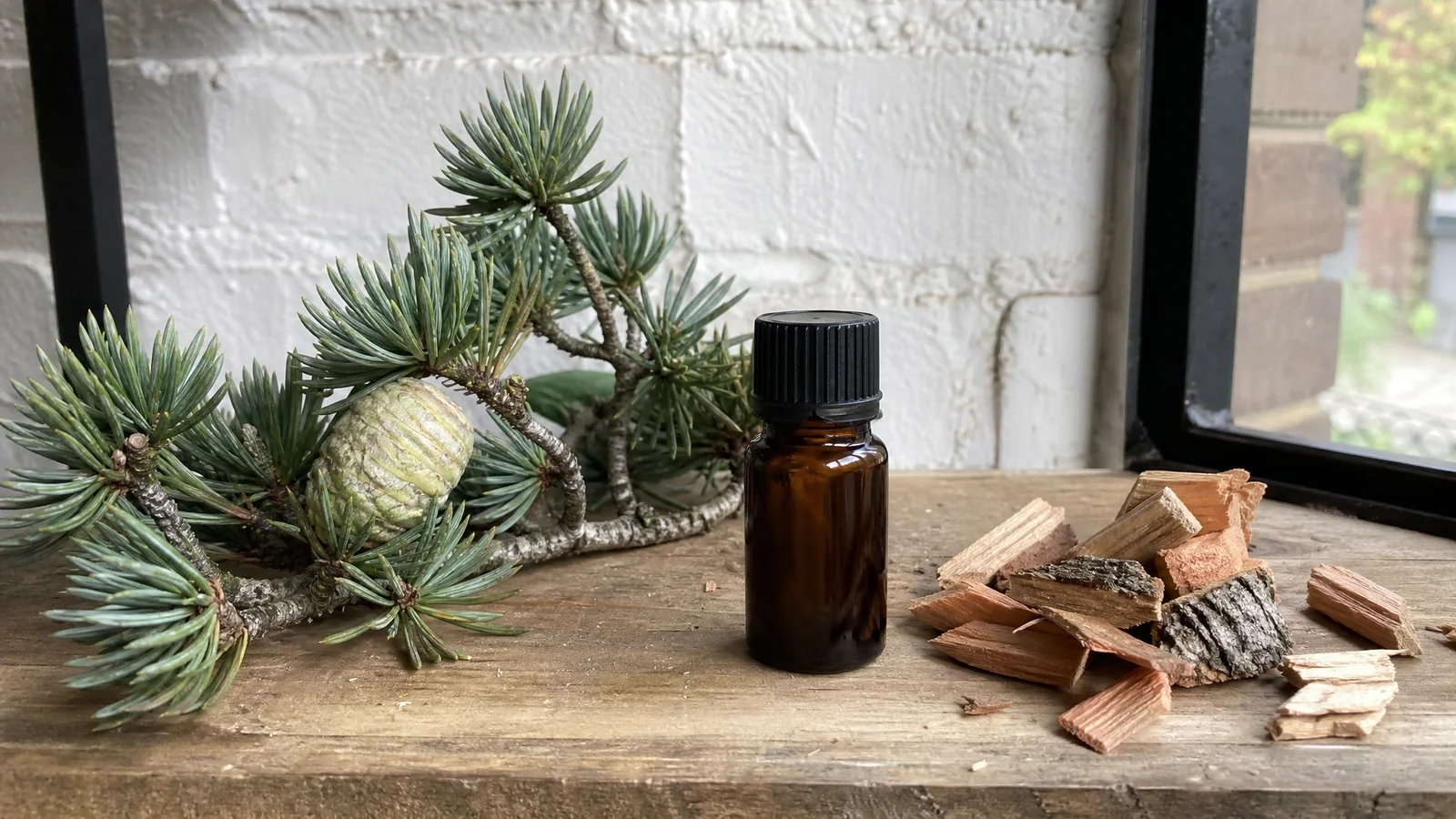
For the classic closet-and-chest scent, we would reach for our Virginian oil. We describe it as dry, sharp and "classically like fresh pencil shavings," the clean cedar of closet drawers and cedar chests, and sachets are one of the uses we suggest for it. The Atlas is dry, woody and warmly sweet, and the Himalayan is softer and more resinous. The Virginian and Texas oils come from junipers, the Atlas and Himalayan from true cedars; our Atlas versus Virginian comparison sets out the differences. Try one oil in one sachet before you scent a whole wardrobe.
A little arithmetic
A drop is roughly 0.05 ml, using the usual 20 drops per ml (droppers vary). The ISO 4724 standard for Virginian cedarwood oil lists a relative density of 0.941 to 0.965, so a drop weighs about 0.047 g. That is a literature range; we publish no density for our Virginian oil.
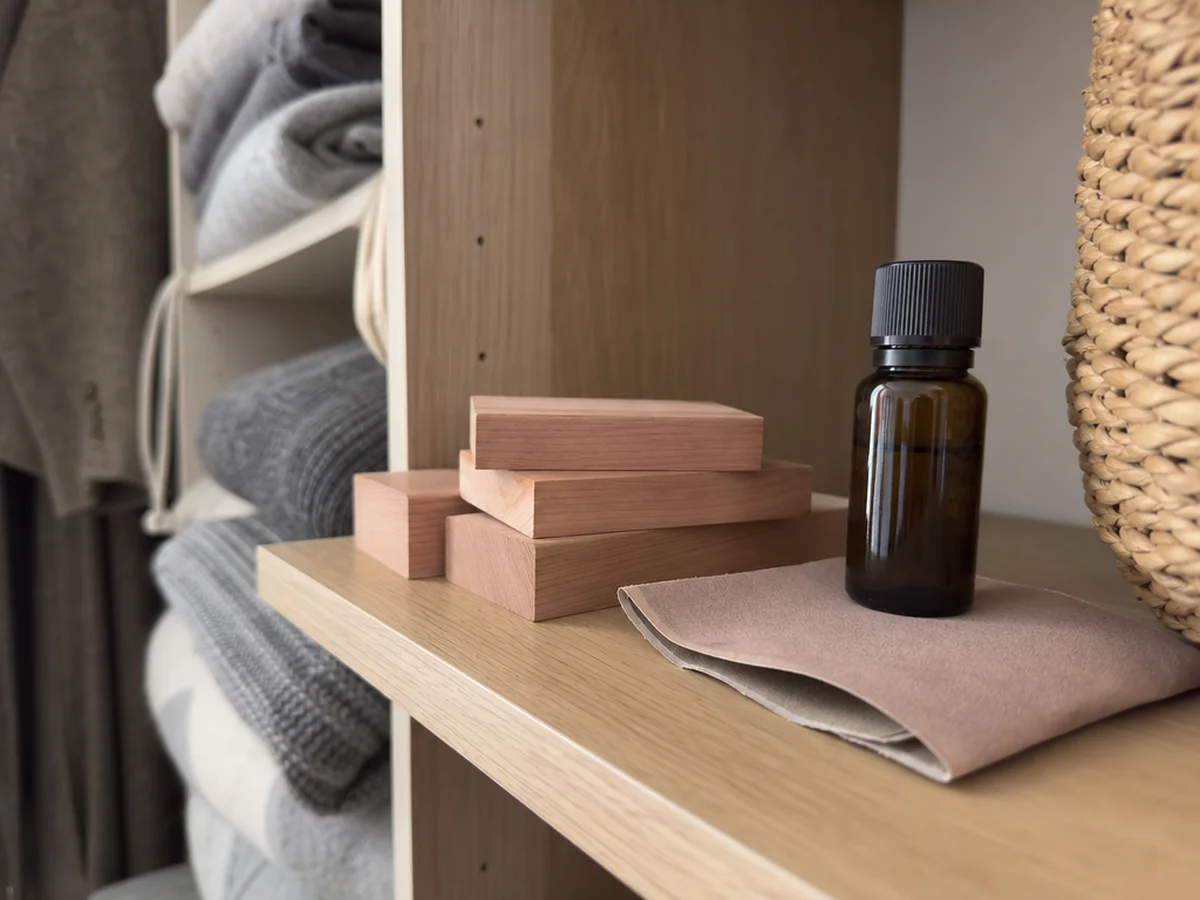
- A 50 g block: five drops is about 0.24 g, roughly 0.5% of the block's weight.
- A 40 g sachet of dry filler: four drops is about 0.5%, and eight drops about 1%.
There is no published standard for how strongly a sachet should be scented, so those are simply easy-to-calculate starting points. Begin low and add two drops at a time; cedar is a persistent scent and more is not automatically better.
Refreshing a block
- Take the block out of the closet. If the surface has gone grey and smooth, sand it lightly to expose fresh wood; the cedar chest article explains why.
- Lay it on a plate or tray, not on furniture, and spread the drops across one face so they do not pool.
- Leave it uncovered somewhere cool, away from children and pets, until the surface looks dry, then return it to the closet.
- Wash your hands afterward. We advise washing after handling the neat Virginian oil and never applying it undiluted.
We do not sell blocks, hangers or sachet bags, so look in a hardware, closet-supply or craft shop. Check what a block is made of, too: a wood of unknown species smells and behaves differently from the juniper wood our Virginian oil comes from.
Filling a sachet
Use a tightly woven cotton or linen bag and an unscented dry filler such as cedar shavings sold for crafts, cotton or dried flowers. Put the filler in a clean jar, add the drops, close the lid and shake. Rest it for a day so you can judge the strength before it goes near your clothes. Keep neat oil off garments, and keep sachets away from silk and pale linens until you have seen how they sit after a few days. We know of no published test of cedarwood oil on fabric, so a trial in a corner is the sensible check.
Where a little cedar goes
Think about where you actually want to catch the smell. A drawer of sweaters, the shelf above the coats, the bottom of a shoe cabinet: put a block or sachet where you will breathe it in as you reach for something, not buried at the back. One sachet per drawer is plenty, and crowding the space does not help. Keep them out of reach of pets and small children.
Then give it a season. Cedar is a slow, steady scent, so open the door after a few weeks and notice how it greets you. When the smell turns faint, top up with two drops and wait a day. Writing the month on a sticky note inside the door helps you remember when you last refreshed it.
Scent is not storage protection
We sell a cosmetic oil, and we make no pest claim for it. If moths or carpet beetles are your worry, cleaning clothes before storage and sealing them in tight containers are the steps to rely on, and our moth article covers what the extension sources say. Let the cedar do what it does best, which is make the closet smell wonderful.
Freshness matters for the oil itself. The Tisserand Institute names oxygen, light and heat as the causes of oxidation, and a 2025 review links cedarwood skin reactions to oxidized oil. By reasoning from those two points, a thin film of oil on warm wood has plenty of air and heat, so an old, oily block is not something to rub against bare skin. Our storage article covers the bottle.
Pets, children and pregnancy
America's Poison Centers advise keeping essential oils "locked up, out of the sight and reach of children and pets"; the US Poison Help line is 1-800-222-1222. A dropped sachet is within reach of a dog or cat, so keep them in a closed closet or drawer, and read the cat article and the dog article before scenting a space they use. If you are pregnant, nursing or have a medical condition, check with your physician first.
If you would like to scent the room rather than the wardrobe, the linen mist tutorial covers a spray. For a closet, one block and one sachet, refreshed only when the scent fades, is plenty. Our cedarwood oils are in the shop, larger sizes are on our bulk page, and our guide to buying cedarwood essential oil in bulk covers what to check before ordering more.
Cedarwood Essential Oil
Cedarwood Essential Oil from our own shop, in sizes from 0.5 oz to bulk.
From $9.99
Shop Now →Sources & Further Reading
- ISO 4724:2004 - Oil of Cedarwood Virginian Quality Standard, iTeh Standards
- Oxidation and the Shelf Life of Essential Oils, Tisserand Institute
- Cedarwood essential oil (Cedrus spp.): a forgotten pharmacological resource with emerging therapeutic potential, Exploration of Drug Science, 2025
- Essential oils: Poisonous when misused, Poison Control