Cedarwood Massage Oil: Weigh It, Keep It Light
A good massage oil is almost entirely carrier: slippery, gentle and barely scented, with cedarwood adding a quiet, dry-woody note on top. That makes the recipe simple, and it means the two choices that matter are which carrier you pour and how much cedarwood you let into it.
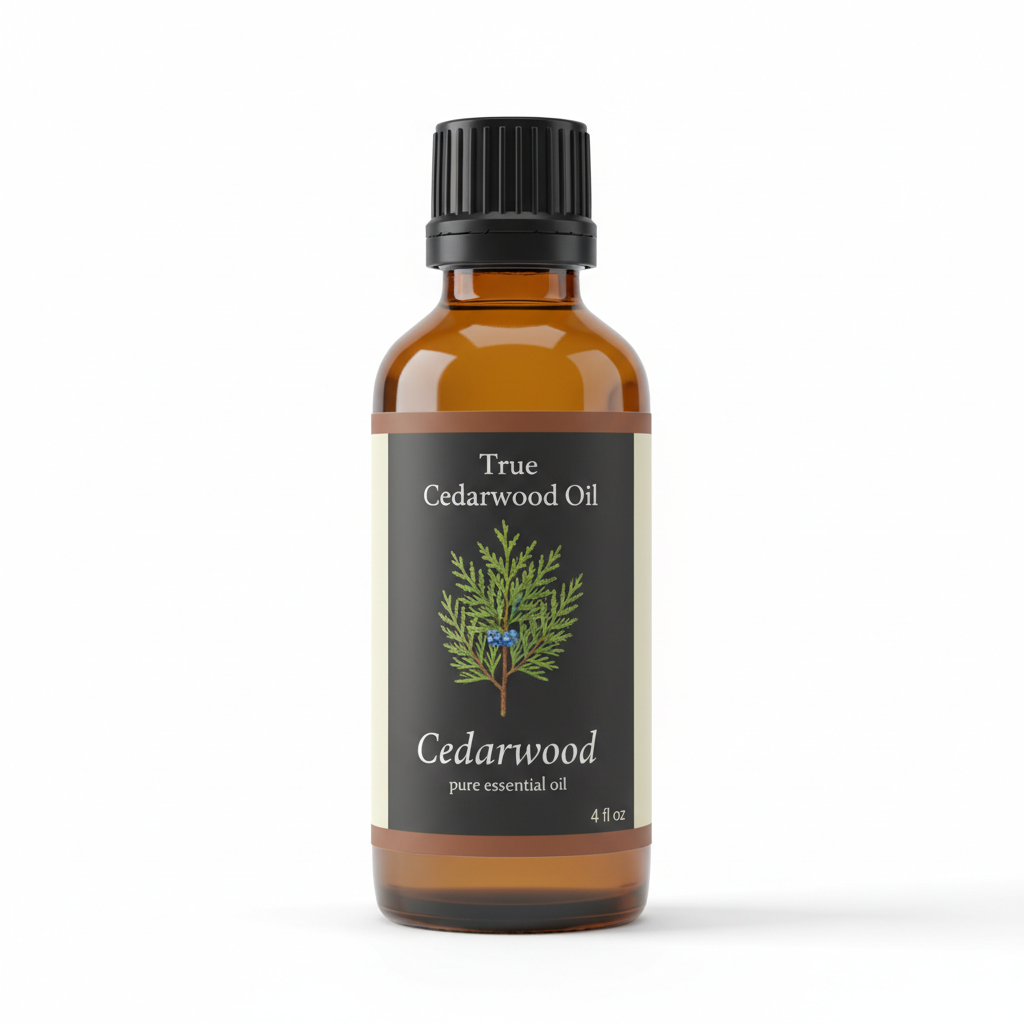
Cedarwood Essential Oil
Our own Cedarwood Essential Oil, in sizes from 0.5 oz to bulk.
From $9.99
Shop Now →Start with the percentage, then count drops
Our dilution guidance for all four of our cedarwood oils is 0.5% to 2% in a carrier, with a patch test first. For a body oil that gets spread over arms, legs and back, we start at the bottom of that range, 0.5% to 1%. The Tisserand Institute's general ranges put body oils and lotions at 1% to 3% for essential oils as a class, and facial products and deodorants lower, at 0.5% to 1.2%. Cedarwood oils have their own wrinkle: a 2025 review notes that regulators give only limited guidance on dermal maximums for them and links skin reactions to oils that are oxidized or used too strong. Starting low costs you very little scent and buys you a good margin.
The easiest way to hit a number is to weigh. One percent of 100 g is 1 g. For our Atlas oil, the density of the batch on our certificate of analysis was 0.934 at 20 C, so 1 g is about 1.07 ml, or roughly 21 drops at the usual 20 drops per ml. That conversion is our arithmetic, and droppers vary, so a scale reading to 0.01 g is better still. For the Himalayan, Virginian and Texas oils we publish no density, so weigh those.
| Share of a 100 g batch | Oil by weight | Atlas oil by volume | Roughly |
|---|---|---|---|
| 0.5% | 0.50 g | 0.54 ml | 11 drops |
| 1% | 1.00 g | 1.07 ml | 21 drops |
| 2% | 2.00 g | 2.14 ml | 43 drops |
Seen this way, the old "3 to 12 drops per ounce" shorthand hides something useful: a 100 g bottle at 2% takes four times the oil of the same bottle at 0.5%, and you use far more of a massage oil than of a roll-on. We suggest 0.5% for daily use or for the torso, and 1% as a ceiling for occasional use.
The carrier is the real recipe
At 99% of the bottle, the carrier is what your skin actually meets. We do not sell carrier oils, so you will find them at a cosmetic-supply shop, a pharmacy or a grocery. Three things are worth checking before you buy.
- Allergies. Read the carrier's ingredient line and ask whoever receives the massage about nut, seed or other allergies. A food-label rule does not tell you how a carrier behaves on skin.
- Freshness. Oils go rancid, and the same review ties cedarwood reactions to oxidized oil. In one heating test (60 C for 60 days), jojoba oil stayed more stable than the olive oil and squalene it was compared with. That is a single lab comparison of three materials, so we treat it as a reason to consider jojoba for a bottle that lives in a warm bathroom, not as a ranking of every carrier.
- Quantity. Buy small. A fresh 100 g batch every few weeks beats a big bottle that sits.
Making a 100 g bottle
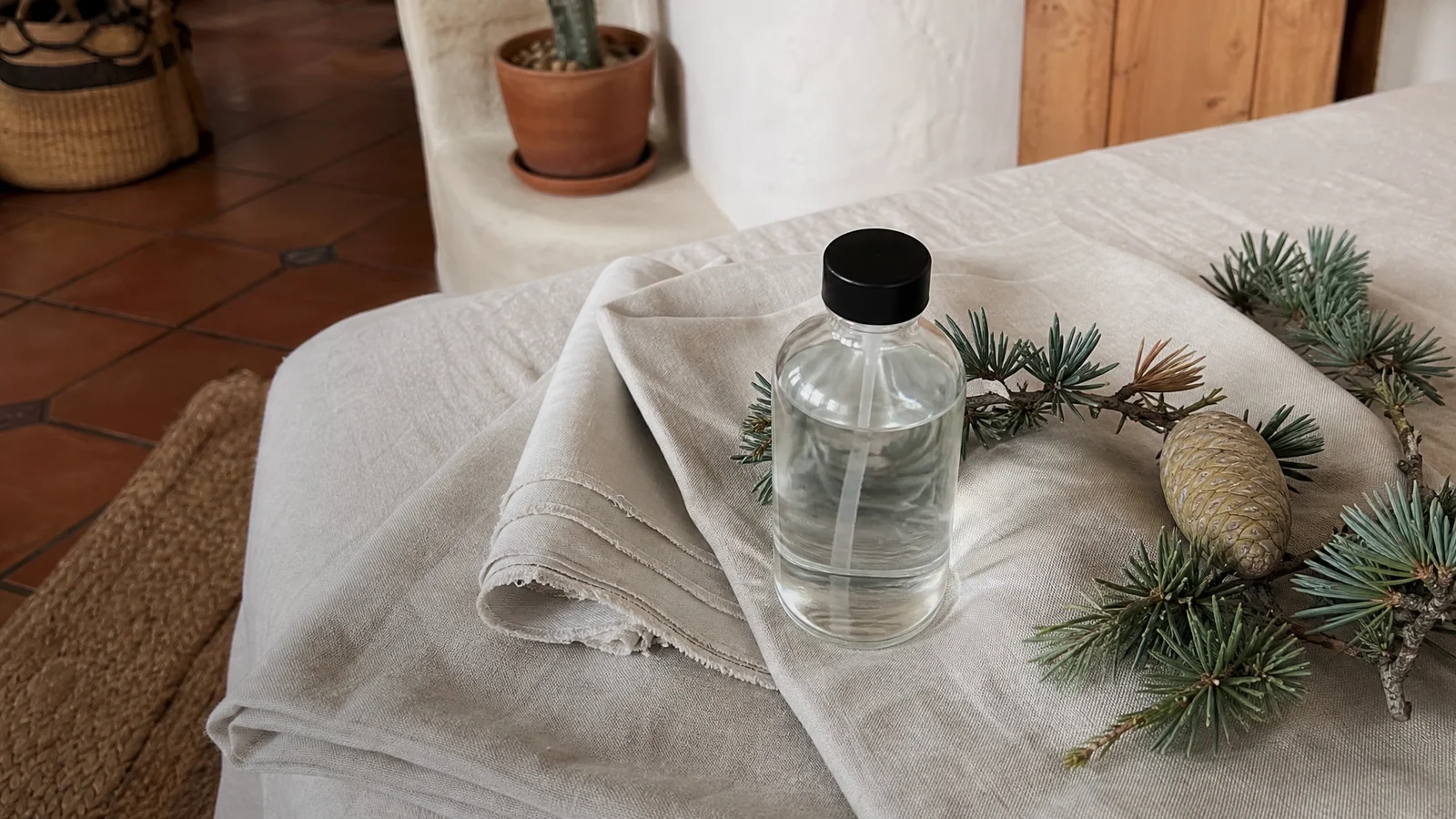
This formulation comes from the guidance and arithmetic above. Weigh 99 g of carrier into a clean, dry, dark glass bottle, add 1 g of cedarwood oil (or 0.5 g for the daily version), cap and shake. There is no heat step and nothing to emulsify. Label it with the date, the oil and the percentage, and keep it cool and out of the light.
Which of our oils? Scent decides. We describe the Atlas as dry, woody and warmly sweet with a balsamic depth, the Himalayan as warm, sweet and softly resinous, the Virginian as dry and sharp like fresh pencil shavings, and the Texas as soft and smooth. The four are not interchangeable, so smell before you commit a whole bottle of carrier. The family guide lays out the differences, and the dilution guide covers patch testing.
Small touches that help
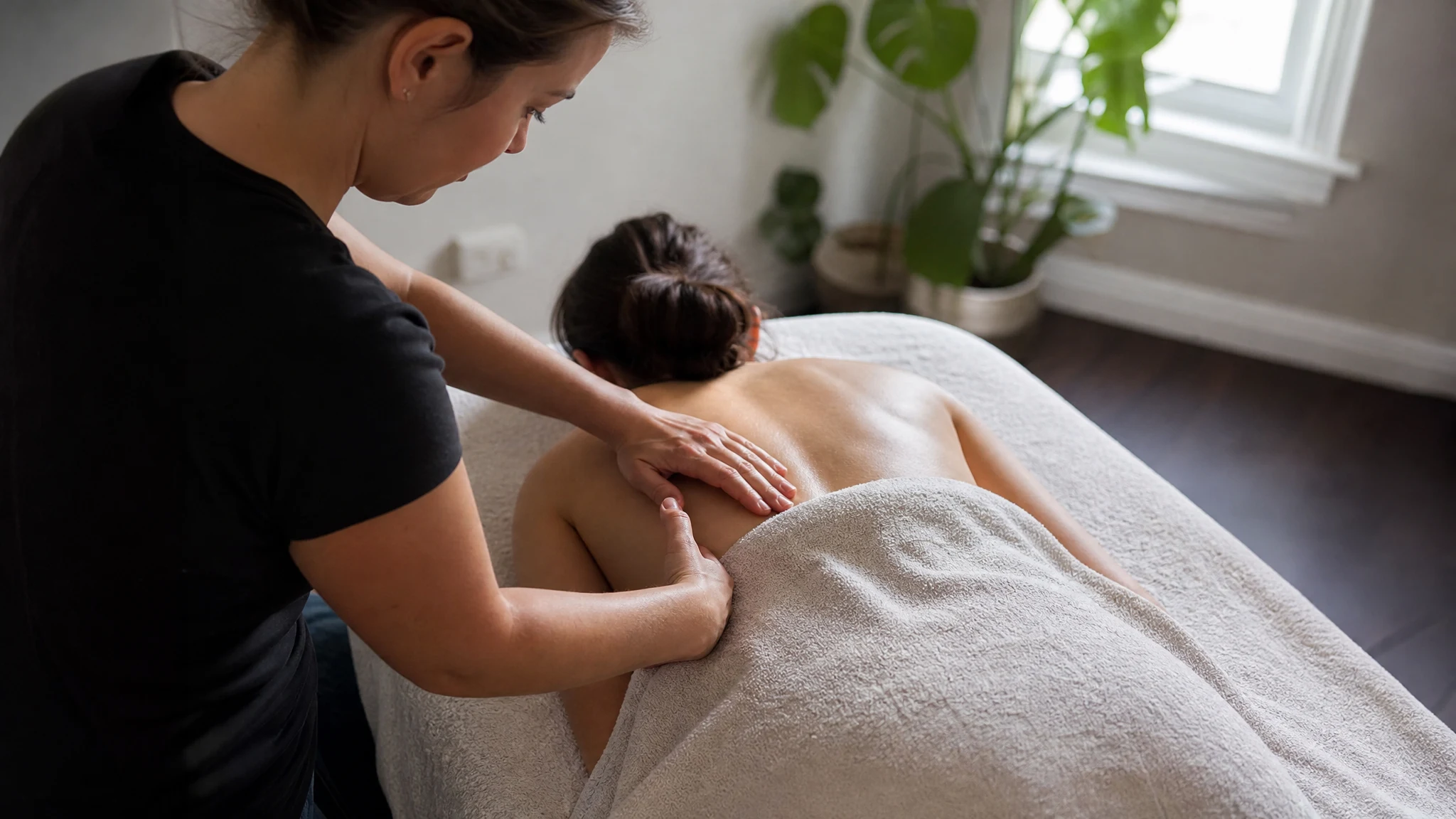
Set up before you pour. Warm your hands, lay a towel under the person receiving the massage so sheets stay clean, and use a small amount at a time, about a teaspoon in your palm. Rub your hands together and smell them: the cedar should be a quiet, dry-woody whisper, not a shout. If it is louder than you like, you have learned something useful for the next batch.
Oil marks fabric, so keep an old towel for this job and wash it separately. A short, slow session with a lightly scented oil is far more pleasant than a rushed one with a strong scent.
When to leave it out
If you are pregnant, nursing or have a medical condition, check with your physician first, as our disclaimer says. Eczema or a history of fragrance allergy is a question for a dermatologist (our eczema article explains why). If you are giving the massage, tell the person what is in the bottle and stop at the first sign of itching or redness. Keep the oil away from eyes, children and pets, and never take it by mouth. Spilled oil makes tubs, tile and mats slippery, so wipe it up.
We make a scented oil, not a remedy. For sore muscles, pain or an injury, a licensed massage therapist, physiotherapist or physician is the person to ask, and NCCIH notes that essential oils are most often inhaled or applied in diluted form without settling whether they work for those uses. For the same style of recipe under the arms, see the deodorant balm, and for general skin questions the skin article.
A quiet, lightly scented bottle that you remake often is a better massage oil than a strong one, and it leaves the cedar as a pleasant surprise on the skin rather than the whole conversation.
Cedarwood Essential Oil
Cedarwood Essential Oil from our own shop, in sizes from 0.5 oz to bulk.
From $9.99
Shop Now →Sources & Further Reading
- Cedarwood essential oil (Cedrus spp.): a forgotten pharmacological resource with emerging therapeutic potential, Exploration of Drug Science, 2025
- Dilution for essential oils, Tisserand Institute
- Oxidative Stability and Antioxidant Activity of Crude Jojoba Oil, BPB Reports, 2022
- Aromatherapy, NCCIH