Cedarwood Linen Mist: With Water or Without?
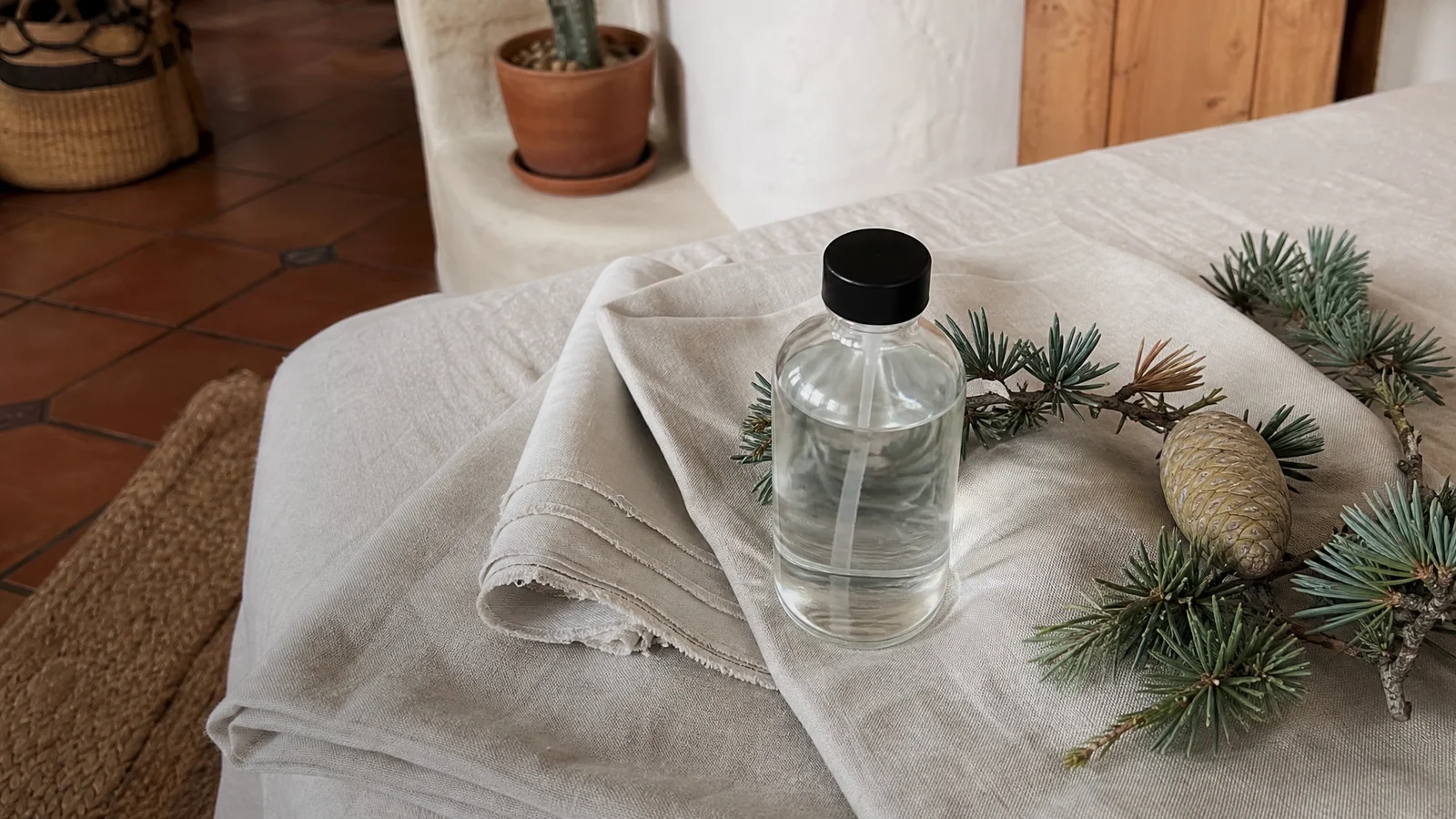
A cedarwood linen mist is one of those small pleasures: a couple of spritzes on a throw or a pillowcase and the room smells like a cabin in the woods. It is easy to make, and it goes best when you decide early whether you want water in it at all.
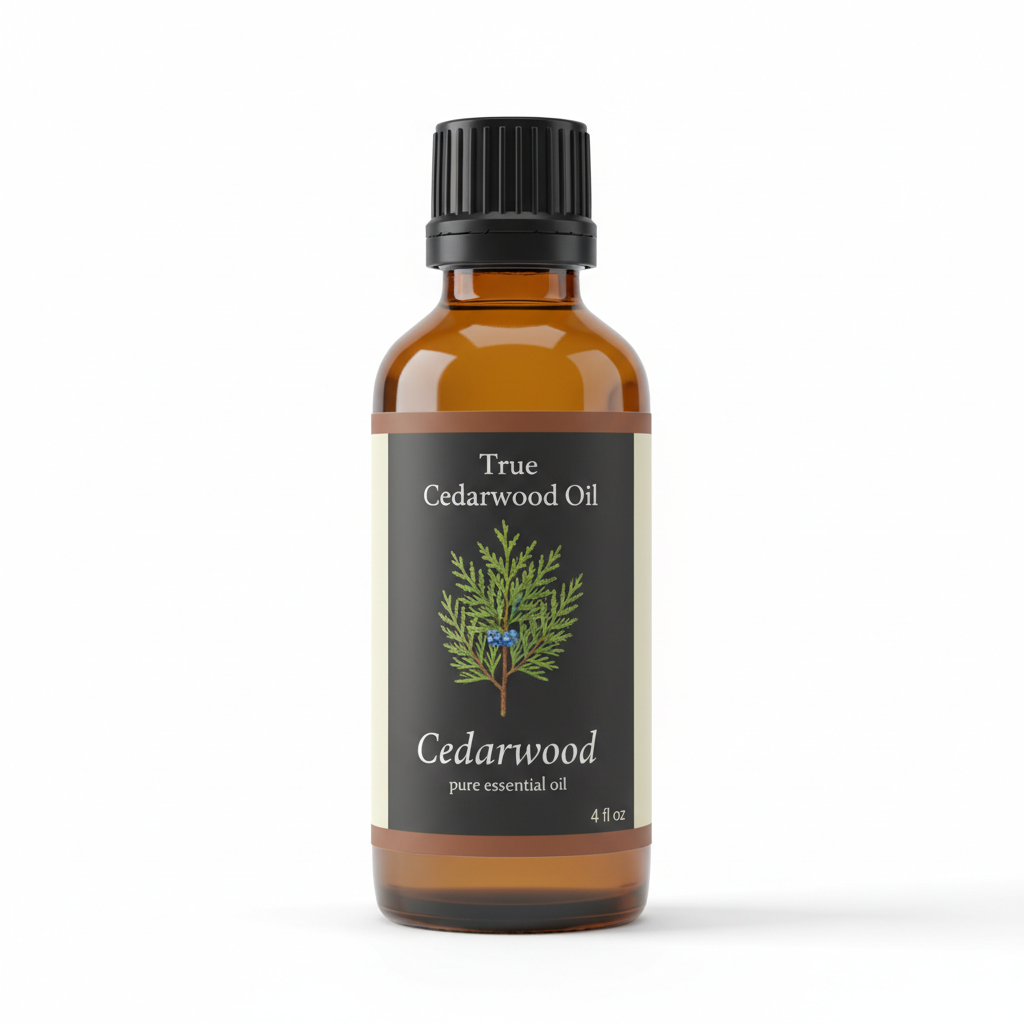
Cedarwood Essential Oil
Our own Cedarwood Essential Oil, in sizes from 0.5 oz to bulk.
From $9.99
Shop Now →Do you need water?
For a drawer, a coat cupboard or a wool scarf, a water-free method is simpler and nothing can spoil: a few drops of oil on an absorbent, unscented material in a closed container, as in our closet block and sachet article. A water-based mist earns its place when you want to cover a bigger surface quickly, like a sofa throw or a room.
Water brings one thing to plan for. A 2024 study of skin and body care products from one city found 26 of 32 samples contaminated with bacteria and fungi, and the authors blamed ineffective preservative systems; they note that products containing water are the ones at risk. That study looked at cosmetics, not room sprays, but the lesson carries over by reasoning: make a small batch you will finish quickly, discard it at any cloudiness or off smell, or use a preservative system from a cosmetic-supply shop according to its maker's directions. We do not sell a preservative and cannot give a rate for one.
How much oil
We sell the oil neat, so the dilution is your arithmetic. For our Atlas oil, the batch on our certificate of analysis had a density of 0.934 at 20 C, so 1 ml weighs about 0.934 g. We publish no density for the other three oils, so weigh those. At about 20 drops per ml (droppers vary), here is 100 g of finished mist:
| Oil share of mist | Oil needed in 100 g | Roughly |
|---|---|---|
| 0.25% | 0.25 g (0.27 ml) | 5 drops |
| 0.5% | 0.5 g (0.54 ml) | 11 drops |
| 1% | 1 g (1.07 ml) | 21 drops |
| 2% | 2 g (2.14 ml) | 43 drops |
A common hobby recipe of 30 drops in a 120 ml bottle works out to roughly 1.25% by volume, above the 0.5% row. Our dilution guidance for skin is 0.5% to 2% in a carrier, and a 2025 review of cedarwood oil mentions 2% as a ceiling for leave-on products while noting that regulators offer limited guidance. A 13-week rodent study with Virginia cedarwood oil found skin lesions at levels that overlap with cosmetic use. Because a mist reaches pillowcases and the air near your face, and is sprayed repeatedly, we would begin at 0.25% to 0.5% and not go higher without a reason and a professional's advice.
Getting oil to sit in water
Oil dropped into water floats, and then lands on fabric in concentrated droplets. That is why recipes add a solubilizer or alcohol, and why we say to follow your supplier's data sheet for the amount. At 0.5% the oil is just half a gram in 100 g, so use a scale that reads to a tenth of a gram, and shake before every spray. If the mist leaves oily spots, the oil is not dispersed and the real strength is higher than the label says.
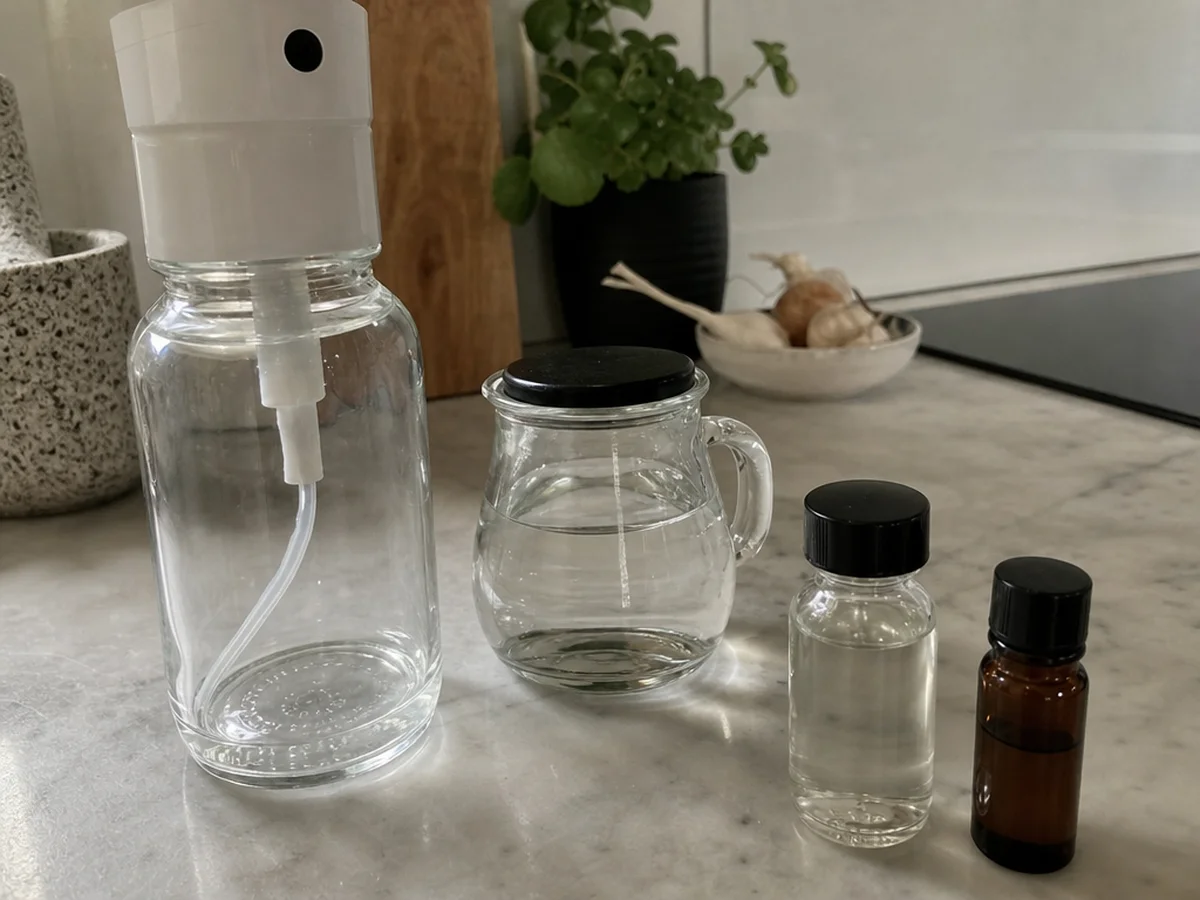
A 100 g formulation
Here is a template built from that arithmetic, to check against your supplier's directions.
- Cedarwood oil: 0.5 g (about 11 drops of Atlas; weigh the other three).
- Dispersant and preservative: the amounts your supplier's instructions give for that oil weight.
- Water: distilled, to bring the total to 100 g, in a clean glass or PET spray bottle.
Blend the oil into the dispersant, add the water, shake, and label with the date and the oil's share. Spray a hidden patch of fabric first and let it dry; a hidden patch is a cheaper lesson than a marked cushion. The dispersant, preservative and bottle all come from a craft or cosmetic-supply shop.
Choosing an oil
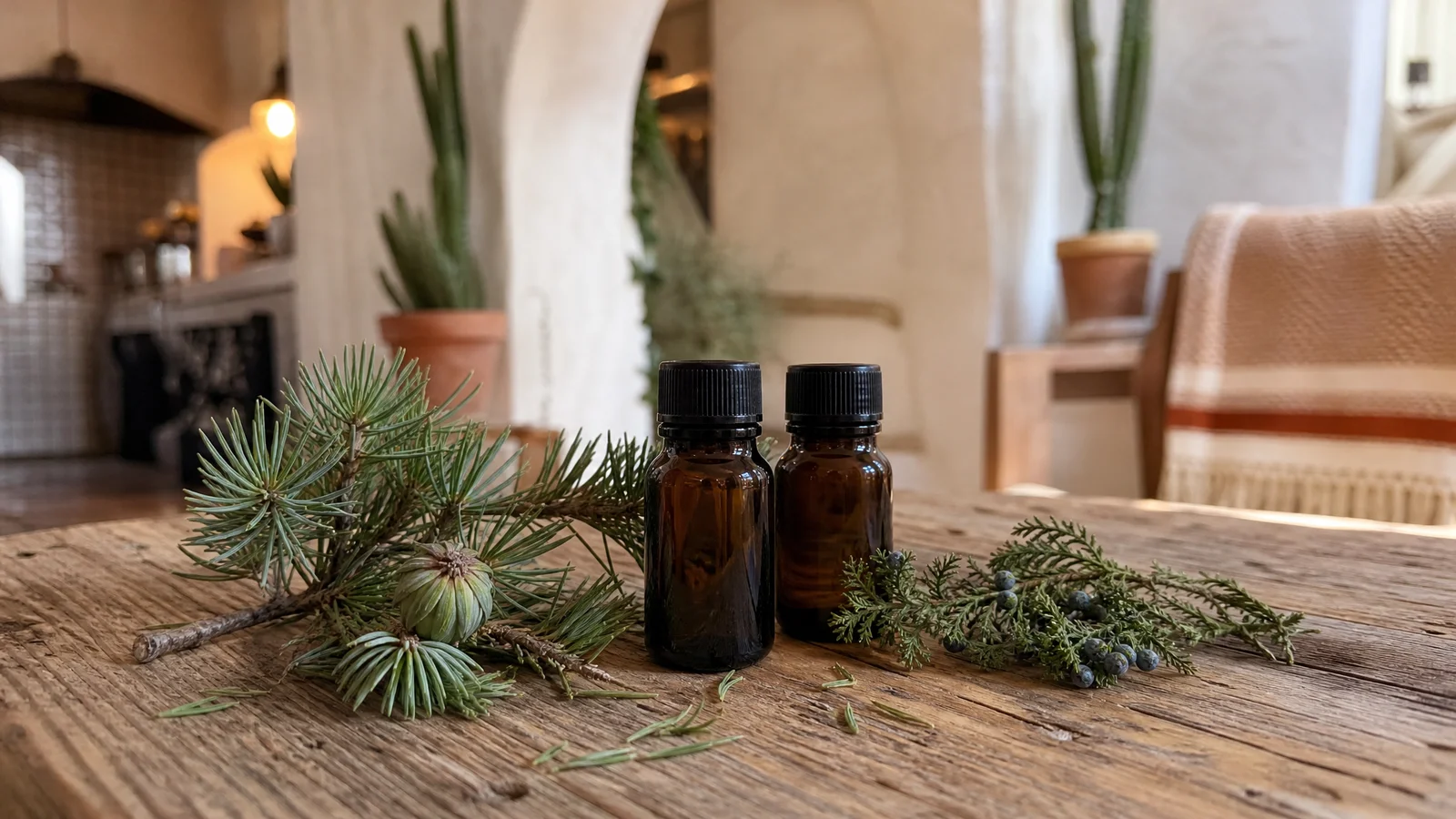
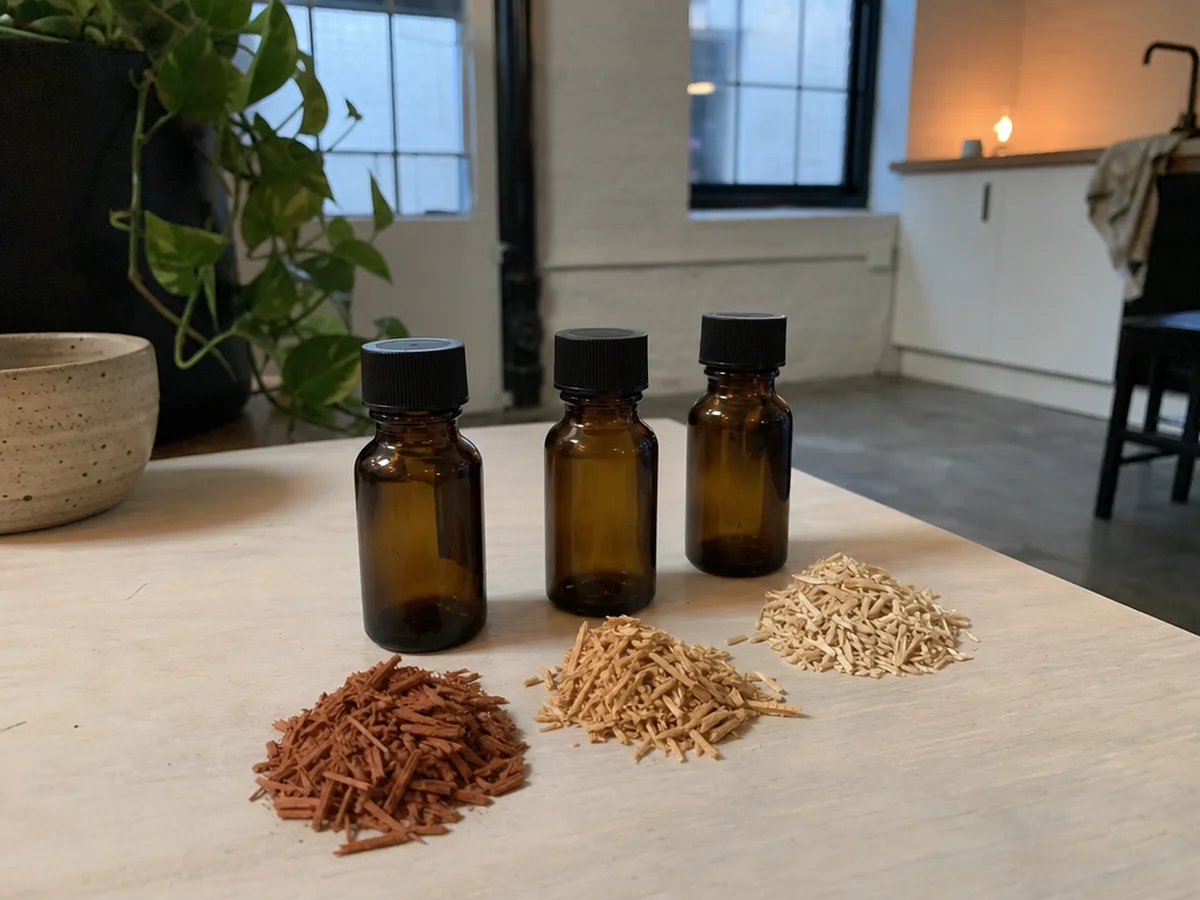
We describe the Virginian as dry, sharp and like fresh pencil shavings, the cedar of closet drawers and chests. The Atlas is dry, woody and warmly sweet, the Himalayan warm and softly resinous, the Texas soft and smooth. The Atlas and Himalayan are cedars of the genus Cedrus, and the Virginian and Texas are junipers, so the aroma families differ; our species buying guide explains more. EFSA, assessing a Texas cedarwood oil from Juniperus deppeana (the species that panel attributes to the name), judged it an irritant to skin and eyes and a skin and respiratory sensitizer, which is one more reason to keep the dose small and the spray off the face.
We make no pest claim for our oils, so keep a "bug-repelling" label off the bottle; our bug spray article explains the thinking.
Using it on fabric
Hold the bottle about a foot from the fabric and mist lightly, once or twice, instead of soaking it. Good places to try are a sofa throw, a cushion cover or the inside of a closet door. Let it dry fully before the cloth touches skin, then step away and notice the scent an hour later, when the first burst has faded into something softer. If it is stronger than you like, mist less next time or use a smaller share of oil.
Storage, children and pets
Poison centers advise keeping essential oils, and products containing them, locked up and out of the sight and reach of children and pets; the US Poison Help number is 1-800-222-1222. A spray bottle is easier for a child to open than a sealed oil bottle, so treat it the same. Do not spray on or near an animal, and read the cat article before scenting a room where a cat lives.
If measuring and water management sound like more than you want, a few drops on a cotton pad in a drawer gives you the same woody smell with none of it.
Cedarwood Essential Oil
Cedarwood Essential Oil from our own shop, in sizes from 0.5 oz to bulk.
From $9.99
Shop Now →Sources & Further Reading
- Microbiological Quality Assessment of Skin and Body care Cosmetics by using Challenge test, Saudi Journal of Biological Sciences, 2024
- Cedarwood essential oil (Cedrus spp.): a forgotten pharmacological resource with emerging therapeutic potential, Exploration of Drug Science, 2025
- Dose-response assessment of the dermal toxicity of Virginia cedarwood oil in F344/N rats and B6C3F1/N mice., Food and Chemical Toxicology, 2016
- Safety and efficacy of a feed additive consisting of an essential oil obtained from the wood of Juniperus deppeana Steud. (cedarwood Texas oil) for use in all animal species (FEFANA asbl), EFSA Journal, 2024
- Essential oils: Poisonous when misused, Poison Control