How to Refresh a Cedar Chest With Cedarwood Oil
Open an old cedar chest and the smell comes up to meet you, warm and dry and a bit like a pencil case. After a few years that scent fades, and many people wonder whether a few drops of cedarwood oil can bring it back. On bare cedar the answer is yes, as a scent top-up. The wood and its finish decide how, and a safe way of handling the rags matters too.

Cedarwood Essential Oil
Our own Cedarwood Essential Oil, in sizes from 0.5 oz to bulk.
From $9.99
Shop Now →Where the scent actually lives
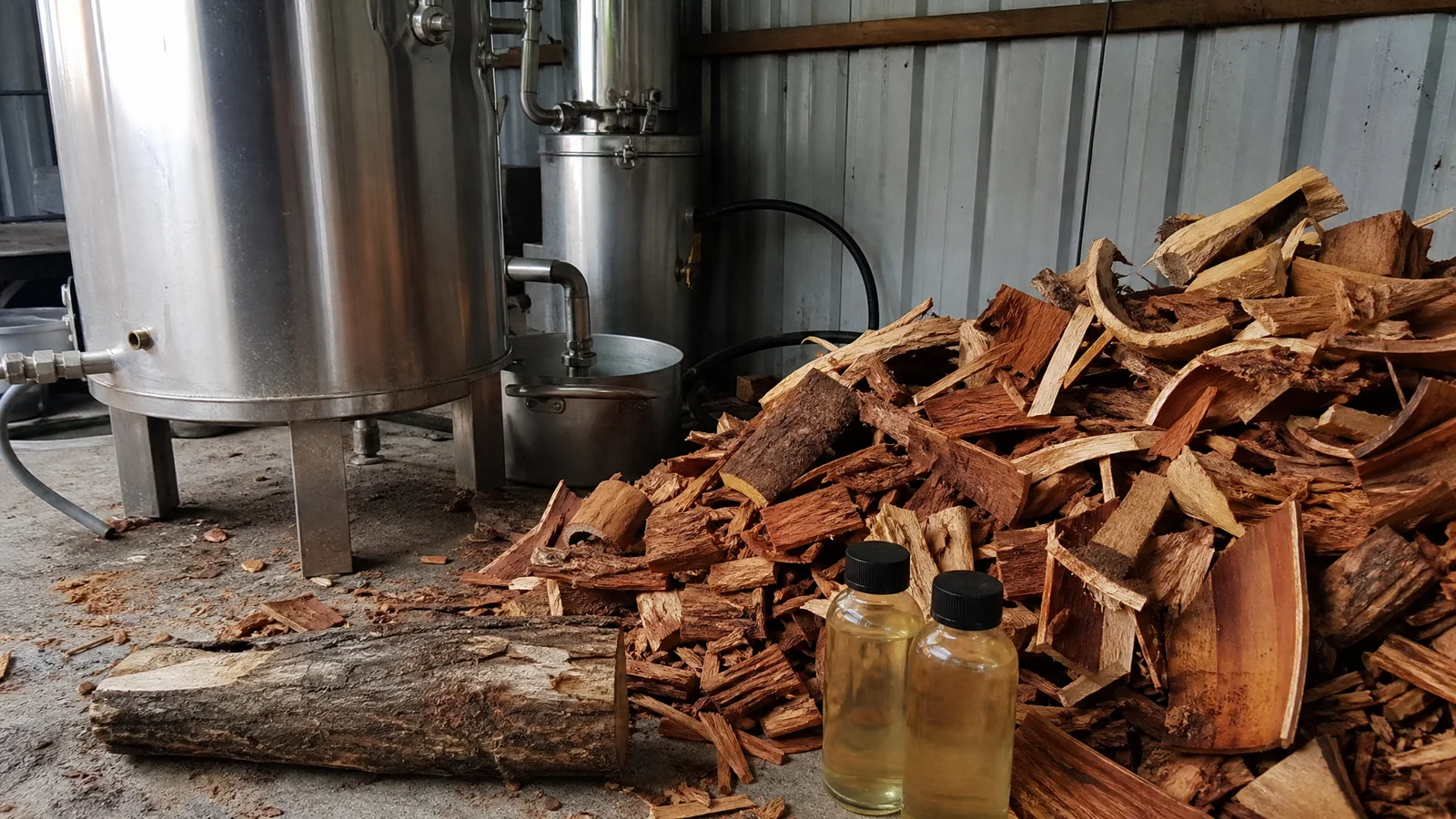
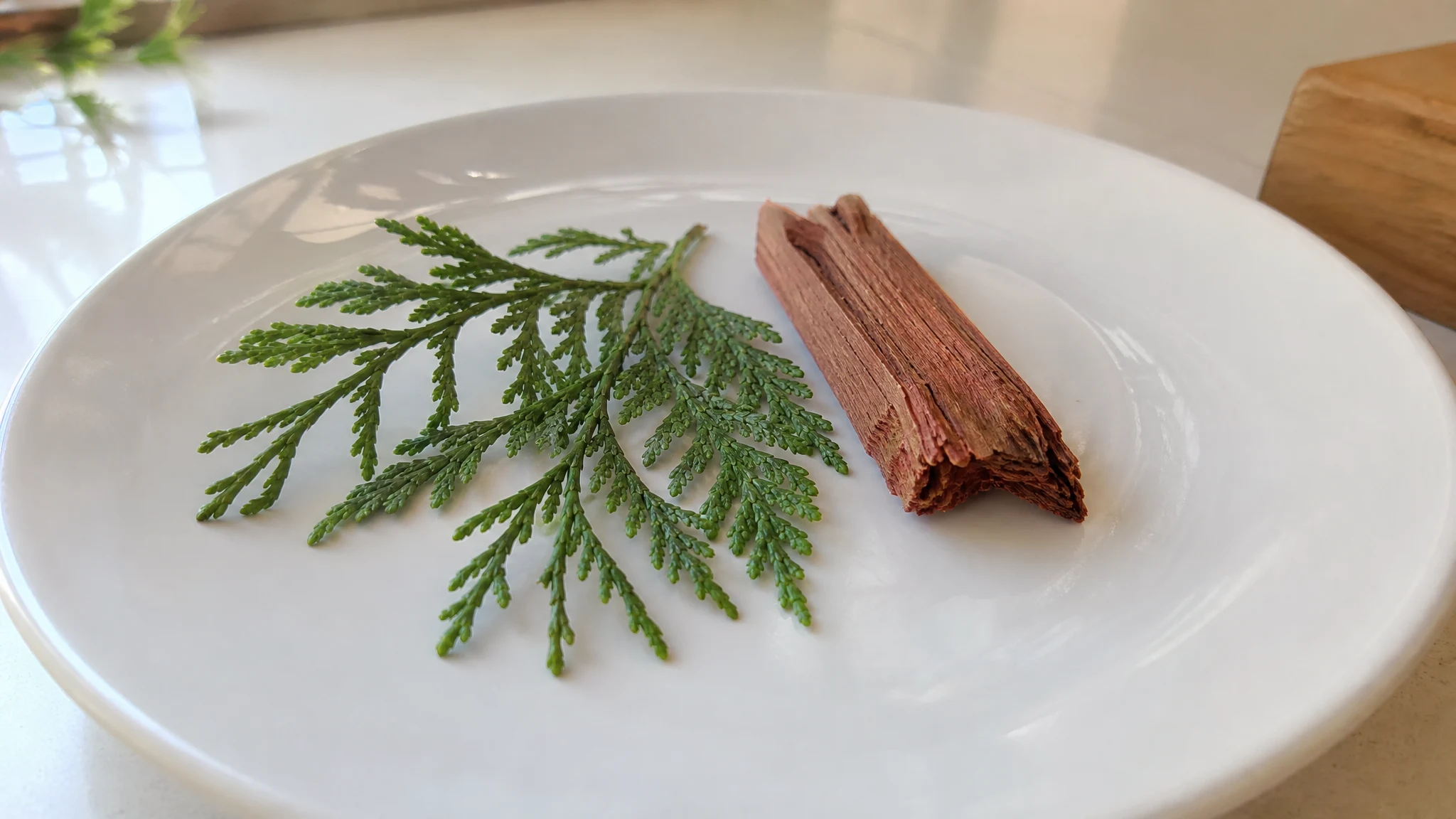
The USDA Forest Service's Fire Effects Information System notes that the aromatic heartwood of eastern redcedar (Juniperus virginiana) is commonly used for chests and closet lining, and that heartwood holds approximately 10 times the oil extractives of sapwood (Species: Juniperus virginiana (USDA Forest Service, Fire Effects Information System)). That is a useful clue: the rich red-brown boards smell strongest, and a piece with a lot of pale sapwood showing will always be milder, whatever you do to it.
Bare or sealed?
Try a drop of water on a hidden spot, such as the underside of a lid. On bare wood it soaks in and darkens, and on varnish or lacquer it beads. Aromatic cedar made for chests and closets is normally sold bare, so oil can reach the grain. On a sealed surface, a film sits between wood and air, and our reasoning is that oil dropped on top will have nowhere to go. We would not use a finished piece as the test subject. If you want cedar scent from a finished chest, adding it elsewhere, such as a sachet or a loose cedar block from a hardware store, is the easier path. Our closet refresh article has ideas.
Sand lightly, then top up
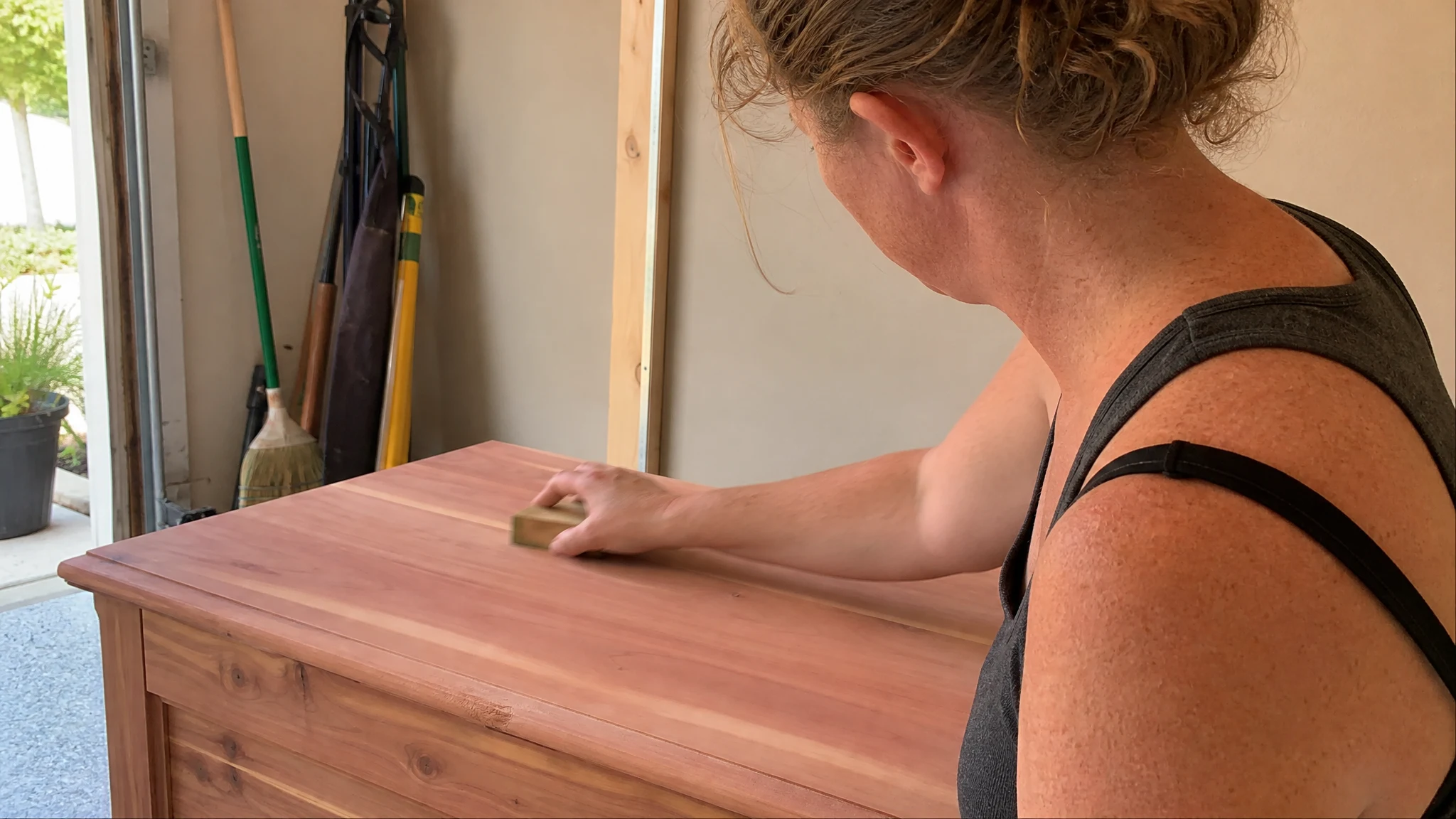
Woodworkers often suggest a light sanding to bring cedar's scent back, and it makes sense: if the oil is held inside the wood, the surface layer is the part that has aired out. Use fine sandpaper, wear a dust mask and sand a hidden patch first. Smell the result before you reach for the bottle.
No authority we know of publishes a dose for refreshing wood with cedarwood oil, so here is our own small suggestion, worked as arithmetic. Take a chest measuring 100 by 50 by 45 cm inside. The floor, the walls and the underside of the lid add up to roughly 2.35 square metres, which is about 26 patches of 30 by 30 cm. At 4 drops per patch, that is around 104 drops, or 5 ml at 20 drops per ml (droppers vary, so weigh if you can). Begin with a single patch and wait a day before doing more. Wipe the oil on with a cotton cloth rather than spraying it, and keep fabric out of the chest until the surface no longer feels wet, since oil on raw wood can mark cloth.
Choosing the oil
Our Virginian (Juniperus virginiana) is the botanical match for eastern redcedar. We describe it as dry, sharp and classically like fresh pencil shavings, the clean cedar of closet drawers and chests. Only your lumber seller can tell you the species of your own chest. The other three work as scent choices rather than matches: Atlas is dry, woody and warmly sweet, Himalayan is softer and resinous, and Texas sits between Virginian and Himalayan. The four are not interchangeable in a recipe, so smaller bottles make a nice way to experiment. If you are unsure how cedarwood oil differs from a cedar fragrance oil, our comparison article sorts that out.
Let it rest and take a sniff
After you top up, resist the urge to shut the lid right away. Leave it open for a day in a room with a little air moving, then close it and come back in a few days. Fresh oil smells loud at first, a bit sharper than you remember, and then it settles into the dry, warm smell you were after. That settling is the moment to judge whether you need another patch or whether you are already done.
It also helps to think of the chest as something you freshen once or twice a year, not every month. A small, patient touch-up keeps the chest smelling like a forest edge instead of like a bottle, and a little oil goes a long way on bare cedar.
The oily rag rule
If you also use a wood finish, treat rags with care. The National Park Service explains that rags soaked with oils, cooking oils included, can self-heat to the point of ignition, and recommends spreading soiled rags in a single layer on concrete, out of direct sunlight, or using an approved container (Fire Prevention 52: Spontaneous Combustion - Fact or Fiction? (U.S. National Park Service)). That page does not test cedarwood oil, so as a sensible habit we would give any cloth that has had oil on it the same treatment, laid flat outdoors until dry and never balled up in a bin.
Pieces to hand to someone else
An antique, a family heirloom or a veneered chest is best left to a furniture conservator. The finish maker's data sheet is the place to ask about a particular varnish. Keep the bottle away from children and pets, which our guidance says for all four oils, and see our cat guide before you leave an open chest anywhere a cat can climb in. Our oils are for external use. If the chest holds baby clothes or bedding, wait until the scent has settled, and if you are unsure, ask your paediatrician. Wondering about moths? Our moth article is the one to read.
Sand lightly, top up in small counted amounts, and leave the finished wood alone. The chest should smell like a forest edge again, and you can store the bottle as described in our storage article.
Cedarwood Essential Oil
Cedarwood Essential Oil from our own shop, in sizes from 0.5 oz to bulk.
From $9.99
Shop Now →