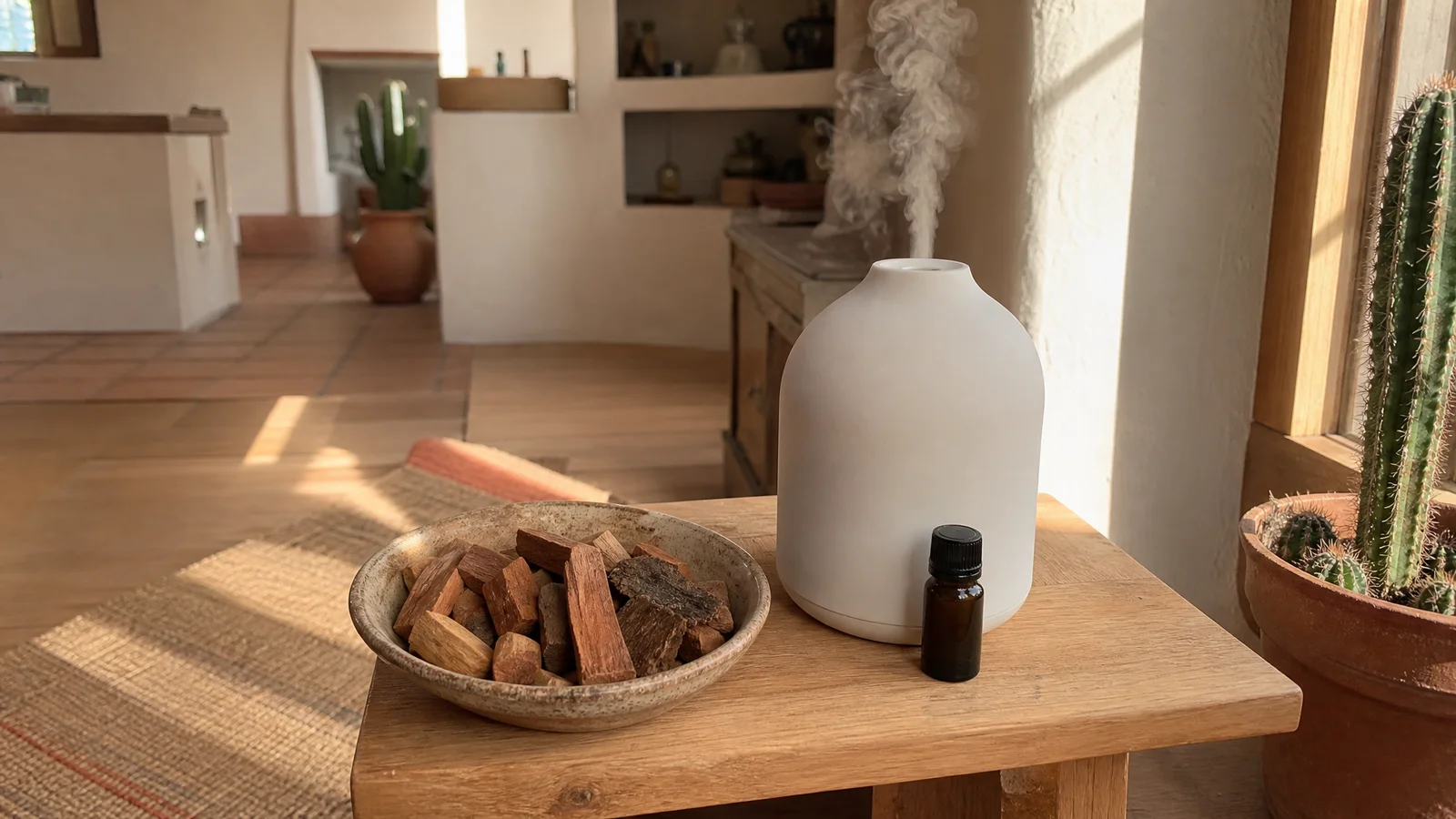
Cedarwood in a Diffuser: Tips for a Happy Room
Cedarwood is one of the most inviting scents to run in a room: dry, woody and a little sweet, like a cabin on a cool morning. A diffuser puts that scent into the whole room at once, and that is also what makes the setup worth a few minutes of thought, since you cannot patch test the air. Here is how we would approach it, from what the published diffuser research shows and what we know about our four oils.

Cedarwood Essential Oil
Our own Cedarwood Essential Oil, in sizes from 0.5 oz to bulk.
From $9.99
Shop Now →What the diffuser studies measured
Two recent papers looked at what diffusers release into indoor air. Neither used cedarwood, so we read them as patterns, not as cedarwood results. In a simulated household, tea tree oil run in an ultrasonic diffuser, the kind that vibrates water into a fine mist, kept terpene levels below the applicable exposure limits. A heat diffuser running the same oil produced terpene levels roughly ten times higher, with five compounds above long-term exposure guidance values (Volatile organic compound and particle emissions from the use of tea tree oil in essential oil diffusers). A second study ran a commercial diffuser in an office for two weeks and found emissions were highest right after it was switched on, with concentrations of pinene and limonene climbing within the first two hours (Time-dependent emission characteristics of terpenes from an essential oil diffuser and indoor exposure assessment using a wearable passive sampler).
Cedarwood oils are built from different molecules than tea tree. We cover how the compounds differ between our oils in the family guide. What plausibly carries over is the shape of the finding, and that is our reasoning rather than a measured cedarwood result: gentler heat means a lighter load on the air, and the first stretch after starting is the strongest.
Four easy habits
- Prefer a cool, ultrasonic unit over one that heats the oil.
- Follow the diffuser's own manual for how much oil to add and how long to run. Those instructions are written for that machine's water volume and output, and we do not know of a cedarwood-specific schedule from an authority, so we would rather not invent one. Short, intermittent sessions follow naturally from the emission pattern above.
- Air the room. Open a window now and then and leave the door open, so the scent stays pleasant instead of building up.
- Think about who shares the air. That decides more than anything else.
Who shares the room
An EFSA panel that assessed a Texas cedarwood oil as an animal feed additive classed it as a skin and respiratory sensitiser and an irritant to skin and eyes (Safety and efficacy of a feed additive consisting of an essential oil obtained from the wood of Juniperus deppeana Steud. (cedarwood Texas oil) for use in all animal species (FEFANA asbl)). That opinion concerned one oil and workers handling it, so we draw one gentle conclusion: someone who reacts to fragrances or has asthma should check with a physician or allergist before diffusing any essential oil.
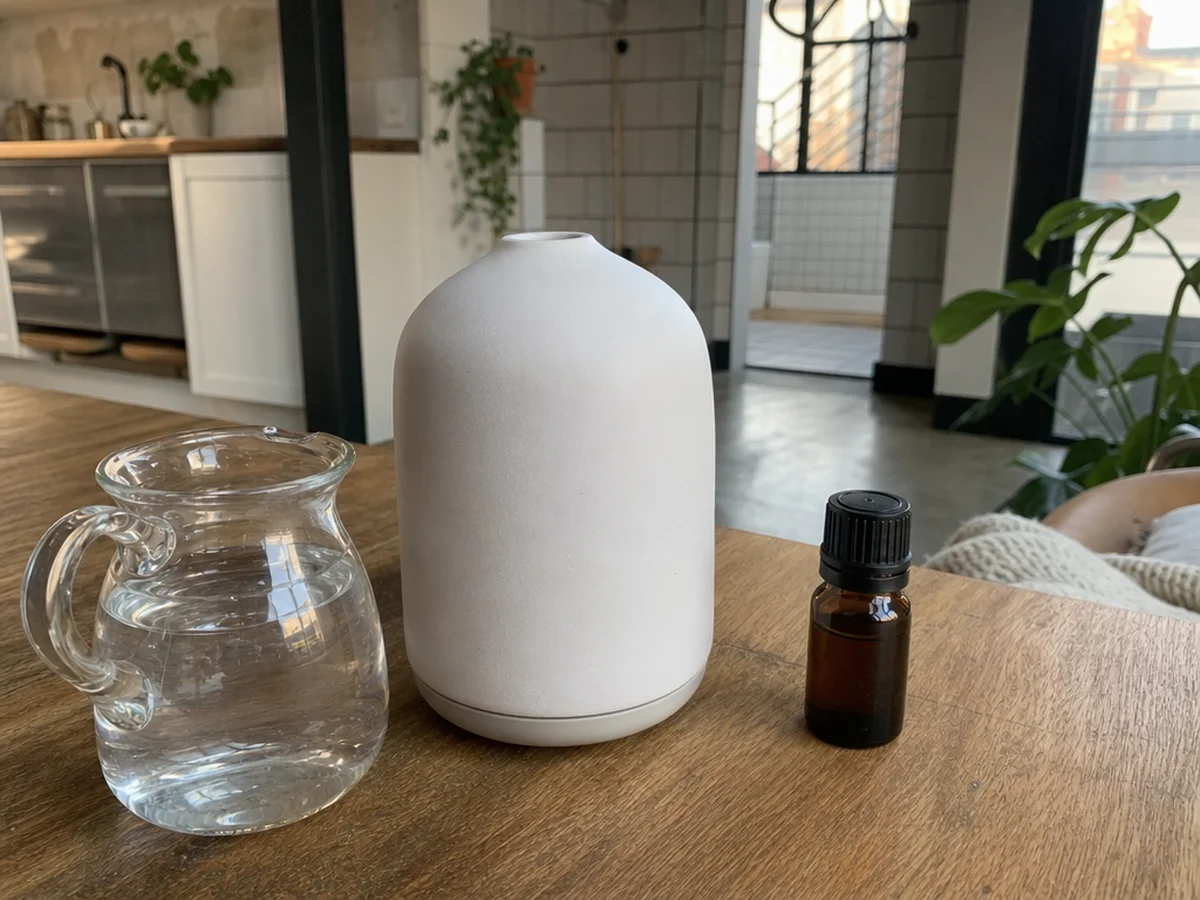
Pets deserve particular thought. Poison specialists name cedar among oils that have caused poisoning and say cats and birds are at the greatest risk (Essential Oils | Pet Poison Helpline). Our guides for cats and dogs go through the details, and a vet is the person to ask about birds and small pets. For children, America's Poison Centers advises keeping essential oils locked up and out of sight and reach of children and pets, and that includes the bottle and the reservoir as well as the mist (Essential oils: Poisonous when misused | Poison Control). Our children's note and our pregnancy note go further.
Setting the scene
Where you put the diffuser changes how the scent feels. A shelf across the room from your chair spreads it gently, while a machine on the side table right beside your face can feel heavy. Set it on a flat, water-safe surface, away from books and wooden furniture in case it drips. Then walk out and come back in: that first impression as you enter is your real test, because your nose gets used to a smell within minutes. If you can no longer smell it, resist adding more oil, and ask someone who has just walked in how it reads to them.
Choosing among our four for the room
We sell four cedarwood oils, and they smell quite different, which is the fun part of diffusing. We describe Atlas (Cedrus atlantica) as dry, woody and warmly sweet, with a balsamic depth that settles as a steady base note. Himalayan (Cedrus deodara) is warm, sweet and softly resinous, softer than the dry pencil-shaving edge of Virginian (Juniperus virginiana). Our Texas oil sits comfortably between Virginian and Himalayan, soft, smooth and gently sweet. If you want a gentle woody backdrop, Himalayan or Texas are the ones to look at first. For that classic closet-drawer scent, Virginian is the match. The four are not interchangeable in a recipe, so a small bottle is a sensible way to find your favourite.

All four blend well with bergamot, lavender, vetiver and sandalwood, which you will find, along with the diffuser itself, at a craft or supply shop. Skin dilution ratios belong to skin and do not apply to air, and we do not give a drop count for a diffuser. Your machine's manual is the best guide.
Cedar in a diffuser is a scent project, and a few simple habits keep it that way: a gentle unit, short sessions, open air and a quick thought for everyone in the house, including the ones with fur.
Cedarwood Essential Oil
Cedarwood Essential Oil from our own shop, in sizes from 0.5 oz to bulk.
From $9.99
Shop Now →Sources & Further Reading
- Volatile organic compound and particle emissions from the use of tea tree oil in essential oil diffusers (Zisook et al., J Occup Environ Hyg, 2025)
- Time-dependent emission characteristics of terpenes from an essential oil diffuser and indoor exposure assessment using a wearable passive sampler (Kim and Kwon, J Environ Sci Health A, 2026)
- Safety and efficacy of a feed additive consisting of an essential oil obtained from the wood of Juniperus deppeana Steud. (cedarwood Texas oil) for use in all animal species (FEFANA asbl) (EFSA, EFSA J, 2024)
- Essential Oils | Pet Poison Helpline
- Essential oils: Poisonous when misused | Poison Control