Cedarwood Candles: How Much Scent to Start With
A cedarwood candle is a lovely thing to make: dry, woody and a little sweet, like the first minute inside a cedar-lined cabin. It also rewards a light hand. The best way to get a good one is to start with less scent than you think you need, change one thing at a time and let the burn tell you what to do next.

Cedarwood Essential Oil
Our own Cedarwood Essential Oil, in sizes from 0.5 oz to bulk.
From $9.99
Shop Now →Read your wax's sheet first
Every wax has its own rules, and the maker's technical data sheet is the best guide you will find. As an example, one coconut-based container wax, EcoCoco ContainerBlend, is designed for fragrance at 5 to 12 percent and says it can take up to 12 percent of fragrance oils made for natural waxes. It suggests melting around 70 degrees C, pouring at about 60 degrees C, waiting 48 hours before a test burn and keeping wicks trimmed to a quarter inch. It also reminds candle makers that every combination of wax, fragrance and wick needs testing, because some fragrances can bleed or affect the surface and flame.
That sheet is written about fragrance oils designed for natural wax, not essential oils, so treat its ceiling as the most you could ever consider, not a target. Your own wax may give a different number entirely. If its sheet names no limit, that is a good reason to begin low.
The arithmetic for a 200 g pour
Fragrance load is normally quoted as a percentage of the wax weight, so confirm that on your sheet. For 200 g of wax, here is what each load means in grams and, using the density of 0.934 measured on the one Atlas batch our certificate of analysis covers, in millilitres. We publish no density for the other three oils, so weigh them rather than converting.
| Load | Oil by weight | Atlas by volume (one batch) |
|---|---|---|
| 3 percent | 6 g | about 6.4 ml |
| 5 percent | 10 g | about 10.7 ml |
| 8 percent | 16 g | about 17.1 ml |
| 12 percent | 24 g | about 25.7 ml |
At 12 percent, one candle would use most of an ounce (29.57 ml) of oil, which is a lot to spend before you know how your wax and wick behave. Our suggestion is to pour the same container at 3 percent, then at 5 percent, changing nothing else, and to stop climbing when the surface or flame says so. A gram scale beats counting drops, which vary from dropper to dropper.
Temperature and timing
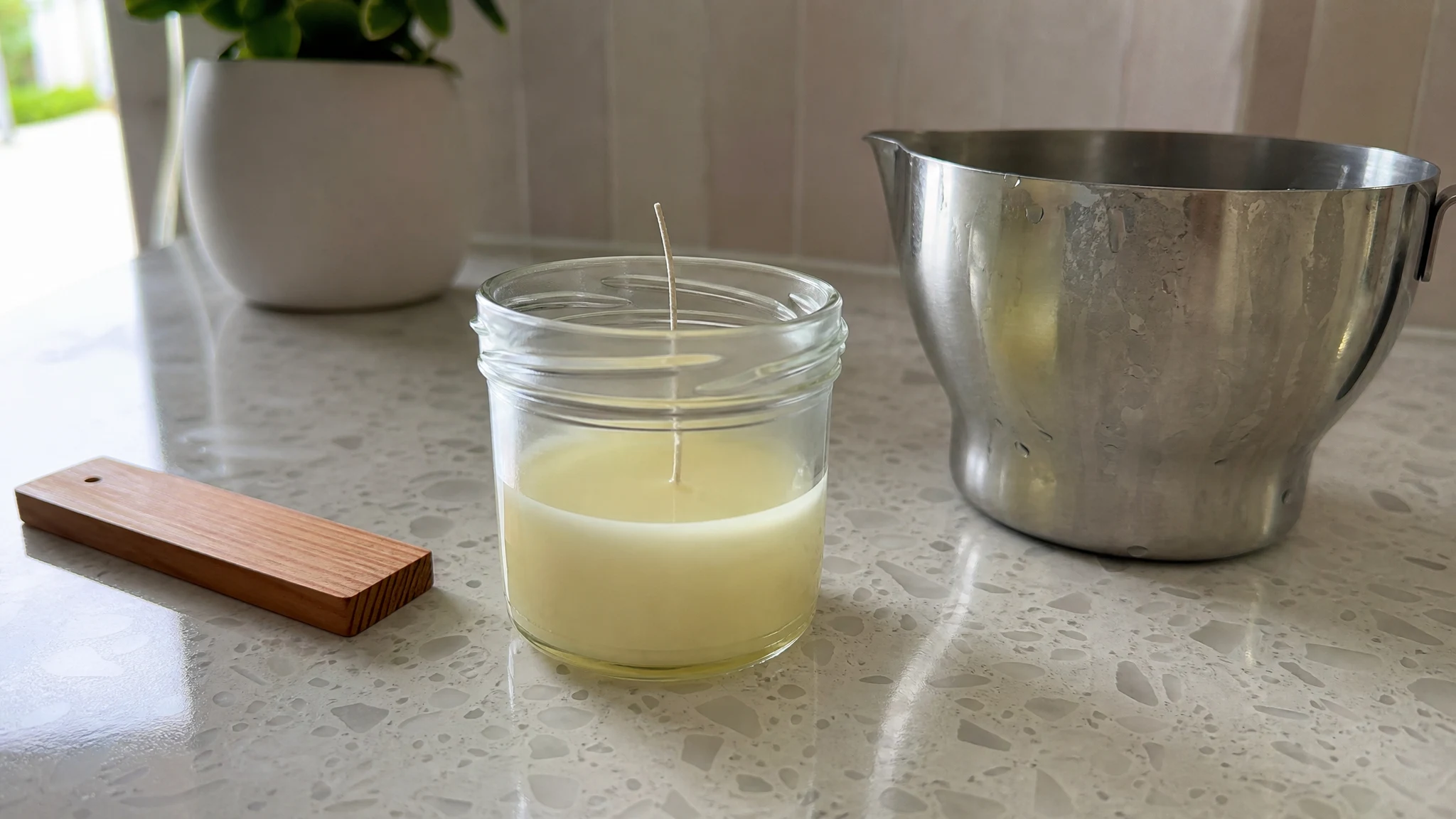
Using the sheet above as the model: melt the wax, let it cool to the pour temperature while stirring, then add the oil and mix well just before pouring. Adding it at the pour temperature rather than at the hottest point of the melt is the sequence the sheet describes, and it is also the gentler way to treat any aromatic oil. A digital probe thermometer makes this simple. Let the candle rest the full 48 hours before the first test burn.
Throw is mostly about the wick
When a candle smells faint, people blame the oil. The wax maker above puts the weight elsewhere: burn pool size and depth greatly affect fragrance throw, so correct wicking is paramount. Too large a wick can soot and gutter; too small a wick tunnels. So if your first cedarwood candle is quiet, try a different wick before you add more oil.
Which cedarwood for a candle
Choose by scent. Atlas is dry, woody and warmly sweet with a balsamic depth. The Himalayan is softer and more resinous. The Virginian is the sharp, pencil-shaving cedar, and the Texas sits between the Virginian and Himalayan. A candle is also a good place to blend: our woody partners guide suggests companions such as bergamot and vetiver, which you would buy from an aromatherapy or craft supplier. Wax, wicks, containers and thermometers also come from craft suppliers, as we sell only the oils. If you are choosing between a real essential oil and a ready-made cedar scent, our article on essential oil versus fragrance oil explains the difference.
Keep a candle notebook
The best habit a candle maker can build is a notebook. For every pour, write down the wax, the wick, the container, the oil share, the pour temperature and the day you poured. When you burn the candle, add a line about how it smelled, how the melted pool looked and how the flame behaved. A few weeks of notes will teach you more than any recipe, and you will quickly see which single change made the difference.
Smell the cold candle first
Before you light it, take off the lid and smell the cold wax. That is a good first check that you like the scent at all. A cold candle that smells faint is not a failure, because some of the scent only opens up as the wax warms, so give it a fair burn before you decide. Notice, too, how the smell changes between the first ten minutes and the first hour. Dry, woody oils like cedarwood often feel quiet at the start and fuller once the pool has spread to the edges.
Burn safety
The National Candle Association's basics are worth printing on a label card: trim the wick to a quarter inch before every burn, keep burning candles at least 12 inches from curtains, bedding, books and other combustibles, space candles at least 3 inches apart, and stop burning when about half an inch of wax remains. Keep the oil bottle and any candle where children and pets cannot reach them.
The same maker's mindset applies to other crafts, from the batch arithmetic in our soap guide to scenting a linen mist, and our bulk page covers larger quantities for makers who pour often.
Light, patient testing is what separates a candle you are proud of from one you made too fast. Take notes on every pour, and your best cedarwood candle will show itself.
Cedarwood Essential Oil
Cedarwood Essential Oil from our own shop, in sizes from 0.5 oz to bulk.
From $9.99
Shop Now →Sources & Further Reading
- EcoCoco. EcoCoco Technical Data Sheet (ContainerBlend, version 2.0).
- National Candle Association. Candle Safety Tips.