Cedarwood Oil in Soap: Lye Safety and Scent Rates
Cedarwood is one of the nicer scents to put in a bar of soap: dry, woody and long-lasting, the kind of note that still lingers on the soap dish a week later. Before the oil goes in, though, comes lye, and a good soap day starts with giving that step your full attention.
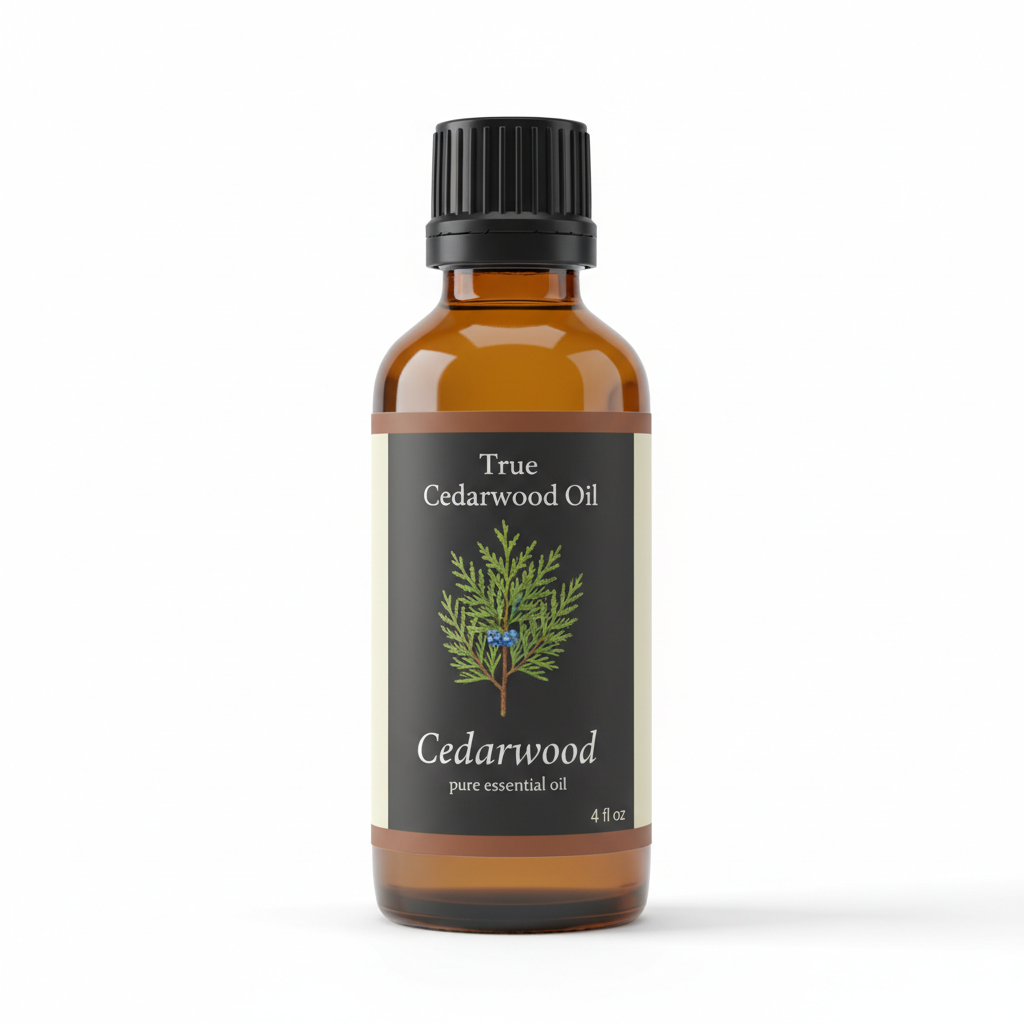
Cedarwood Essential Oil
Our own Cedarwood Essential Oil, in sizes from 0.5 oz to bulk.
From $9.99
Shop Now →Lye first, because it is the part that can hurt you
Cold process soap needs sodium hydroxide. The ATSDR medical management guideline says sodium hydroxide is corrosive to tissue and that the severity of a burn may not be apparent until 24 to 48 hours after exposure. Its first-aid advice is specific: flush skin with water for at least 15 minutes and eyes for at least 30. Anything that does more than sting is a call to poison control (1-800-222-1222 in the US) or a doctor.
We sell essential oil, not lye or molds, so buy lye labeled 100% sodium hydroxide from a soap-supply or hardware shop, run your recipe through a lye calculator, and keep children and pets out of the room while it is open. Our oils are for external use only and should be kept away from eyes, children and pets, and if you are pregnant, nursing or have a medical condition, check with your physician first.
Soap or cosmetic? Your scent and your label decide
The FDA uses "soap" narrowly: the bulk of the nonvolatile matter must be an alkali salt of fatty acids, the cleansing must come from those salts, and the product must be sold solely as soap. A bar that meets that test is regulated by the Consumer Product Safety Commission, not as a cosmetic. A cleanser sold for other cosmetic purposes, with fragrance given as an example, counts as a cosmetic, and claims such as growing hair or reducing cellulite can turn a product into a drug. The practical lesson for a cedarwood bar is to keep the label simple: name the scent, skip the promises.
Setting up before you touch anything
A soap day goes better when the table is ready before the lye comes out. Clear the counter, lay out your scale, cups, stick blender and mold, and weigh the cedarwood into its own small cup first so it is waiting when you need it. Keep a pen nearby and write the weight on your batch notes as you go. It sounds fussy, but a batch of soap is easiest to repeat, or improve, when the numbers are on paper and not in your memory.
How much oil goes in
Our dilution guidance for all four oils is 0.5% to 2% in a carrier, starting at the low end. Rinse-off soap is not quite a carrier, and we could not verify a cedarwood-specific limit for it, so we borrow the same range as a cautious starting point and suggest checking the current IFRA standard for your product category before going higher. You will find soap-supplier charts that print higher rates; we would rather you begin quiet and add on a later batch.
Here is the arithmetic for a batch of about 730 g, which is our assumption: roughly 500 g of oils, 70 g of lye and 160 g of water. Your lye calculator gives your real figures.
| Level | Oil to add | Of the 500 g of oils |
|---|---|---|
| 0.5% of the batch | 3.7 g | 0.7% |
| 1% of the batch (a good first try) | 7.3 g | 1.5% |
| 2% of the batch (top of our range) | 14.6 g | 2.9% |
For our Atlas oil, the batch on our certificate of analysis had a density of 0.934, so 14.6 g is about 15.6 ml, or roughly 310 drops at 20 drops per ml. That is arithmetic only, and droppers vary, so weigh the oil. We publish no density for the other three oils, which is one more reason to reach for a scale.
Which of our four oils suits a bar
All four are base notes. We describe the Atlas as dry, woody and warmly sweet with a balsamic depth, the Himalayan as warm, sweet and softly resinous, the Virginian as dry and sharp like fresh pencil shavings, and the Texas as soft and smooth, sitting between Virginian and Himalayan. A soap supplier's guide lists cedarwood among the longer-lasting essential oils for soap and as a fixative alongside patchouli and benzoin, and suggests a tablespoon of kaolin or bentonite clay per pound of oils to help anchor scent. Those are one supplier's tips, not a comparison of our four, so choose by the scent you want to wash with.
Adding it to the batch
Weigh the oil into a small cup ahead of time and stir it in at the stage your recipe calls for; the exact moment differs between cold process, hot process and melt and pour. Write the weight against the batch number so you can repeat or adjust it. Make a single small bar first, and before anyone else uses it, wash a small patch of your own inner forearm and wait a day. If you have eczema, the American Academy of Dermatology advises fragrance-free products, so a scented bar is not for you.
What to expect from a cedarwood bar
Cedarwood is a quiet scent in soap. On the day you cut the bar you may smell it faintly, and it tends to be the dry, woody thread you notice when the bar is in your hand and the room is still. Give the bars their cure time, then lift one to your nose: that is when you will know whether the amount suits you. If it seems too gentle, you can nudge it up a little on the next batch, which is far easier than trying to fix a bar that came out too strong. Soap also pairs nicely with a second oil from the list of blending partners on our product pages, but change one thing at a time so you know what you are smelling.
If you plan to sell it
Ask your oil supplier for an IFRA certificate and safety data sheet, check labeling rules for the market you sell into, and keep claims off the label. We publish a certificate of analysis for one Atlas batch (density and refractive index), and if you need more documentation for a lot, ask us in writing through the contact page. For sizing, see the sizes guide and our bulk page; for candle makers there is the candle article, and the dilution guide explains the range used above.
Lye handled carefully, a weighed and modest dose of cedarwood, and one test bar before the full pour: that is the whole method, and it makes a lovely bar.
Cedarwood Essential Oil
Cedarwood Essential Oil from our own shop, in sizes from 0.5 oz to bulk.
From $9.99
Shop Now →