Cedarwood Oil Shelf Life and Storage: How Long It Lasts
Open a drawer and find a cedarwood bottle you bought two years ago, and the question writes itself: is it still good? The honest answer is that cedarwood oil does not expire on a date, and it also does not stay exactly as it was. Knowing what changes makes the decision easy.
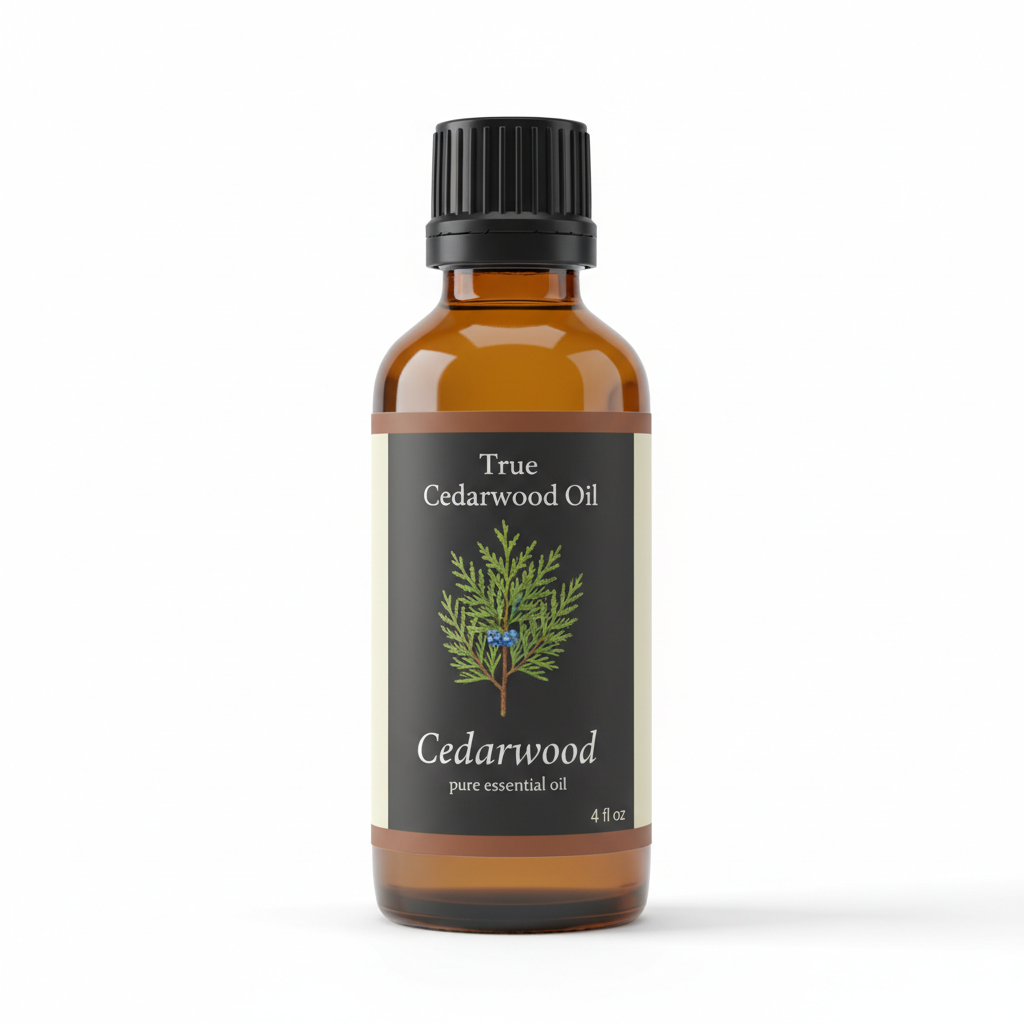
Cedarwood Essential Oil
Our own Cedarwood Essential Oil, in sizes from 0.5 oz to bulk.
From $9.99
Shop Now →Our typical years, oil by oil
We say typically 4 to 6 years for our Atlas and Texas oils, and typically 3 to 5 years for Himalayan and Virginian, kept tightly capped in a cool, dark place. Treat these as sensible planning ranges, not guarantees, because how a bottle is stored matters as much as the oil inside it. The Certificate of Analysis we publish for one Atlas batch carries a best-by date of 07/12/2028, and a note of your own on the bottle is a handy habit (more on that below).
What changes in an aging bottle
The Tisserand Institute says that even the best quality essential oils deteriorate over time, and it names the three drivers: oxygen, light and heat. Oxidation can change the aroma and raises the chance of skin irritation. It is the same slow process that browns a cut apple, only far gentler.
Why does that matter on skin? Work on a different fragrance molecule shows the idea clearly. In a 2002 study, researchers let linalool, a compound from lavender and coriander, sit in air for 10 weeks. About a fifth of it was lost, new compounds formed, and the oxidized material sensitized guinea pigs while the high-purity linalool did not. Linalool is not in cedarwood, so we are borrowing the mechanism, not a result. A 2025 review of Cedrus oils says the same thing in cedarwood's own terms: reports of skin sensitization and irritation have been documented, particularly with oxidized or poor-quality oils. Sensible, then, to keep the bottle in good shape.
Air in the bottle is the quiet culprit
This part is reasoning, not data. A nearly full bottle holds very little air, while a bottle that is 90 percent empty holds about nine times as much air as oil, and every opening lets in more. If you buy a large size, one practical idea is to pour a working amount into a smaller, full, tightly capped bottle, and keep the large one sealed. Bulk buyers should decant from a sealed container as needed.
Matching the bottle to how you use it
Here is some arithmetic to guide ordering. At the common convention of 20 drops per milliliter, a 0.5 oz bottle (about 14.8 ml) holds around 300 drops, and a 1 oz bottle around 600. A hobbyist making a 1 percent blend of one ounce of carrier uses about 6 drops, and by that measure a 0.5 oz bottle supplies a year of weekly batches. A 4 oz bottle is about 2,400 drops, which is many years of the same habit, longer than any of the typical ranges above. So the right size is the one you will finish inside the window, and a larger bottle makes sense for soap or candle makers working in volume. Our sizes guide goes through the options.
Where the bottle lives
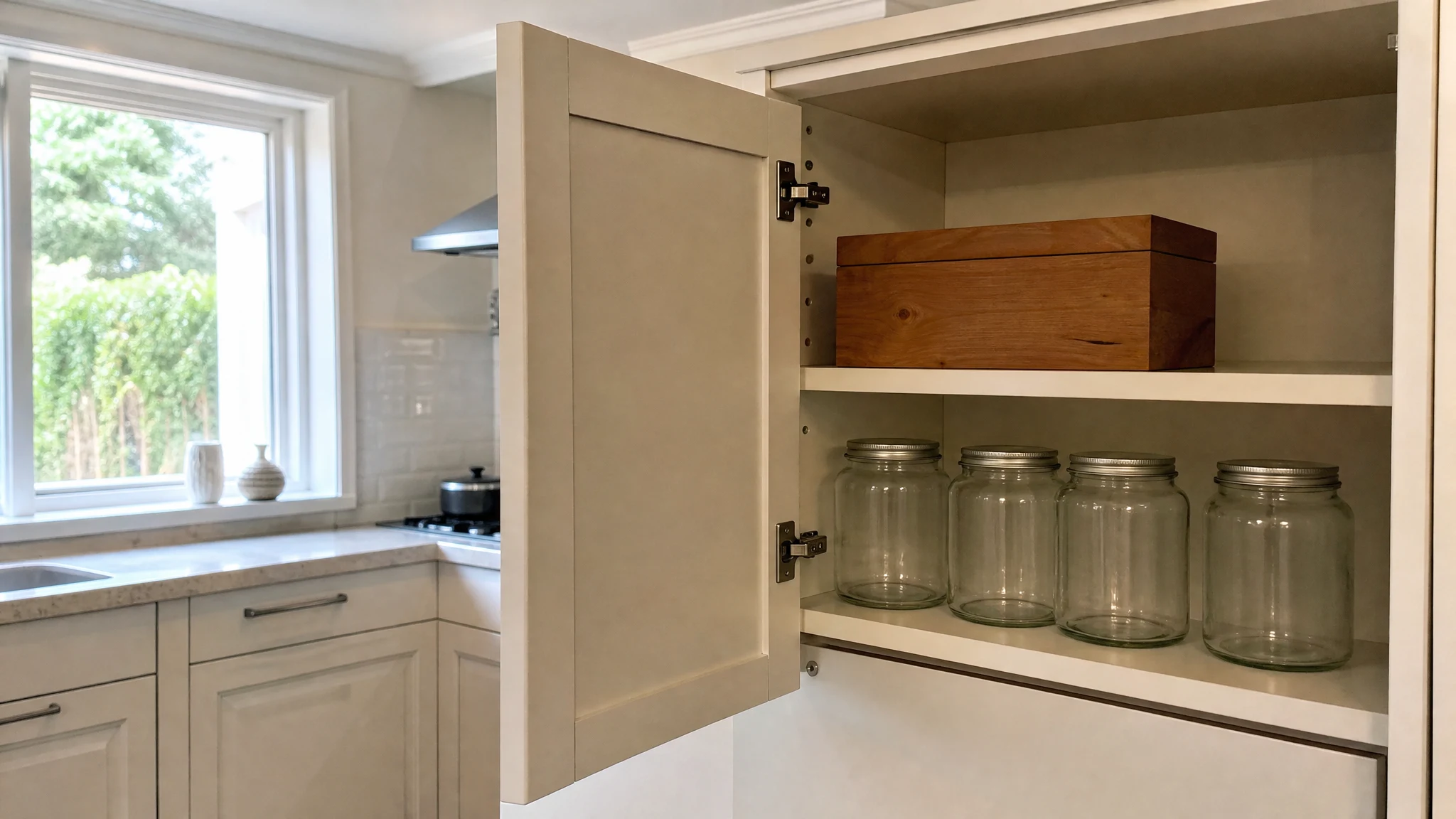
Think of the spot you would store a good bottle of vinegar or a jar of spices you care about: a cupboard, away from the cooker and the sunny sill. A drawer in a bedroom or study often works well. Bathrooms are the usual trap, because steam and temperature swings are hard on a bottle, and so is the glove box of a car. If you carry a travel size, keep it in a small pouch in a bag you do not leave in the sun.
Storage habits that help
Cap it right after each use, and check that the cap seats fully. Keep it out of sunny windows, cars and the shelf above the stove. Write the date you opened it on the label. Store it where children and pets cannot reach it, as our safety guidance says.
A smell check you can do in ten seconds
When you open a bottle after a long gap, hold it a little way from your nose rather than directly under it, and breathe in gently. Cedarwood should smell dry, woody and rounded, in the way you remember it. If the first impression is thin, sour or oddly sharp, set it aside for scent-only uses. If you have two bottles, comparing a fresh one with an older one side by side makes any change much easier to notice.
Checking an older bottle
The home tools are smell and a patch test, and both have limits. An off, sharp or harsh note that was not there at first is a good reason to retire the oil from skin use. An oil that smells normal can still have oxidized, and a patch test shows a reaction only after it happens. If a bottle is older than its range or you cannot date it, use it for scent in a diffuser or a sachet instead of on skin, or start with a fresh bottle for skin blends. If you do use an older bottle on skin, stay at the low end of our 0.5 to 2 percent range, patch test and stop at the first redness, itch or burn. Our patch test article and dilution guide cover the technique, and an allergist or dermatologist can test properly if a reaction keeps returning.
A cedarwood bottle that is capped, cool and dark is a long-term friend, and you will smell the difference when you open it.
Cedarwood Essential Oil
Cedarwood Essential Oil from our own shop, in sizes from 0.5 oz to bulk.
From $9.99
Shop Now →Sources & Further Reading
- Oxidation and the Shelf Life of Essential Oils - Tisserand Institute
- Studies on the autoxidation and sensitizing capacity of the fragrance chemical linalool, identifying a linalool hydroperoxide (Sköld et al., Contact Dermatitis, 2002)
- Cedarwood essential oil (Cedrus spp.): a forgotten pharmacological resource with emerging therapeutic potential (Gonçalves, Explor Drug Sci, 2025)