Does Cedarwood Oil Keep Ants Away? The USDA Findings
Anyone who has opened an old cedar chest knows the smell is meant to keep little pests at a distance, so it is natural to wonder whether a few drops of cedarwood oil on a windowsill could turn ants away too. A team of USDA researchers actually put that question to the test with Virginian cedar, and what they found is interesting, though it is more modest than the internet makes it sound.
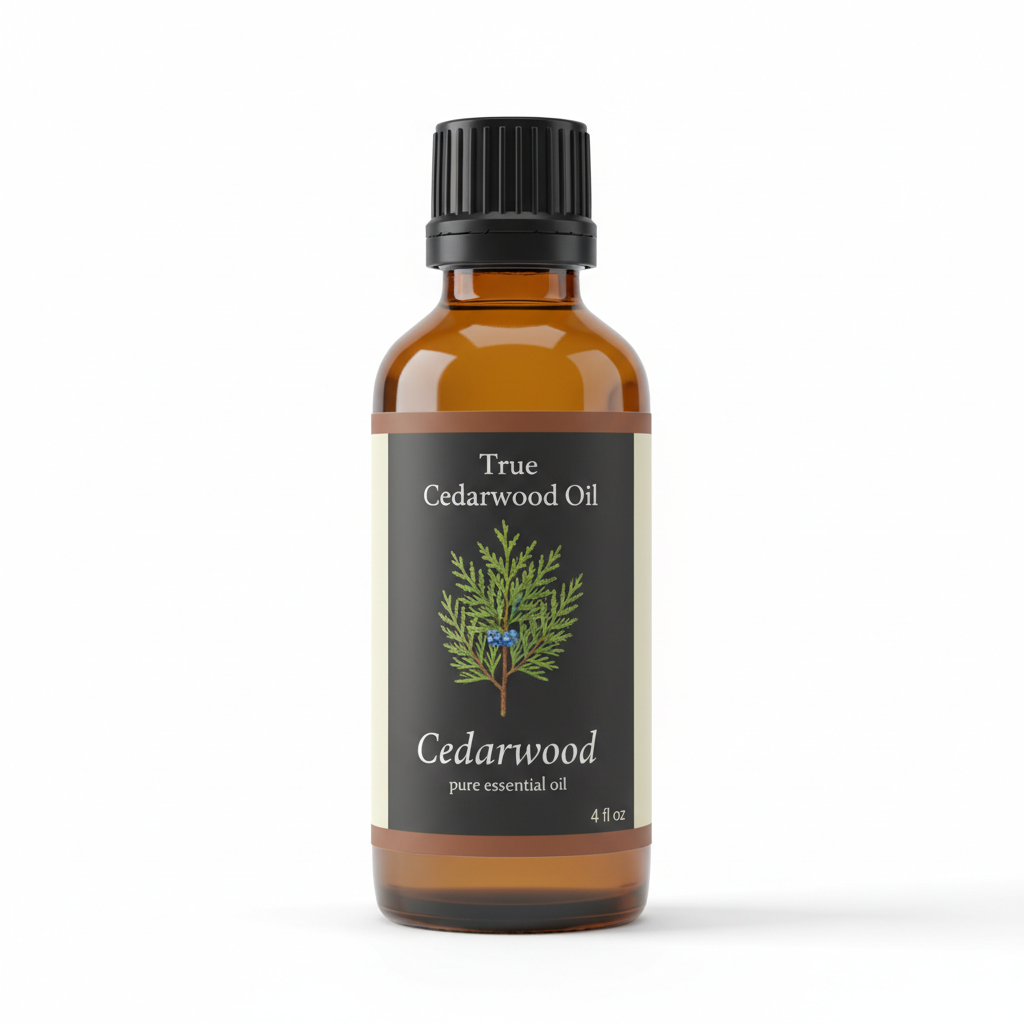
Cedarwood Essential Oil
Our own Cedarwood Essential Oil, in sizes from 0.5 oz to bulk.
From $9.99
Shop Now →What the USDA lab saw
Researchers at the USDA's Agricultural Research Service took heartwood from Juniperus virginiana, the eastern red cedar, and extracted it with liquid carbon dioxide. In an outdoor test, ants that would normally climb a pole to reach sugar water were significantly put off when the extract was on the pole. The same extract also acted as a repellent barrier for red imported fire ants and kept them from finding a typical food source.
Two details are worth holding onto. First, the material was a carbon dioxide extract, which is not the same thing as a steam-distilled oil in a bottle, even though it comes from the same kind of wood. Our Virginian oil is the same species as the tree they used, but the paper does not tell us how a steam-distilled oil would behave. Second, the abstract describes ants being repelled from a food source, which says something about where foragers walk. It does not say anything about what happens to the colony.
Foragers versus the nest
This is the part of the story that matters most for anyone with ants in the kitchen. The ants you see are workers out looking for food, and the colony behind them keeps sending more. University extension services say as much in their own way. Iowa State recommends finding where the ants are coming from, sealing cracks and gaps in outside walls, fixing poor foundation drainage and repairing water leaks. Penn State notes that foraging pavement ants can be controlled with baits, because workers carry the bait back to the nest, and that slow-acting baits give workers time to share it, which can take two weeks or longer.
Put those pieces side by side and a sensible picture emerges. Our reading, and it is our reasoning rather than a statement from any of those sources, is that a scent line can at most nudge where foragers travel, while the things that actually settle an ant problem are sealing the way in, removing what they came for, and dealing with the nest. A woody aroma on the sill is a pleasant extra at best.
What about the garden?
Garden pests are a different question again, and plants are living things that can react badly to oils sprayed on their leaves. Your county extension office or a local garden centre can tell you what suits your plants and your pest, and that is the right place to go. We sell our cedarwood oils for their aroma and craft use, make no pest-control claim, and do not sell garden sprays or bait stations.
Where the ants are coming from
Anyone who has watched a line of ants find a crumb knows how quickly it happens. Spend ten minutes looking before you reach for any bottle. Follow the line back to a gap by a window frame, a crack at the base of a wall or a damp corner under the sink. Wipe the trail, store sweet things in sealed containers and take the bin out. You will often see the line thin out on its own once there is nothing at the end of it.
Once that is sorted, a little cedar scent on the porch or in the mudroom is a nice finishing touch, a way to make the doorway feel fresh and woody rather than a pest plan. Put it on a cotton pad inside a small container with a few holes, rather than on a surface where it could stain or be touched.
When the scent is the point
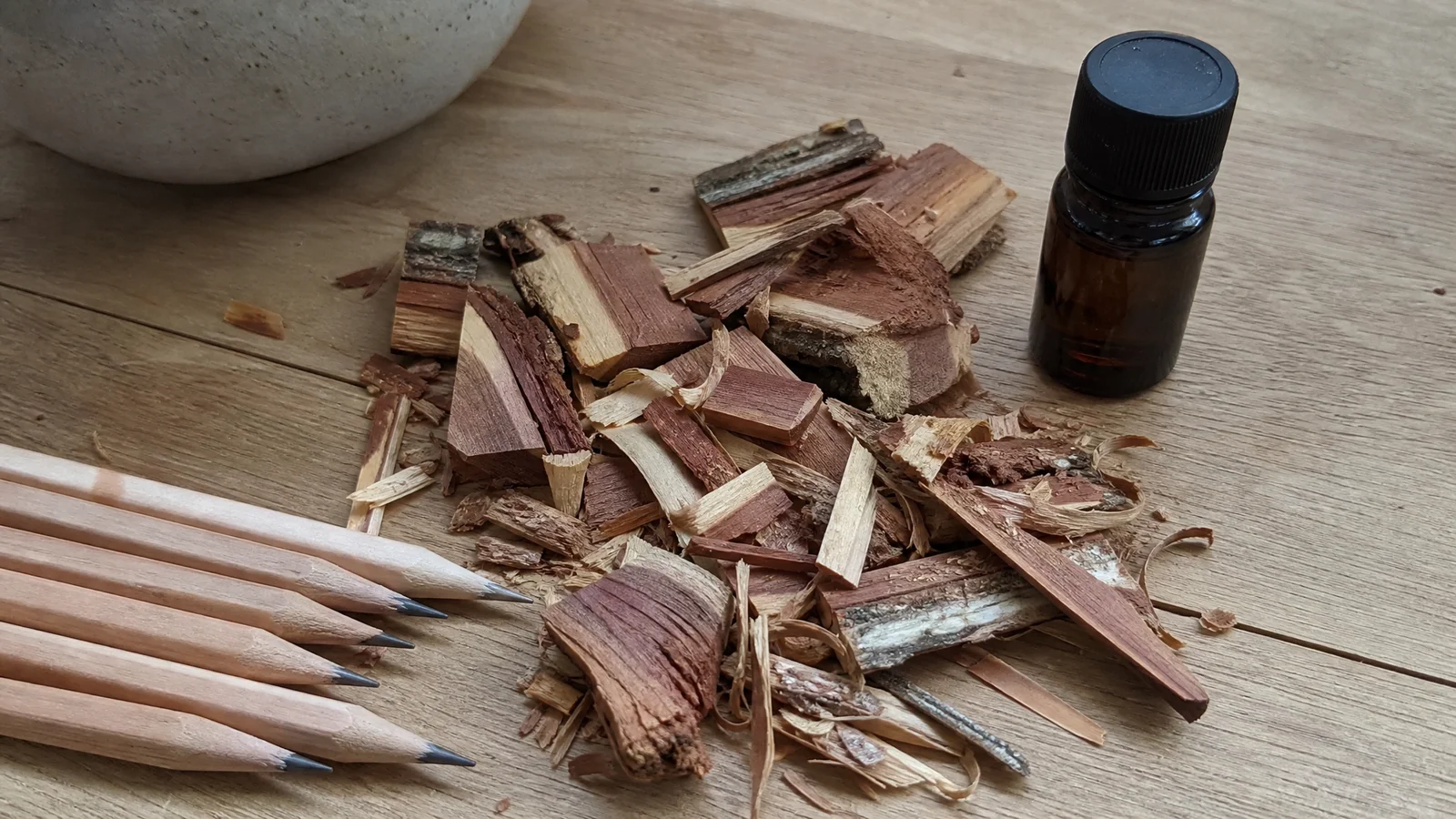
If what you want is the smell of cedar drifting around a porch, a potting shed or a mudroom, that is a lovely use for these oils, and the four we sell have quite different characters. Our Atlas oil is dry, woody and warmly sweet. Himalayan is warm, sweet and softly resinous. Virginian is the classic pencil-shaving cedar of closet drawers, and Texas is soft, smooth and gently sweet. Our shop guidance for all four applies: they are concentrated, for external use only, to be diluted in a carrier before they touch skin, and kept away from eyes, children and pets. Cats in particular deserve extra thought, so have a look at our cat safety guide before putting any oil in a place a cat can reach.
If you are curious about other insect questions, our overview of the insect-repellent research covers mosquitoes and ticks, the bug spray article is about a scented spray and its limits, and the bed bug piece looks at that question. For a colony in a wall, stinging ants or fire ants, a licensed pest professional is the person to call.
The USDA result is a good reminder that cedar and insects have a real history together. It just does not turn a bottle of fragrant oil into a pest plan, and it is more fun to enjoy the oil for what it smells like.
Cedarwood Essential Oil
Cedarwood Essential Oil from our own shop, in sizes from 0.5 oz to bulk.
From $9.99
Shop Now →Sources & Further Reading
- Eller FJ, Vander Meer RK, Behle RW, Flor-Weiler LB, Palmquist DE, 2014. "Bioactivity of cedarwood oil and cedrol against arthropod pests." Environmental Entomology. PubMed 24690252
- Iowa State University Extension and Outreach, "Pavement Ant | Yard and Garden." yardandgarden.extension.iastate.edu
- Penn State Extension, "Pavement Ant." extension.psu.edu/pavement-ant