Cedarwood Oil and Eczema-Prone Skin: Read the Label
If you live with eczema-prone skin, you probably read labels the way other people read menus. One word keeps turning up on dermatologists' lists, and it matters for any scented product, including anything made with cedarwood: fragrance.

Cedarwood Essential Oil
Our own Cedarwood Essential Oil, in sizes from 0.5 oz to bulk.
From $9.99
Shop Now →Fragrance-free is not the same as unscented
The American Academy of Dermatology draws a distinction we think is worth remembering. Unscented, it explains, means a fragrance has been masked so you cannot smell it, while fragrance-free means free of all fragrances, even ones you cannot smell. For eczema-prone skin it advises choosing fragrance-free rather than unscented products. The page is written about childhood eczema and does not mention essential oils, so what follows is our own reasoning: cedarwood oil goes into a product to give it a cedar smell, which makes it a fragrance, so a product containing it is not fragrance-free.
The NHS page on atopic eczema takes a practical angle. It lists everyday triggers such as soap and washing detergent, along with pollen, house-dust mites, heat and stress, and recommends emollients at least twice a day. The overlap is a pleasant, simple idea: the fewer extra ingredients touching sensitive skin, the fewer possible culprits.
What we know about allergy and oils
A review of essential oils by Sindle and Martin estimates that about 80 of them have been reported to cause contact allergy, includes cedar oil among those that have been patch-tested, and suggests asking about oil use when eczema is not responding to usual care. A children's hospital chart review found fragrance-marker reactions more often in children with atopic dermatitis than in those without, among patients already referred for suspected contact allergy. It was a single-hospital study and did not test cedarwood, so it is a pointer, not a verdict.
We sell cedarwood oils as aroma and cosmetic materials, with no claim for dry or itchy skin, and we do not give a dilution for eczema-prone skin. Our usual guidance is 0.5% to 2% in a carrier with a patch test first, and for sensitive or reactive skin that is a conversation to have with a dermatologist, not a number to take from us.
Where cedar scent can live instead
The good news is that cedar's charm is wonderfully portable. A drop on a cotton pad tucked in a drawer, a sachet in a closet, or a few minutes in a diffuser can fill a space with that dry, woody warmth while keeping it off skin and away from laundry. Our closet refresh article shows simple ways to do it. If a household member has eczema, it is still sensible to check with their clinician before scenting shared rooms, and to keep bottles away from children and pets.
That is not a reason to give up on a cosy, cedar-scented home. Many households simply decide where the scent lives: in the hallway closet, the bookshelf drawer or the guest room, and not on the bedding, towels or the skin of the person with eczema. Because the Atlas, Himalayan, Virginian and Texas oils each smell a little different, you can pick the one that suits the space, and our smell guide will help you choose.
Keeping a scented home comfortable
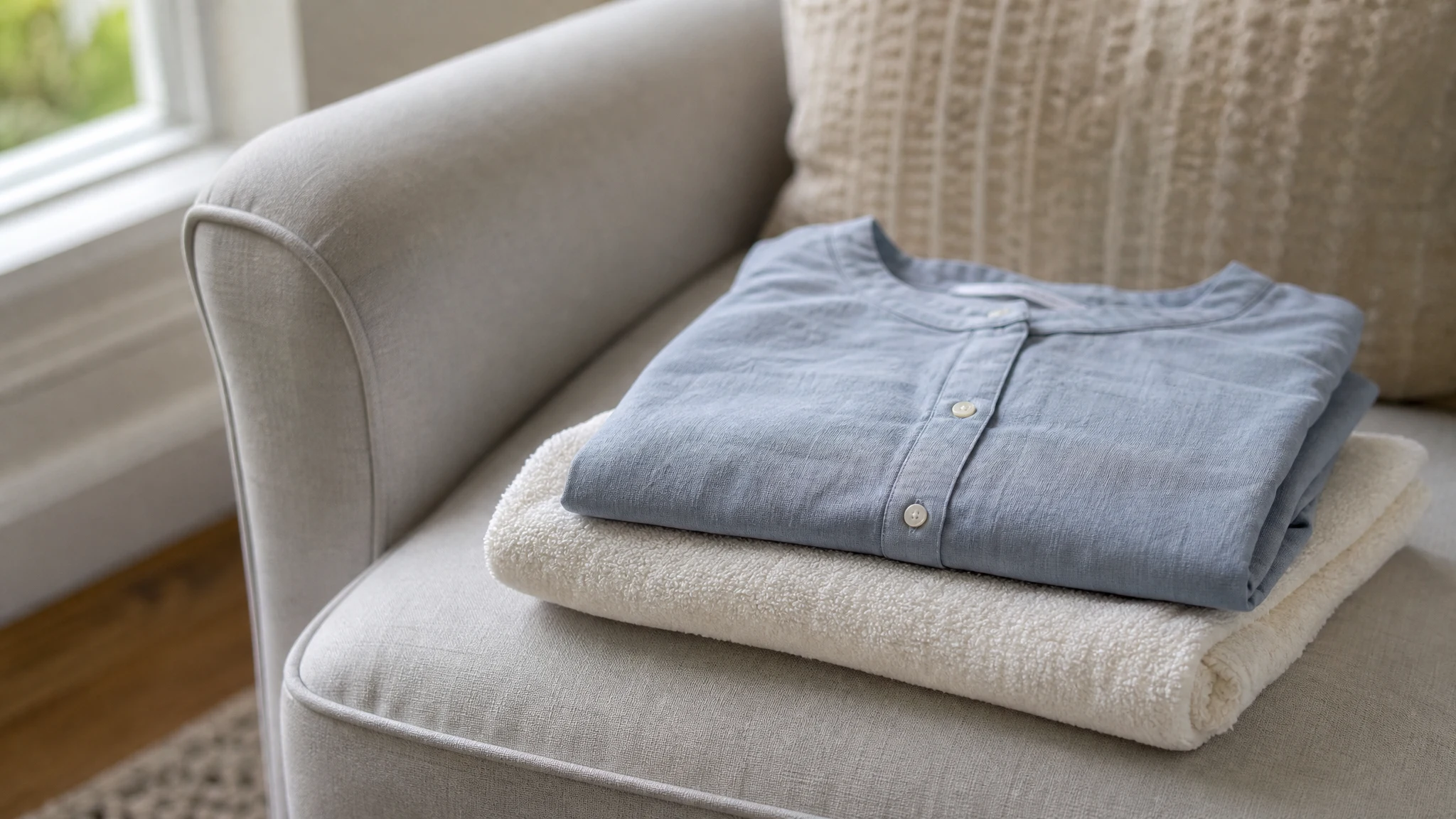
Living with eczema often means a quiet audit of the whole house: the laundry detergent, the soap by the sink, the candle on the shelf. If you also love a cedar smell, the simplest approach is to decide where it belongs and stick to it. A scented cotton pad inside a closed closet or a lidded box in the hall cupboard can give you the woody smell when you open the door, without the scent sitting on towels or bedding.
Notice how you feel after a few days, and ask the person with eczema, because they are the best judge. If anything seems to bother them, take the scent out of the house and talk to their clinician. Cedar will still be there to enjoy once things are settled, and it is far easier to add a smell back than to figure out what caused a flare.
Reading labels
A tip for shoppers: in the US, the FDA says fragrance ingredients can be listed simply as “Fragrance” and that it lacks the same legal authority to require allergen labelling for cosmetics as it has for food. So a label cannot always tell you whether a cedarwood oil is inside. If you are avoiding fragrance, look for products that say fragrance-free.
When to see someone
The NHS advises seeing a GP if you or your child have eczema symptoms or treatments are not working, and seeking urgent help if skin is blistered, weeping, painful, swollen or warm, or you feel unwell. If you suspect a product or an oil is involved, a dermatologist or allergist can patch test the actual product. A home forearm test is only a screen, as our patch test article explains. For babies and children, ask a paediatrician first.
Our broader looks at cedarwood on skin and safety by group may also help. For eczema-prone skin the answer is simple and kind: keep it plain, and enjoy cedar from a little distance.
Cedarwood Essential Oil
Cedarwood Essential Oil from our own shop, in sizes from 0.5 oz to bulk.
From $9.99
Shop Now →Sources & Further Reading
- How can I find eczema friendly products?, American Academy of Dermatology
- Atopic eczema, NHS
- Art of Prevention: Essential Oils - Natural Products Not Necessarily Safe, Sindle and Martin, International Journal of Women's Dermatology
- Frequency of contact allergens in pediatric patients with atopic dermatitis, Herro et al., Journal of Clinical and Aesthetic Dermatology, 2011
- Fragrances in Cosmetics, FDA