Cedar, Fir and Citrus Blend: A Cabin Scent on Paper
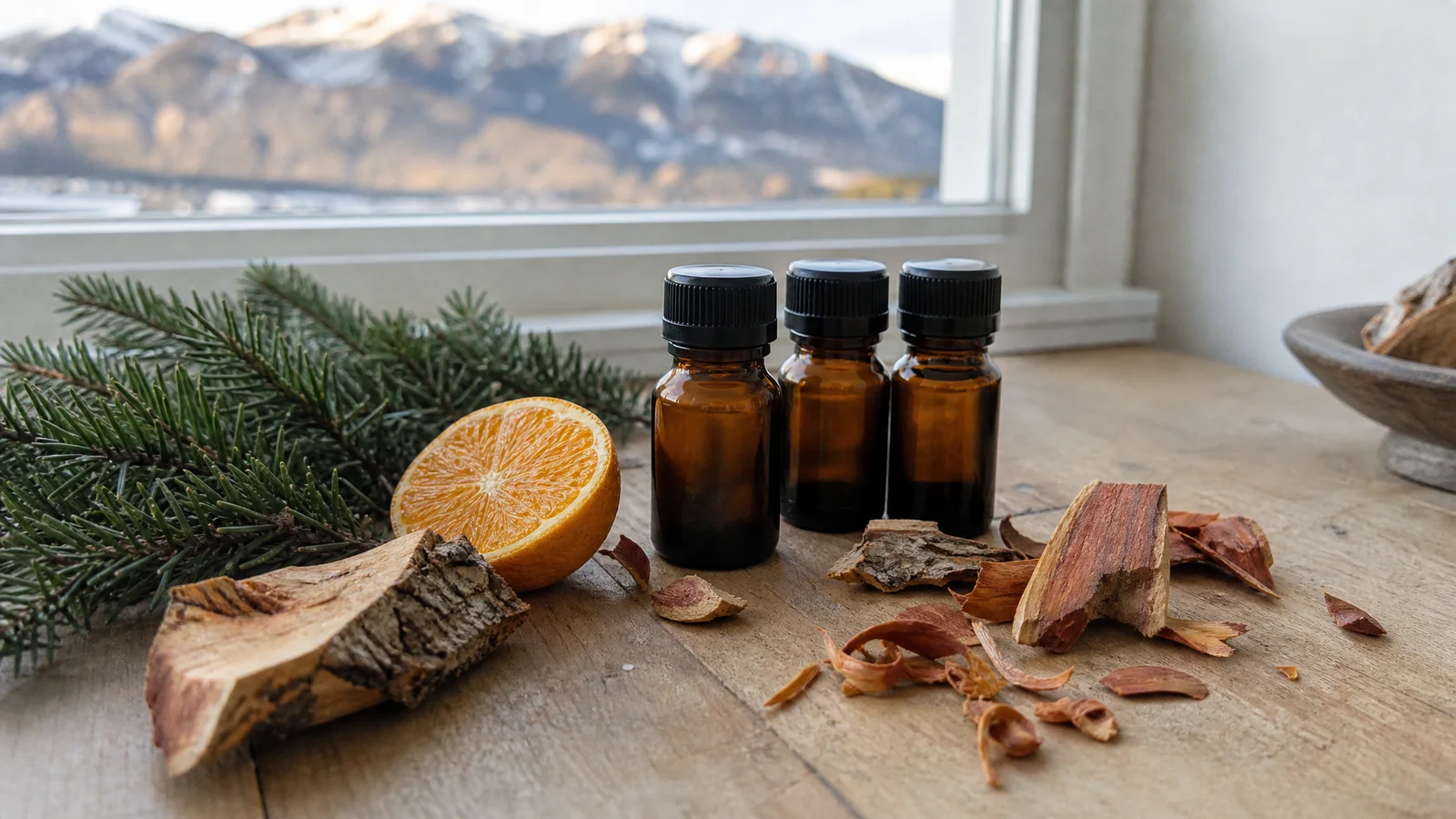
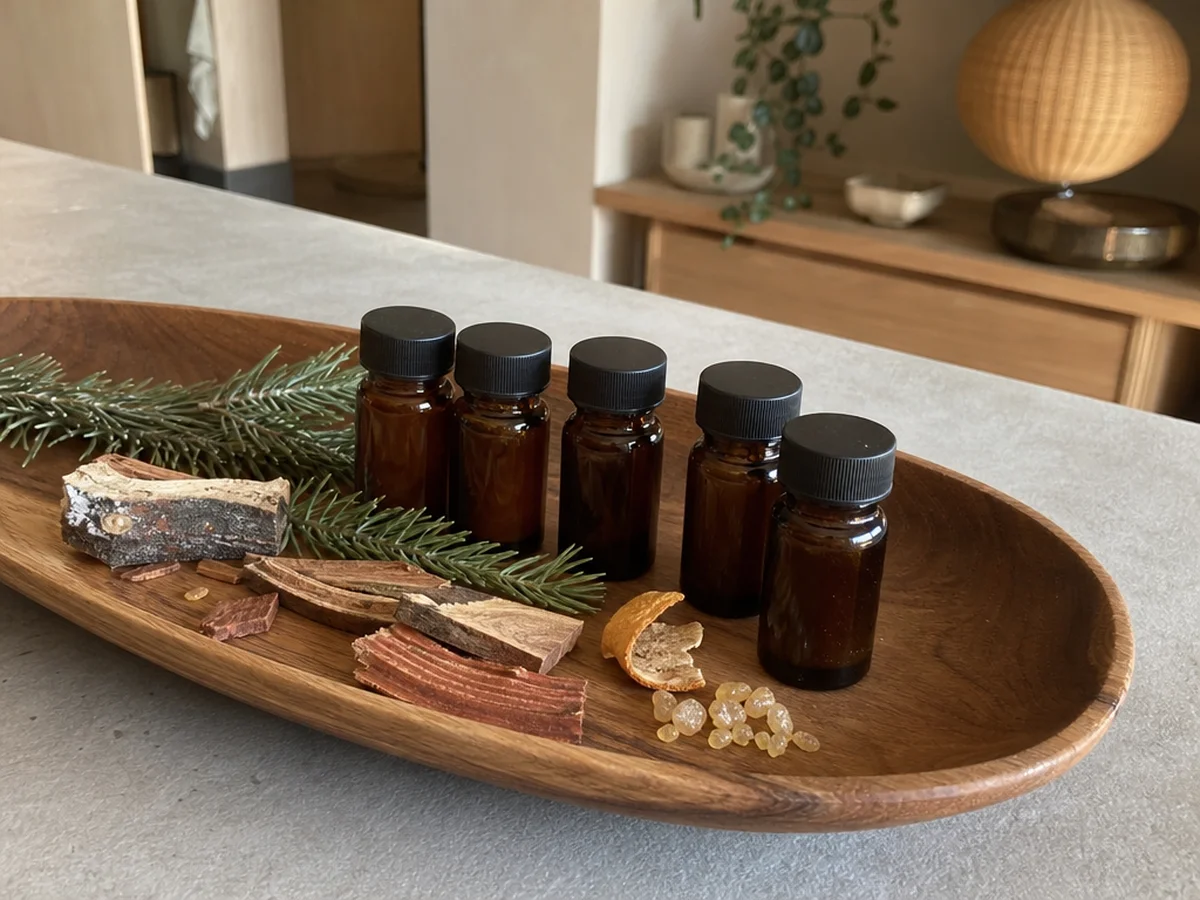
Cedar, fir and citrus is the smell of a cabin on a cold morning: dry wood underneath, green resin above, and a bright orange peel catching the light. It is easy to describe and easy to get slightly wrong, because a pleasant ratio by nose says nothing about what ends up on skin. This is the blend worked out on paper, with the numbers set up so you can change them.
Cedarwood Essential Oil
Our own Cedarwood Essential Oil, in sizes from 0.5 oz to bulk.
From $9.99
Shop Now →The idea behind the three oils
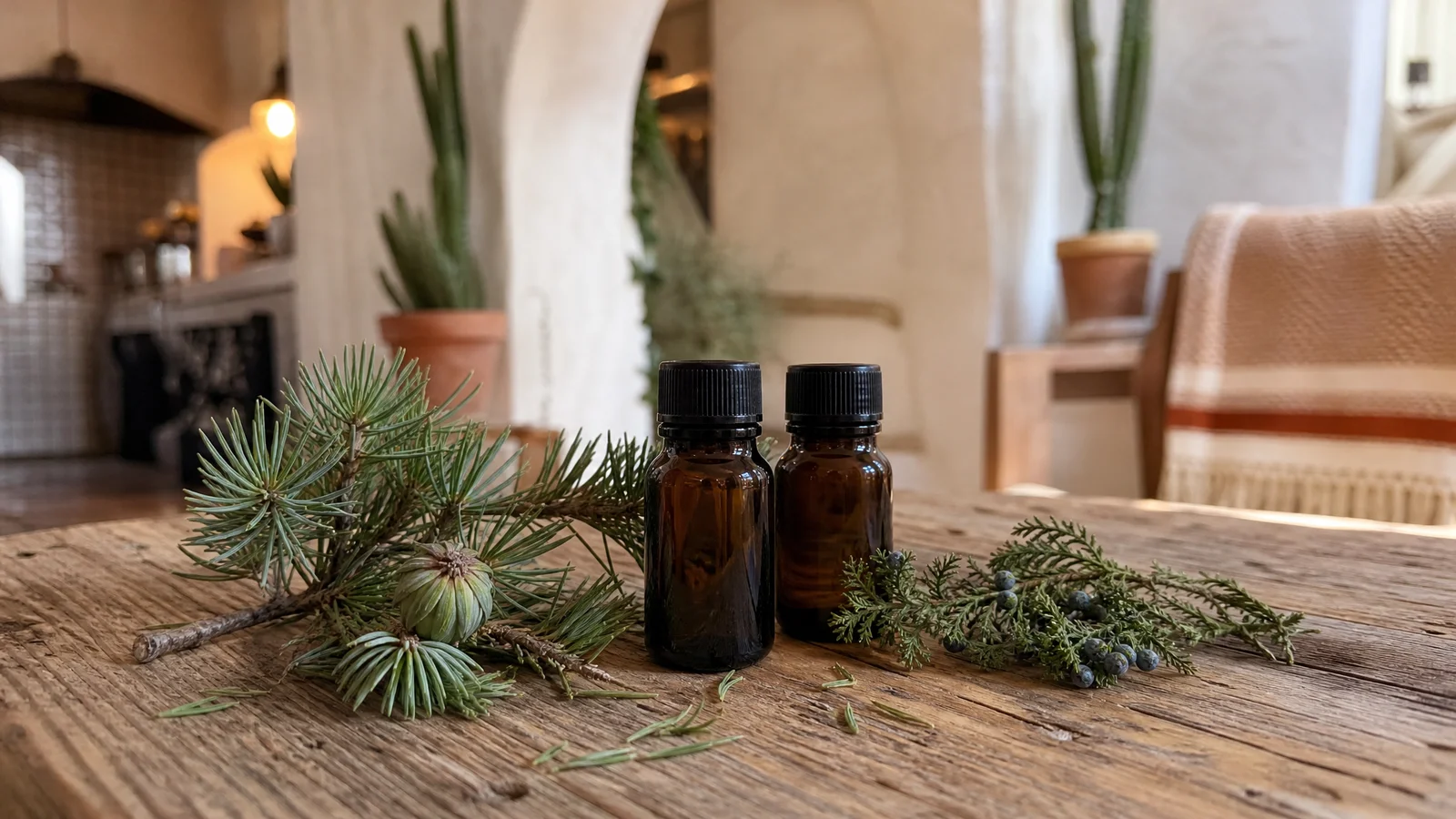
Cedarwood supplies the dry woody base, fir needle brings a resinous green lift, and sweet orange adds brightness on top. Our Himalayan cedarwood page lists sweet orange as a pairing, and all four of our cedarwood oils sit in the base-note role, so the structure is sound. We sell cedarwood only, so find fir and orange at an aromatherapy or craft supplier, and ask for the botanical name on each label. The Tisserand Institute notes that "cedarwood" covers several different oils, and "fir" has the same kind of ambiguity.
This is a formulation built from published guidance and arithmetic, so treat it as a starting point to adjust by nose. Our oils are sold neat, which means the dilution maths is yours.
Decide where it is going first
The same three oils need different ratios depending on the job. Two forms make sense: a skin oil in a carrier, which needs a dilution ceiling and a patch test, or a room scent on a blotter or in a diffuser, which needs no skin ceiling but does want fresh air and short sessions. We leave water-based sprays out on purpose. Water-containing products need a preservative, and in one survey of skin and body care products from the Mecca region (Alshehrei, 2024), 26 of 32 were contaminated, with water-based products singled out as at risk. A blend in oil avoids the issue.
Let the cedarwood set the ceiling
Start from three reference points. Our dilution guidance for all four cedarwood oils is 0.5% to 2% in a carrier with a patch test. The Tisserand Institute's dilution guide gives 0.2% to 1% for sensitive skin, 0.5% to 1.2% for facial products and 1% to 3% for body oils. And in a 13-week study (Catlin et al., 2016), Virginia cedarwood oil applied in ethanol to rat and mouse skin produced skin lesions at the application site, with lower dose estimates starting at 0.65%. That was an animal study of one oil, so we read it as a reason for caution, not a verdict.
So we start at the lower end. We would keep the total blend near 1% and the cedarwood portion well under that. We do not regard 2% as a safe figure, and a review of cedarwood oil (Goncalves, 2025) points out that sensitization reports tend to involve oxidized or poor-quality oil, which is one more reason to store your bottles carefully.
The arithmetic, by weight
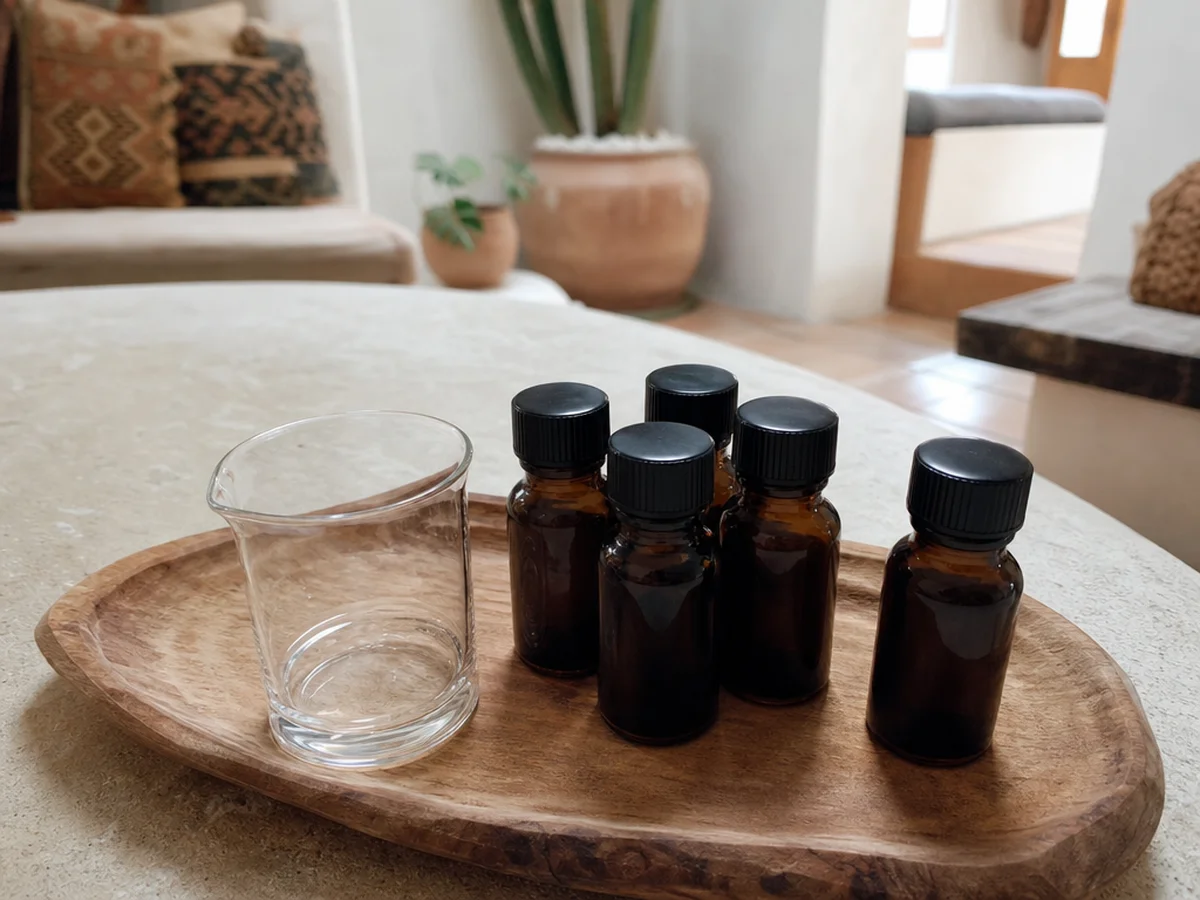
Weigh in grams, because drop sizes vary between droppers and oils. As one possible ratio, make a concentrate of 40% cedarwood, 35% fir and 25% sweet orange, then dilute it to 1% in a carrier oil from a craft supplier.
| Ingredient | In 10 g of concentrate | In 100 g of finished skin oil |
|---|---|---|
| Cedarwood oil | 4.0 g | 0.40 g (0.40%) |
| Fir needle oil | 3.5 g | 0.35 g (0.35%) |
| Sweet orange oil | 2.5 g | 0.25 g (0.25%) |
| Carrier oil | none | 99.0 g |
Cedarwood lands at 0.40% of the finished oil, which is under the lowest dose estimate in the animal study and inside our guidance range. If you would rather measure by volume, the one density we publish is 0.934 for the Atlas batch on our certificate, so 4.0 g of that batch is about 4.3 ml. It is a single batch and does not apply to the other three oils. A scale reading to 0.1 g is too coarse for 0.35 g, so make the 10 g concentrate first and then stir 1 g of it into 99 g of carrier.
Two partners worth a supplier question
Fir. We did not find a dermal limit for fir needle oil, so the blend inherits whatever your supplier's safety documentation says. If a supplier cannot give you the species and a safety sheet, we would choose a different fir.
Orange. The Tisserand Institute's phototoxicity page says most phototoxic essential oils are expressed citrus oils, and it does not address sweet orange specifically. Ask your supplier whether the oil is cold-pressed and what the furanocoumarin content is. Steam-distilled citrus oils contain very much less, according to the same page.
Smelling it before you commit
Before you mix anything for skin, smell the three oils together on plain paper strips. Dip one strip in each, hold them fanned out like a hand of cards, and sniff the whole fan. You will notice the orange arrives first, the fir comes through in the middle, and the cedarwood lingers after the others have faded. If the cabin feels too sharp, the answer is usually a touch less fir; if it feels flat, a touch more orange. Make small changes and write them down, because a blend you cannot reproduce is only a nice accident.
As a room scent
For a diffuser, skip the carrier and follow the manual for the oil amount. A pilot study of household diffusers (Zisook et al., 2025) used tea tree oil, not cedarwood, but its finding is a useful general guide: heat-based diffusers produced roughly ten times the terpene levels of ultrasonic ones. An ultrasonic unit in a ventilated room for a short session is the conservative choice. Our diffuser article covers the device.
Who should skip the skin version
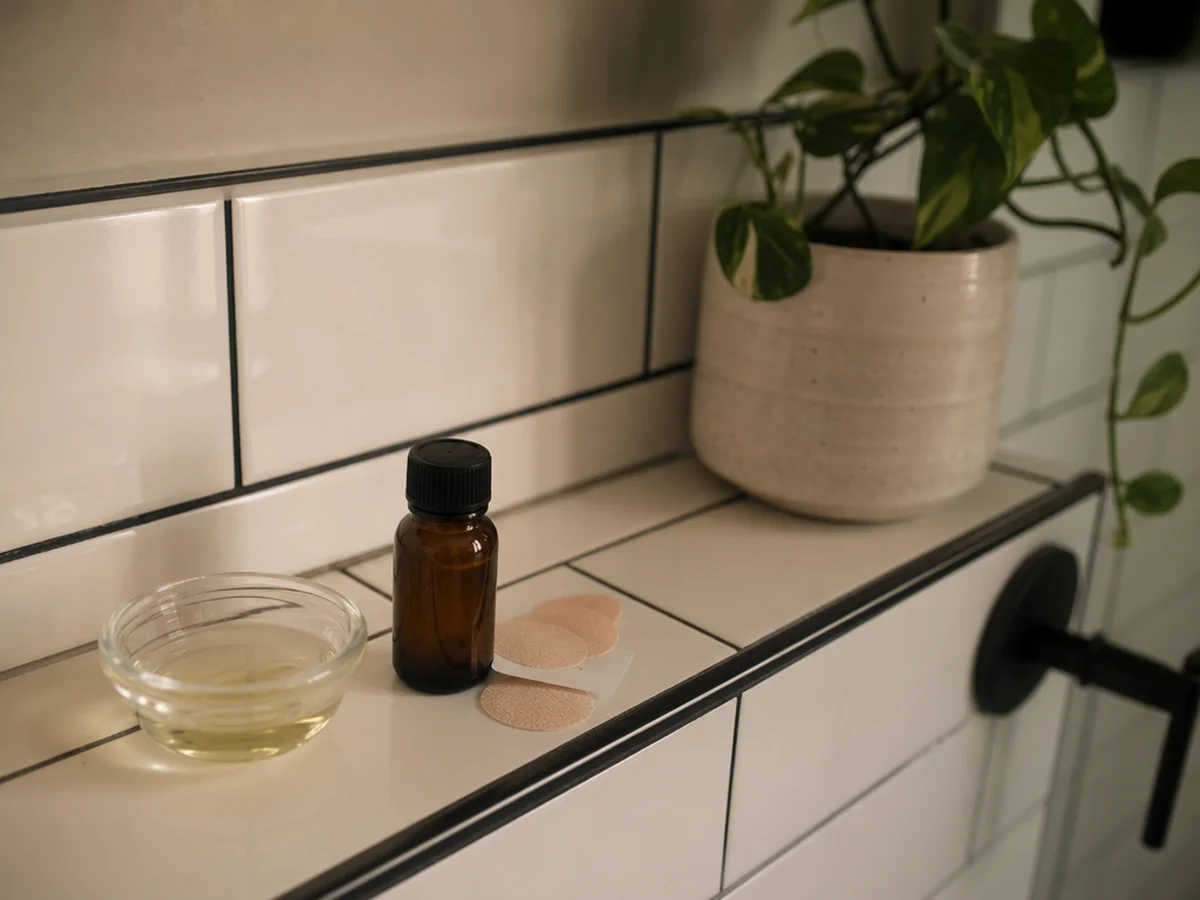
Skip it if you have reacted to fragrance before, and see a dermatologist before using any blend on inflamed or broken skin. Our patch-test article explains what a patch test catches. If you are pregnant, nursing, or choosing for a child, ask your physician or pediatrician first, and keep all bottles out of reach of children and pets. Our dilution guide covers the wider table, and our perfumery article explains how a base note behaves in a blend.
The numbers above are a frame, not a finished recipe. Adjust the shares by nose, keep each oil inside its own limit, and enjoy the cabin.
Cedarwood Essential Oil
Cedarwood Essential Oil from our own shop, in sizes from 0.5 oz to bulk.
From $9.99
Shop Now →Sources & Further Reading
- Dilution for essential oils (Tisserand Institute)
- Phototoxicity: essential oils, sun and safety (Tisserand Institute)
- What’s in a name? (Tisserand Institute)
- Dose-response assessment of the dermal toxicity of Virginia cedarwood oil in F344/N rats and B6C3F1/N mice (Catlin et al., Food and Chemical Toxicology, 2016)
- Cedarwood essential oil (Cedrus spp.): a forgotten pharmacological resource with emerging therapeutic potential
- Volatile organic compound and particle emissions from the use of tea tree oil in essential oil diffusers
- Microbiological Quality Assessment of Skin and Body care Cosmetics by using Challenge test