Cedarwood in Perfumery: Using the Dry, Woody Base Note
Open a bottle of cedarwood and the first thing you notice is dryness: a clean, warm, woody note that feels more like a room than a flower. Perfumers have leaned on that quality for generations, using cedarwood as the quiet floor that everything brighter stands on.

Cedarwood Essential Oil
Our own Cedarwood Essential Oil, in sizes from 0.5 oz to bulk.
From $9.99
Shop Now →What a base note actually does
In perfumery, notes are described by how quickly they leave the skin. Top notes, such as citrus, flash by in minutes, hearts last a while, and base notes arrive late and stay. Cedarwood belongs firmly in the last group, and we list all four of our cedarwood oils as base notes. The practical lesson is to judge a woody blend at its dry-down, an hour or so after you put it on, rather than on the first sniff, when the cedar has barely begun to speak.
Why does it smell woody at all? A 2026 review of cedarwood oils notes that sesquiterpenoids, the larger, slower-moving aroma molecules, are generally responsible for woody fragrances, and that is exactly what these oils are rich in.
The fixative idea
You will often hear that cedarwood is a fixative, an ingredient that helps lighter materials last longer. The claim appears in the literature, for instance in a recent review that says the oil's fixative qualities help stabilise aromatic blends, though that review does not present measurements for it. We like the idea and the heavier feel cedarwood gives a blend, and we would simply suggest you test it your own way: make two versions of a blend, with and without cedarwood, and compare them hours later. That is a more honest answer than a promise.
Four oils, four characters
The family matters a great deal to a perfumer, because the four behave differently.
- Atlas (Cedrus atlantica) is dry, woody and warmly sweet with a balsamic depth. We list bergamot, lavender, vetiver, rose, sandalwood and clary sage among its natural partners.
- Himalayan (Cedrus deodara) is warm, sweet and softly resinous, rounder than Virginian, and pairs nicely with sandalwood, patchouli, bergamot and sweet orange.
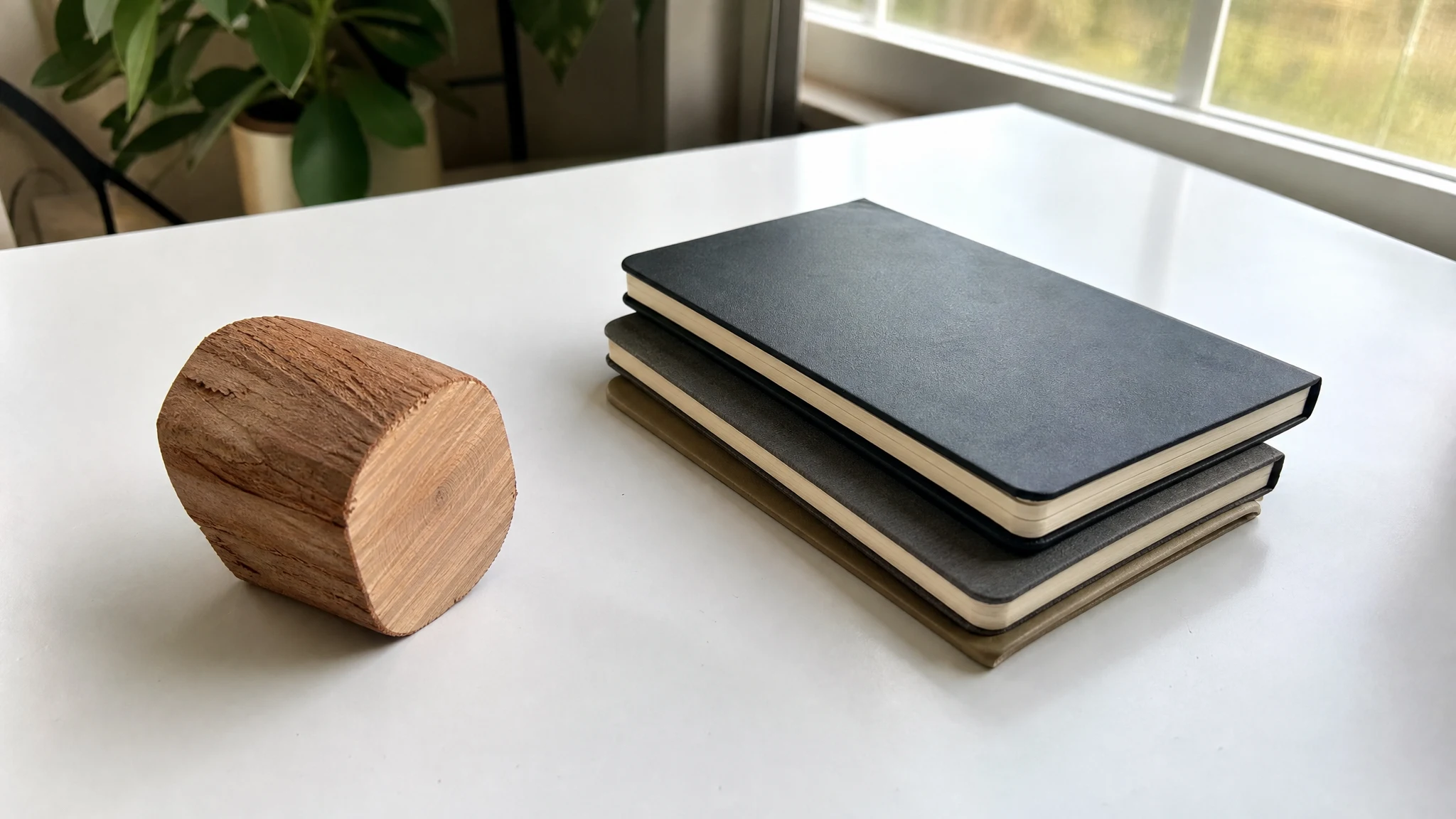
- Virginian (Juniperus virginiana) is the dry, sharp pencil-shaving cedar, good with lavender, rosemary, cypress and vetiver.
- Texas is soft, smooth and gently sweet, sitting between Virginian and Himalayan.
The chemistry mirrors the nose. The true cedars are led by himachalenes (beta-himachalene averaged about 40% in the Atlas oils the review studied) and the junipers by cedrenes, thujopsene and cedrol (Virginian averaged about 13% cedrol). Those are averages for commercial oils in general, not figures for our bottles. Our chemistry article unpacks these molecules, and our cedarwood versus sandalwood piece is handy if you are weighing two classic woods.
Judging a cedar blend
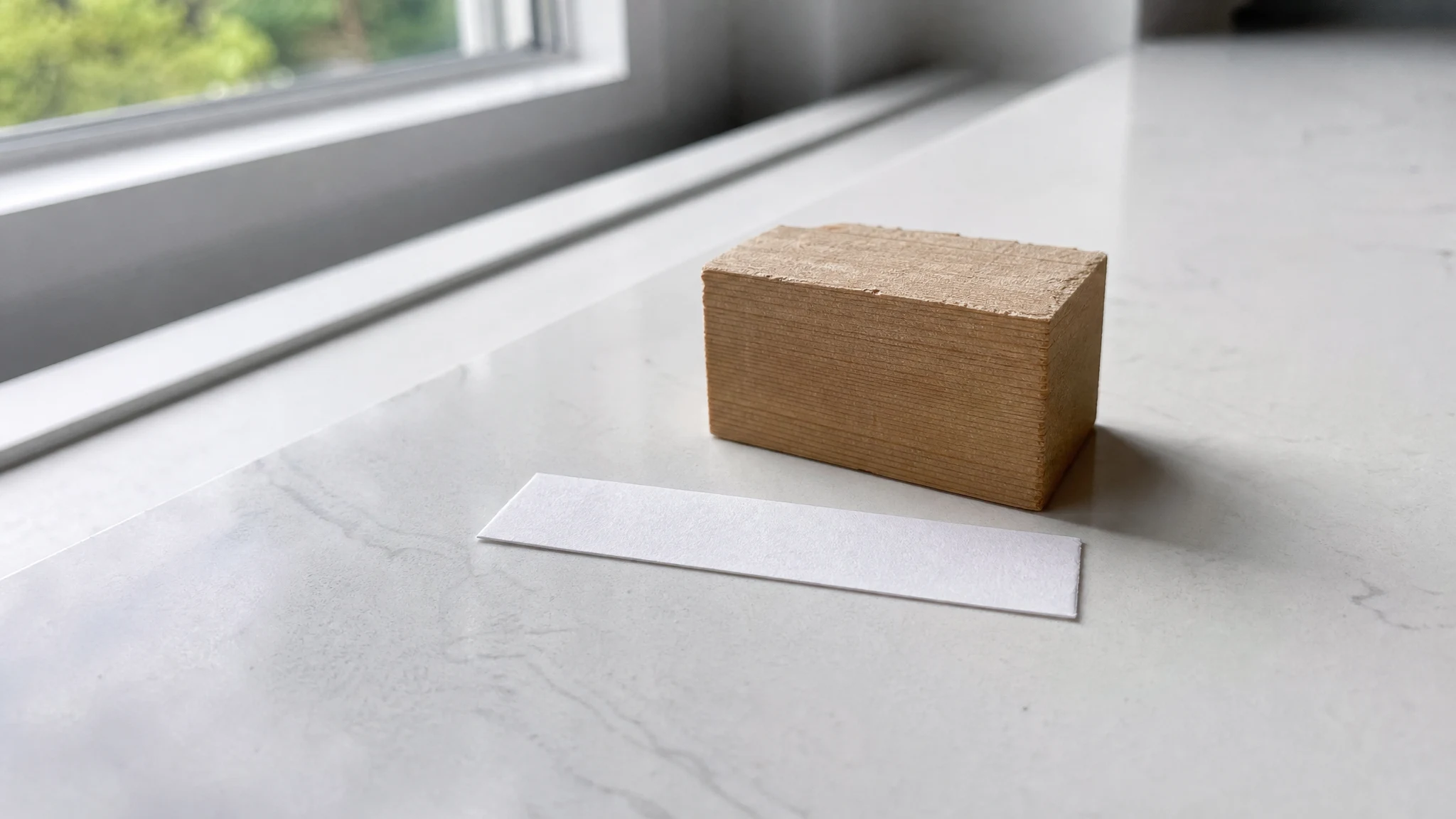
A few habits make a woody blend easier to read. Smell it on a paper strip or your wrist and come back after ten minutes, after an hour and after a few hours. Notice how the cedar changes the longer it sits, and how much it rounds off sharper partners like bergamot. Keep the cedar share modest at first: it is a persistent, heavy material, and a little goes a long way in a roller or a room blend.
Choosing your partners
Cedarwood is a quiet partner, so it helps to decide what you want it to hold up. A bright top like bergamot gets a steady floor under it, and something rounder like sandalwood gets a drier, cleaner edge. Smell candidates together on a paper strip before you commit to a ratio, holding the strips side by side under your nose. You will often find that one oil you thought was strong turns out to be quiet next to the cedar, and the reverse.
It also pays to start with small quantities. A cedar-led blend can run away from you, because a base note keeps building as the lighter notes leave, so changing one drop in a tiny trial is a lot kinder than correcting a full batch.
A small woody accord, as arithmetic
Here is a way to think about proportions, offered as a formulation idea rather than something we have made. For a skin product, we favour the lower end of our 0.5% to 2% guidance, and the Tisserand Institute lists 0.5% to 1.2% for facial cosmetics and deodorants as a general range.
Suppose a 10 ml roller bottle with 1% total essential oil. That is 0.1 ml, about 2 drops at the usual 20-drops-per-millilitre rule of thumb, which is far too few to split into three. So make it as a stock: blend the aromatics in a small glass vial at, say, 2 parts cedarwood, 1 part lavender and 1 part vetiver, then add that mixed oil to your carrier at 1% by weight on a scale. The ratio gives you a cedar-led, softly herbal, earthy accord. Lavender and vetiver are not oils we sell, so find them at a craft or aromatherapy supplier, and check each one's current IFRA guidance for your product type, since limits vary by oil and category.
Roll a little on the inner forearm first, as our patch test article describes, and see our dilution guide for more on the maths. If you need a specific constituent profile before you formulate, ask us in writing through the contact page.
One last practical note from a small business that loves these woods: keep a notebook beside the bench. Write down the oils, the proportions and what you noticed at ten minutes and at an hour. A cedar blend that seemed ordinary at the start often becomes the one you reach for, and the notes tell you why.
Cedarwood rarely steals the show. It gives a blend somewhere to rest, and that is exactly why it keeps its place on the perfumer's bench.
Cedarwood Essential Oil
Cedarwood Essential Oil from our own shop, in sizes from 0.5 oz to bulk.
From $9.99
Shop Now →Sources & Further Reading
- Cedarwood Oils: The Wood Essential Oil Compositions from Trees Known as "Cedar", Setzer and Satyal, Plants, 2026
- Cedarwood essential oil (Cedrus spp.): a forgotten pharmacological resource with emerging therapeutic potential, Gonçalves, Exploration of Drug Science, 2025
- Dilution for essential oils, Tisserand Institute