Cedarwood vs Sandalwood: Choosing a Woody Base
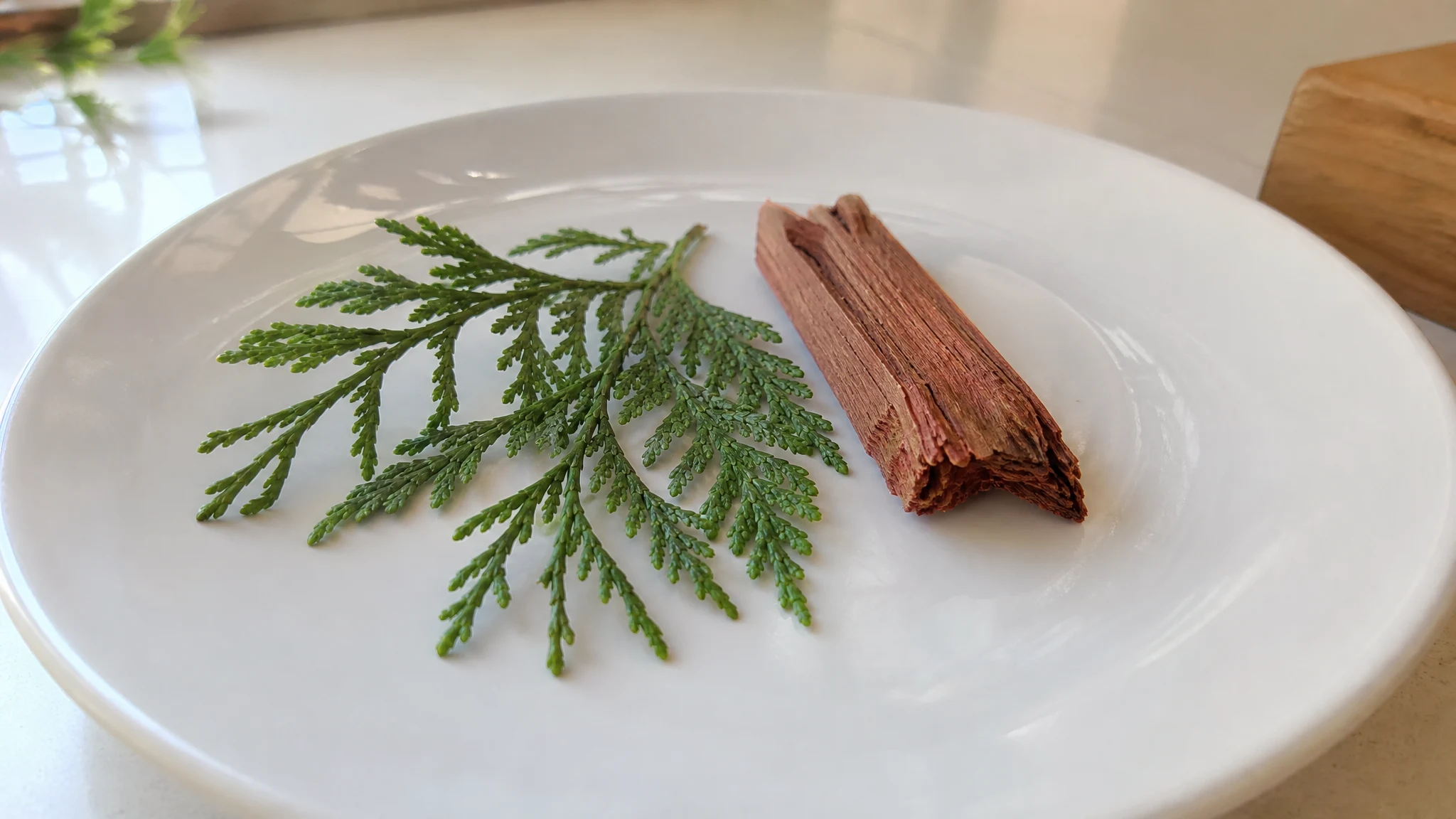
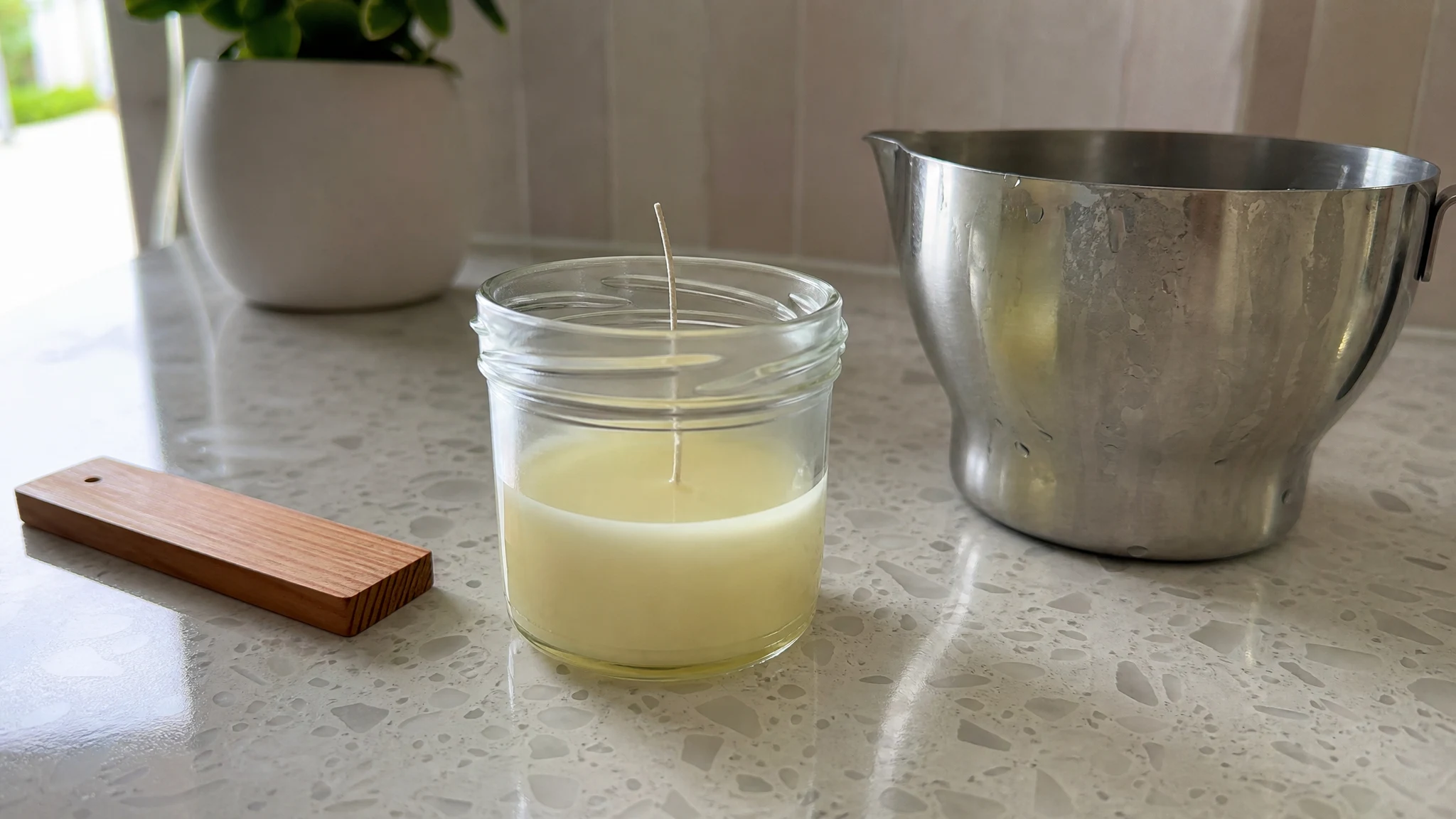
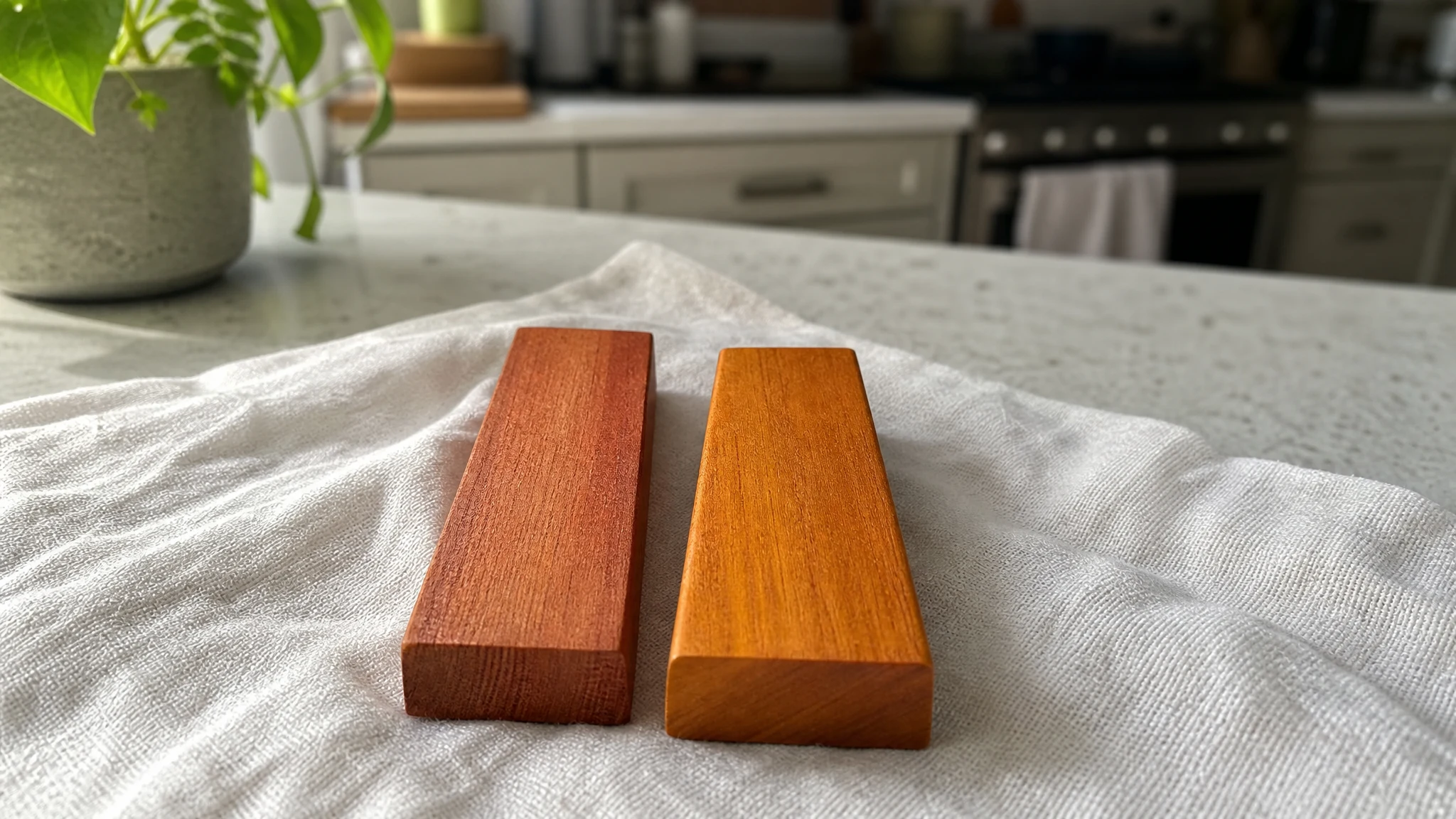
Hold a strip of sandalwood beside a strip of cedarwood and you can see why people lump them together, and why that is a mistake. Both are warm and woody. Sandalwood is the creamy, rounded part of the picture; cedarwood is the dry, clean timber standing behind it. In a blend they usually help each other rather than compete.
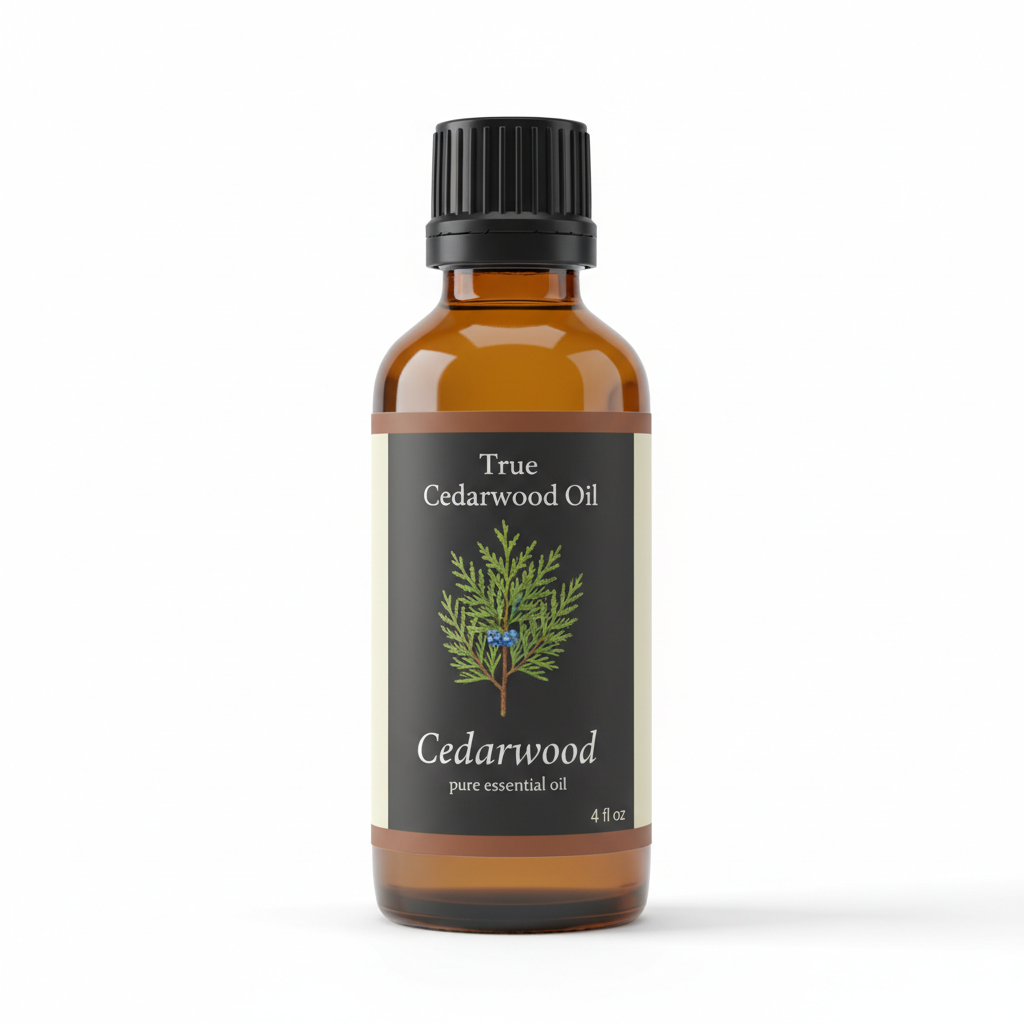
Cedarwood Essential Oil
Our own Cedarwood Essential Oil, in sizes from 0.5 oz to bulk.
From $9.99
Shop Now →Two woods, two kinds of warmth
The difference starts with chemistry, and you can hear it in the scent. East Indian sandalwood oil is built on santalols: a 2026 review of cedarwood oils puts alpha-santalol at 40 to 47 percent, and describes beta-santalol as the more potent of the pair, with woody, musky, almost animal qualities. Cedarwood is made of different molecules altogether. The true cedars, our Atlas and Himalayan oils, are dominated by himachalenes, while the juniper cedarwoods, our Virginian and Texas oils, lean on cedrene, cedrol and thujopsene. The same review notes that sesquiterpenoids in general are what give cedarwood oils their woody fragrance. Different molecules, different smell, same woody neighbourhood.
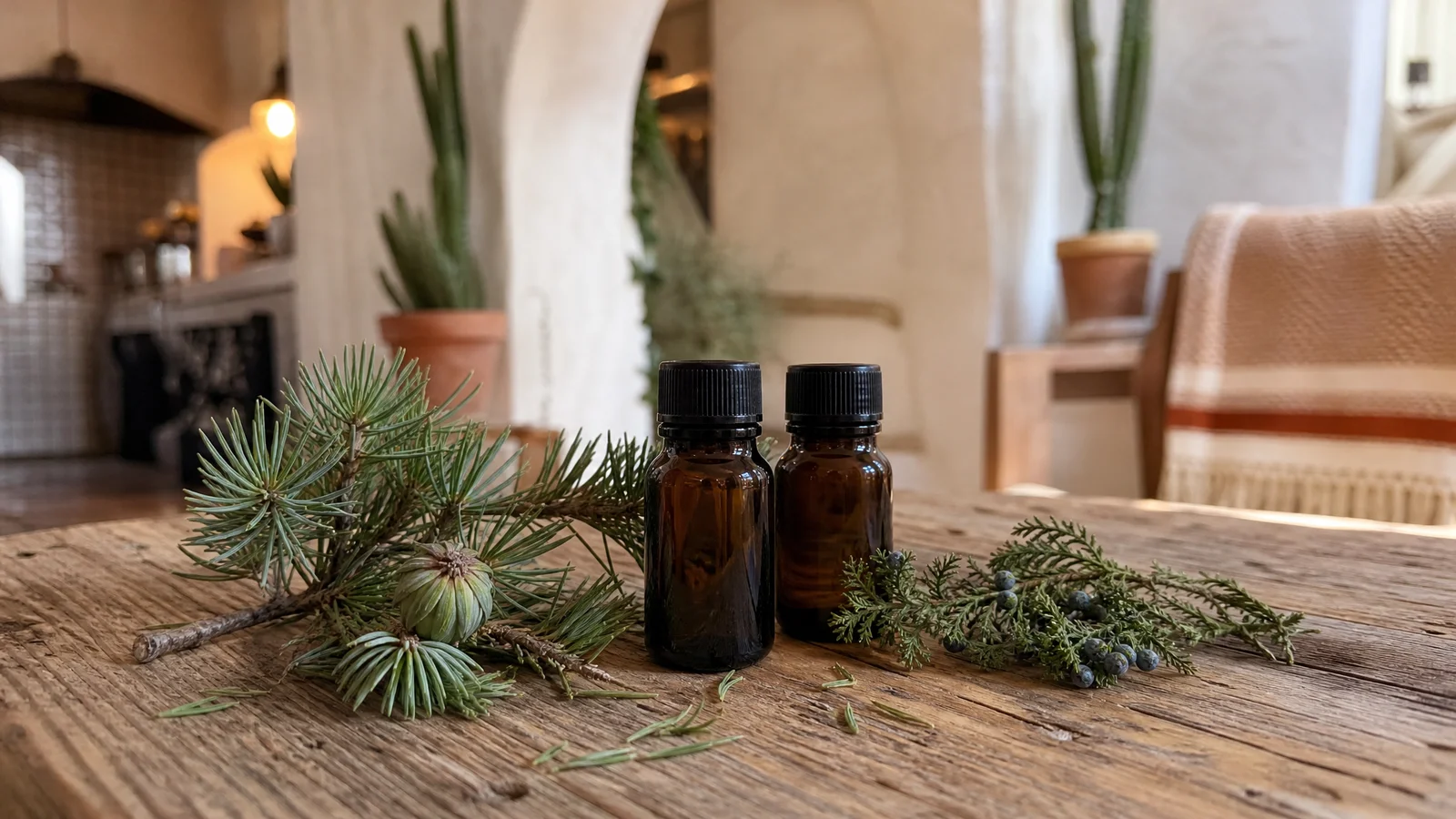
That is why the four cedarwoods we sell each sit differently beside sandalwood. We describe our Atlas oil as dry, woody and warmly sweet with a balsamic depth, and the Himalayan as warm, sweet and softly resinous, softer than the dry pencil-shaving edge of the Virginian. The Texas sits comfortably between Virginian and Himalayan. Sandalwood is one of the blending partners we list for the Atlas, Himalayan and Texas oils, which tells you how we think of the pairing: cedarwood alongside sandalwood, adding structure and a dry backbone.
When cedarwood can stand in
Plenty of recipes say "woody base" and only half mean sandalwood. If what you want is a steady, dry, woody foundation under citrus or lavender, a cedarwood oil does that job well. If what you want is sandalwood's creamy roundness, cedarwood will not supply it, and you will notice the recipe reads drier. That is our reasoning from the chemistry rather than a lab result, but it matches how the two are described across perfumery writing.
If you are replacing sandalwood and want the softest landing, the Himalayan is the one we would try first, because of how we describe it. For a crisper, pencil-shaving edge, the Virginian is the one. Sandalwood itself is a specialist item, so look for it at an aromatherapy or perfume-supply shop and ask for the botanical name.
Try them side by side on a strip
If you already have a sandalwood you like, the quickest way to understand cedarwood is to smell the two together. Dip one paper strip in each, label them in pencil, and let them sit for a few minutes. Smell the sandalwood first and notice how round and soft it feels, then the cedarwood and notice how it straightens up and dries out. Come back after an hour and smell them again. The cedarwood often keeps its backbone while the creamy character shifts, and that is the moment you will see why perfumers keep both on the bench.
A note on shopping for sandalwood
Sandalwood is slow-growing and expensive, which invites imitation. In one study, researchers bought six oils sold as sandalwood and ran gas chromatography on them. None met the international standard for sandalwood oil (ISO 3518:2002). Only one contained both santalols; three looked like Amyris, sometimes sold as West Indian sandalwood, and two were synthetic mixtures. The labels were right in only three of the six. Six bottles is a small sample and not a verdict on the market, but it is a good reason to ask any seller for the Latin name and a GC-MS report, whichever wood you are buying.
The same habit pays off with cedarwood, where the words "cedarwood oil" alone do not tell you whether you are holding a Cedrus or a juniper. We name the tree on every one of our product pages. If you need a GC-MS report or species confirmation for a particular lot, ask us in writing through our contact page, and our guide to reading a GC-MS report shows what to look for when it arrives.
Swapping one for the other: the arithmetic
Say you have a body oil recipe at 1 percent total essential oil in 1 oz (29.57 ml) of carrier. That is about 0.3 ml of essential oil, or roughly 6 drops at the common estimate of 20 drops per ml (droppers vary, so weigh if you can). If 2 of those drops were sandalwood and you take them out, adding 2 drops of cedarwood holds the total at 1 percent. That is arithmetic, not a tested recipe, and the sensible way to try it is to smell the blend on a strip before you commit a whole batch.
Keep the total at the gentle end of our 0.5 to 2 percent guidance for skin, and patch test first. Exact limits differ from oil to oil and by product type, so if you make products to sell, check the current IFRA standard for the specific oils you use.
For more on pairing, see our woody blend partners, the scent profile of each oil, the family guide to our four cedarwoods and how cedarwood works in perfumery.
A simple way to think about it
Sandalwood gives a blend its cushion, and cedarwood gives it its frame. If your blend smells too sweet or too soft, a touch of cedarwood tends to tidy it up. If it smells too dry, you may want something rounder alongside it. Treat it as a conversation between the two woods, make small changes, and let your nose have the last word.
Cedarwood and sandalwood have been sharing perfumers' benches for a long time. Let each one do what it does best and the blend takes care of itself.
Cedarwood Essential Oil
Cedarwood Essential Oil from our own shop, in sizes from 0.5 oz to bulk.
From $9.99
Shop Now →Sources & Further Reading
- Setzer WN, Satyal P. Cedarwood Oils: The Wood Essential Oil Compositions from Trees Known as "Cedar". Plants (Basel), 2026.
- Kucharska M et al. A Comparison of the Composition of Selected Commercial Sandalwood Oils with the International Standard. Molecules, 2021.