Cliganic vs VINEVIDA Cedarwood Oil: Listings Compared
Two well-known brands, Cliganic and VINEVIDA, both sell cedarwood essential oil online, and their product pages make a nice case study in how differently a seller can describe the same family of oils. This is a friendly read of what their pages say as we saw them on 5 November 2026, not a ranking and not a review of the oil inside the bottles. Listings change, so check the live page before you rely on any line below.
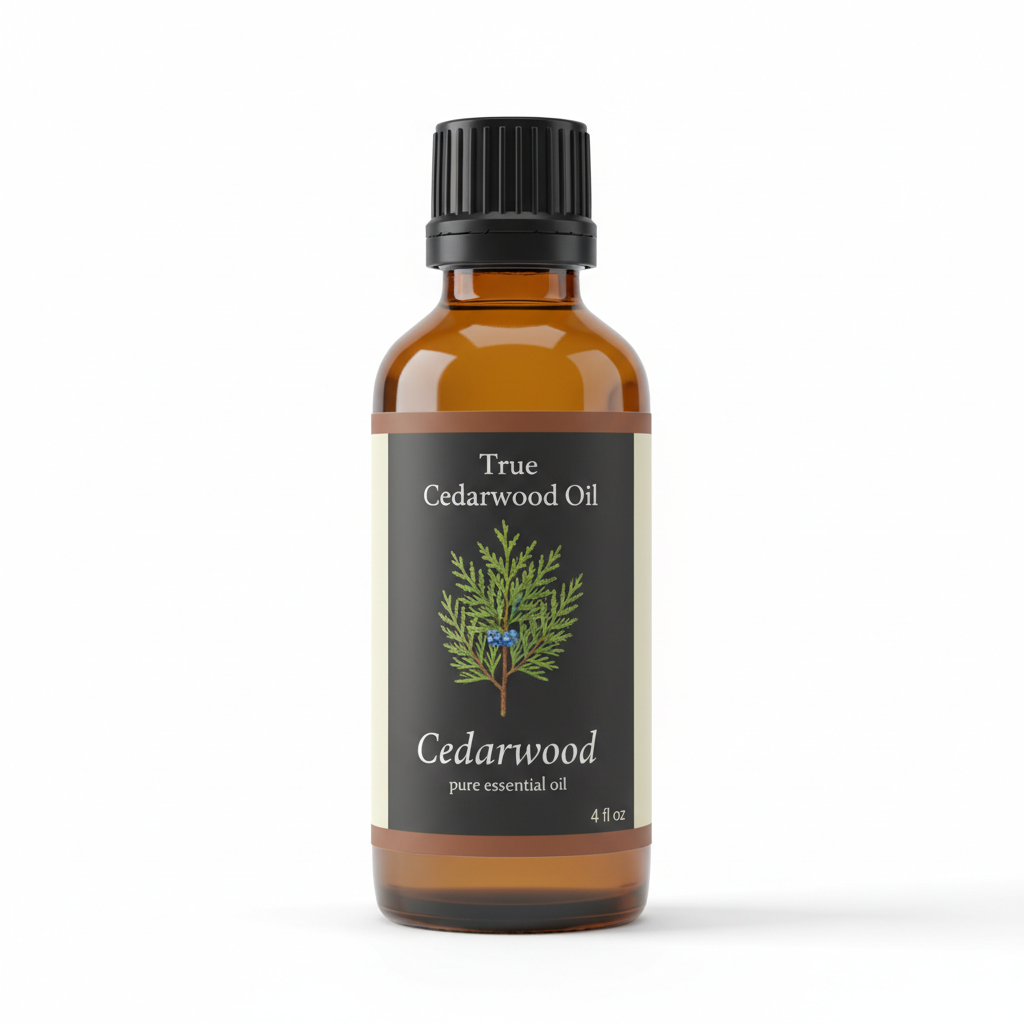
Cedarwood Essential Oil
Our own Cedarwood Essential Oil, in sizes from 0.5 oz to bulk.
From $9.99
Shop Now →What each page tells you
| Listing | Botanical name | Origin, part and process | Documents mentioned |
|---|---|---|---|
| Cliganic, Organic Atlas Cedarwood | Not given in the description (the product name says Atlas) | "Steam distilled from the wood of the cedar tree"; no country named | Says it is third-party tested for purity and quality; no report named in the description |
| VINEVIDA, Virginia | Juniperus Virginiana | USA, wood, steam distilled | None mentioned in the text |
| VINEVIDA, Himalayan | Cedrus Deodara | India, wood, steam distilled | States that GC-MS, CoA and SDS are provided |
| VINEVIDA, Atlas | Cedrus Atlantica | Morocco, wood, steam distillation | None mentioned in the text |
| VINEVIDA, Texas | Juniperus Mexicana | USA, wood, steam distilled | Shows a GC-MS snapshot, with the full report listed under documents |
The contrast that stands out is not brand against brand but how specific each page is. VINEVIDA names a species for every oil, lists a country for each and, on two pages, points to analytical documents. Cliganic's description is shorter on botany. We read the pages' text and did not open every linked document, so a report may exist where we did not look. As with any seller, ours included, a page statement is a statement until the document for your lot is in your hands. The Certificate of Analysis we publish covers one Atlas batch and lists density and refractive index, so we hold ourselves to the same standard.
Small differences that are worth noticing
VINEVIDA's Atlas page describes the oil as a top note that acts like a base-note fixative, while we describe our Atlas as a steady base note. Both are seller descriptions rather than measurements, and that is a nice reminder that perfumery notes are somewhat subjective. The Texas tree is a second example: VINEVIDA lists Juniperus mexicana, as we do, but other scientific literature uses different names, and our buying checklist explains why a lot report is the best way to be sure.
Pregnancy wording also varies. The Virginia page tells readers to consult a doctor if pregnant or breastfeeding, while the Texas page includes a line about the first sixteen weeks of pregnancy. We avoid choosing between phrasings. If this applies to you, ask your physician or midwife, and see our pregnancy article.
Dilution: three levels of detail
Cliganic's description says to dilute with a carrier oil. VINEVIDA's Virginia page says to dilute and patch test without a percentage, and its Texas page gives a maximum dilution of 3%. Our guidance is 0.5% to 2% in a carrier oil with a patch test first, and we start at the low end. None of these numbers is a verified limit for every oil and person. A 13-week rodent study of Virginia cedarwood oil on skin worked out benchmark dose lower limits between 0.65% and 4.4% depending on the endpoint and sex of the animal (Dose-response assessment of the dermal toxicity of Virginia cedarwood oil in F344/N rats and B6C3F1/N mice). Animal data is not a human limit, but it is a good reason to treat any seller's ceiling, including a friendly 3% or our 2%, as a guide and not a guarantee. Our dilution article shows the arithmetic.
Reading a listing like a shopper
When you compare product pages, give yourself a little routine. Save or screenshot the page with the date, because listings change. Read the product name last and the fine print first. Notice what the seller says plainly and what they leave out, then write down the questions you would still like answered. None of this is about catching anyone out. It is just a way of making sure you are choosing from facts and not from adjectives.
Benefit language
Several of these pages describe uses well beyond fragrance, such as sleep, stress and hair. We keep our cedarwood oils firmly in the aroma and craft lane and make no such claims. If a purchase hangs on one of those promises, a product page is not evidence for it, and our benefits article looks at what research does and does not show.
Why compare pages at all
We find that comparing pages is the quickest way to learn what good information looks like. When one seller names the tree, the country and the document and another gives a general description, the contrast teaches you what to ask for. Use these two listings as practice, then try the same exercise with any brand you are considering, including ours.
A five-point way to compare any two listings
- The botanical name.
- The plant part and process.
- A lot number.
- The document for that lot and what it measures.
- The dilution the seller recommends.
A listing that answers all five clearly is easier to trust than one that answers none. If you want a report for a specific lot of any oil, ask for it in writing, and that includes asking us through the contact page.
A word on tone
We like having other sellers in the same space. A well-written page from anyone makes the whole conversation about cedarwood a little better, and a thin page is a chance to ask a question. Be curious, be polite, and keep your own notes.
Whichever brand you choose, let the Latin name and the document, not the adjectives, make the decision.
Cedarwood Essential Oil
Cedarwood Essential Oil from our own shop, in sizes from 0.5 oz to bulk.
From $9.99
Shop Now →Sources & Further Reading
- Cliganic. Organic Atlas Cedarwood Essential Oil | Essential Oil Singles. cliganic.com
- VINEVIDA. Cedarwood (Virginia) Essential Oil. vinevida.com
- VINEVIDA. Cedarwood (Himalayan) Essential Oil. vinevida.com
- VINEVIDA. Cedarwood (Atlas) Essential Oil. vinevida.com
- VINEVIDA. Cedarwood (Texas) Essential Oil. vinevida.com
- Catlin et al., 2016. Dose-response assessment of the dermal toxicity of Virginia cedarwood oil in F344/N rats and B6C3F1/N mice. Food and Chemical Toxicology. Europe PMC 27769849