Cedarwood Oil vs DEET: What Mosquito Studies Show
If you are heading somewhere mosquitoes can carry disease, this is not a close contest, and we would not dress it up as one. We sell cedarwood oils for their warm, woody aroma and for crafting, and we make no repellent claim for them. But the question is a fair one, and the best answer comes from the study everyone points to: a head-to-head test of repellents on real arms.
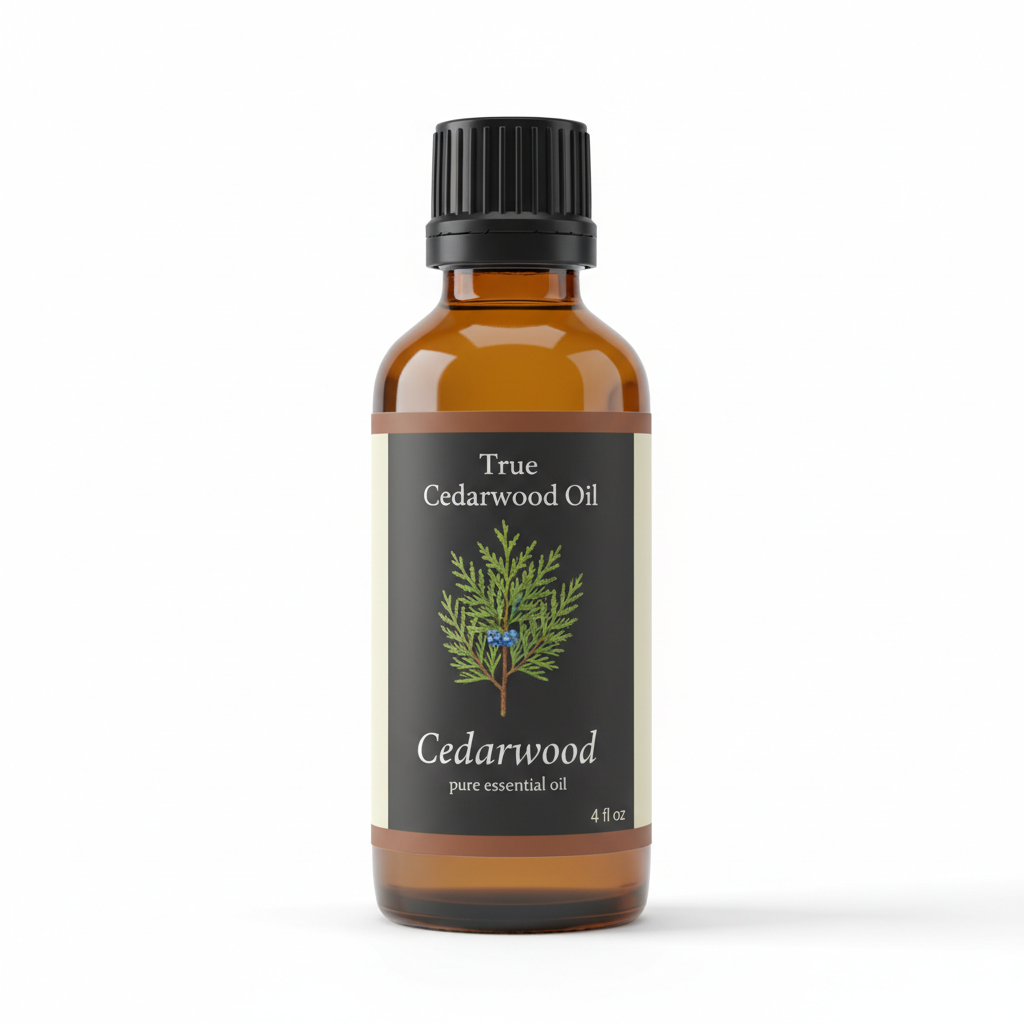
Cedarwood Essential Oil
Our own Cedarwood Essential Oil, in sizes from 0.5 oz to bulk.
From $9.99
Shop Now →What the study measured
Researchers put 15 volunteers' treated arms into cages of mosquitoes under controlled conditions, with the species, age, hunger, temperature, humidity and light cycle all held constant. They tested seven botanical repellents, four DEET products, one IR3535 product, three repellent wristbands and a moisturizer sometimes claimed to repel insects. The clock stopped at the first bite (Comparative efficacy of insect repellents against mosquito bites).
The results were lopsided. A formulation with 23.8% DEET gave complete protection for a mean of 301.5 minutes, about five hours. A soybean-oil-based product averaged 94.6 minutes, and the IR3535 product 22.9 minutes. Every other botanical product protected for under 20 minutes on average, and the wristbands gave none. The authors concluded that non-DEET repellents cannot be relied on for prolonged protection where mosquito-borne disease is a serious threat.
The abstract does not say which botanicals were in the group of seven, so we cannot tell you whether any contained cedarwood oil. It is also a 2002 study of products then on the US market, not a test of an oil you dilute yourself.
A summer evening in numbers
This is simple arithmetic, not a forecast. A four-hour dinner outside is 240 minutes. A mean of 301.5 minutes covers that with an hour to spare. A product protecting for under 20 minutes would need reapplying at least a dozen times to cover the same evening. Laboratory means are not guarantees, of course. EPA notes that real-world effectiveness varies with perspiration, water exposure, air temperature and even how attractive you are to mosquitoes, since every person is different.
What other studies say about essential oils
We could not find an arm-in-cage protection time for cedarwood oil against mosquitoes that we could read, so we will not quote one. A 2023 study tested 20 active ingredients from EPA's minimum-risk list as 10% lotions against Aedes aegypti mosquitoes and Ixodes scapularis ticks. Clove and cinnamon oil gave the longest protection, over an hour (Repellent efficacy of 20 essential oils on Aedes aegypti mosquitoes and Ixodes scapularis ticks in contact-repellency assays). The abstract does not name cedarwood among the leaders.
Note the strength. Ten percent is far above the 0.5% to 2% we recommend for skin, and raising a skin application to match it would go beyond our own safety guidance. We do not suggest that.
What a registration number tells you
EPA explains that an EPA registration number on a repellent label means the company gave EPA technical information on the product's effectiveness, and CDC recommends EPA-registered products (Using Insect Repellents Safely and Effectively). Essential oils sold under the minimum-risk exemption are a different category. EPA also notes that an exempt product label may not claim to control pests in a way that links them with a specific disease (Personal Insect Repellents and Minimum Risk Pesticides). So when disease is the worry, the registration number is the thing to look for.
Reading a repellent label
It helps to know what you are looking at in the pharmacy aisle. Look for the EPA registration number on the label, read the directions for how often to reapply, and notice whether the product is meant for skin or for clothing. Take a minute to check what age it is suitable for if a child will use it. A label that is clear and specific is a good sign, and one that is vague about where and how to use it is worth putting back. Following the directions is part of why a repellent works as the study suggests.
A sensible order of thinking
- Disease risk where you are going: choose an EPA-registered product, follow its label, and ask a physician or travel clinic for destination advice. That decision belongs with them.
- Just an annoying evening: screens, a fan and emptying standing water cut exposure without anything on your skin. That is reasoning, not a studied comparison.
- You simply like a woody scent outdoors: that is a fragrance choice. Dilute to 0.5% to 2%, start at the low end, patch test, and keep it away from eyes, children and pets.
Our body spray article works through the arithmetic of a scented spray, which is a fragrance rather than a repellent, and our pest evidence article reviews what researchers have actually studied. If you are pregnant, our guidance is to set cedarwood oil aside as a precaution, and for a child's repellent a paediatrician or pharmacist is the right person to ask. For cats, see our cat article and ask your veterinarian.
If you like a woody smell outdoors, there is a gentle way to enjoy it that does not ask the scent to do any protecting: keep a small cedar sachet in your daypack, or a drop on a cotton pad in a tin in the car. You will notice it when you open the bag, and it brings a little of the woods along. Just keep it away from skin, food and pets.
The only certificate we publish covers one Atlas batch and lists density and refractive index, so none of our four oils comes with mosquito data. Enjoy cedarwood for what it does well, and let a registered product handle the mosquitoes.
Cedarwood Essential Oil
Cedarwood Essential Oil from our own shop, in sizes from 0.5 oz to bulk.
From $9.99
Shop Now →Sources & Further Reading
- Fradin and Day, 2002. Comparative efficacy of insect repellents against mosquito bites. New England Journal of Medicine. PubMed 12097535
- Luker et al., 2023. Repellent efficacy of 20 essential oils on Aedes aegypti mosquitoes and Ixodes scapularis ticks in contact-repellency assays. Scientific Reports. PubMed 36717735
- US EPA. Using Insect Repellents Safely and Effectively. epa.gov
- US EPA. Personal Insect Repellents and Minimum Risk Pesticides. epa.gov