Cedarwood Oil and Sleep: What the Cedrol Studies Show
Picture a wooden cabin in the evening, a little cedar in the air, and the whole room feeling slower. That image is why so many people ask whether cedarwood oil helps with sleep. The honest answer is that the research behind it is narrower than the reputation, and the most interesting part is a single compound called cedrol.
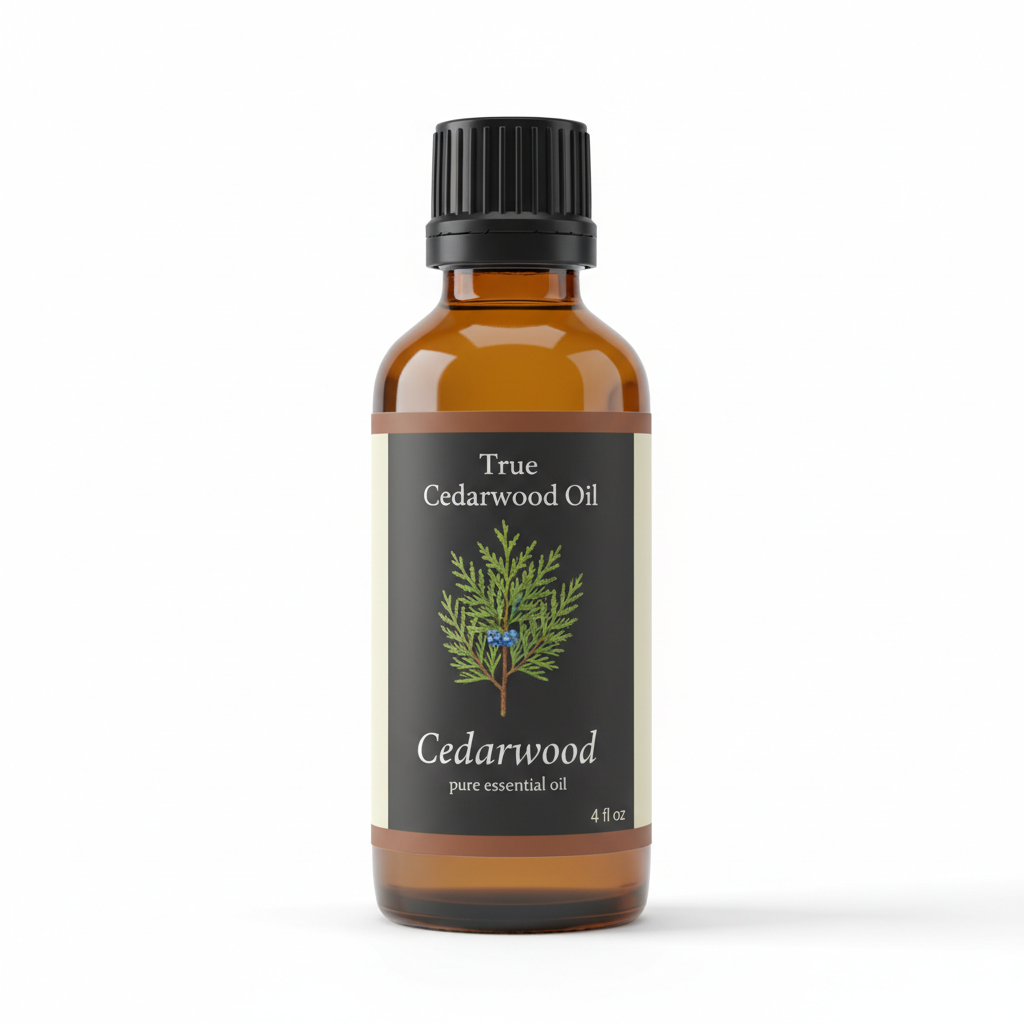
Cedarwood Essential Oil
Our own Cedarwood Essential Oil, in sizes from 0.5 oz to bulk.
From $9.99
Shop Now →The rodent study behind the reputation
Most of the sleep talk traces back to a 2003 study by Kagawa and colleagues at Kao Corporation. They exposed rats and mice to inhaled cedrol, a component of cedarwood oil, and found that the animals moved around less, even when they had been given caffeine, and that cedrol lengthened the sleeping time brought on by a sedative drug. Rats whose sense of smell had been dulled still showed the effect, which led the authors to suggest it was not working through the nose.
It is a neat piece of work, but look at what it measured. The animals were rodents, the substance was one isolated compound rather than a whole oil, and the outcome was how long drug-induced sleep lasted. That is quite far from a person drifting off after a long day.
The human experiment that never measured sleep
The other paper people cite is a 2003 study by Dayawansa and colleagues. Twenty-six healthy adults breathed vaporised cedrol through a face mask, then plain air at the same flow, while researchers monitored their hearts and breathing. During the cedrol, heart rate, blood pressure and breathing rate went down compared with plain air, and the pattern of heart-rate variability shifted in a direction the authors read as relaxation.
Again, it is worth reading closely. Nobody was asked to sleep, and no sleep quality or time to fall asleep was measured. And a face mask delivering a measured stream of cedrol straight to the nose is a very different thing from a diffuser quietly running across a bedroom, where most of the vapour is carried off by air movement long before you breathe it.
Why a cabin feels sleepy
Part of the pull of cedar at bedtime is simply the setting. A wooden cabin usually comes with other cues: a cooler room, soft light, quiet, a heavy blanket. The smell of wood sits in the background of all of that, so it gets the credit. This is our own observation about how people describe it, not a finding, but it is a useful reminder that the room, and not only the scent, shapes an evening.
Cedrol belongs mostly to the junipers
Here is a detail that rarely gets mentioned. In a 2026 review of cedarwood oil compositions, Setzer and Satyal found cedrol among the major components of the juniper oils, such as Virginian, but it is not among the major components listed for the true cedars, Atlas and Himalayan, whose chemistry leans on himachalenes and atlantones. We sell all four oils, two of each kind, so a cedrol study is simply not a study of every cedarwood. If the compound interests you, our article on cedrol and atlantones sorts out which oil has which.
What sleep experts start with
When people ask clinics how to sleep better, the answers are wonderfully ordinary. The NHS says insomnia usually gets better by changing sleeping habits: going to bed only when sleepy, getting up at the same time every day, making the bedroom dark and quiet, winding down for an hour before bed, and avoiding screens, daytime naps, large late meals and caffeine or alcohol close to bedtime. It suggests seeing a GP if those changes have not helped, and it says to check with a doctor before taking anything for sleep problems. If you are struggling for weeks, or have loud snoring or pauses in your breathing, that is a conversation for a physician or sleep specialist.
If you like the scent in the evening
Should you want to try cedarwood as a pleasant background aroma, keep it small and simple. A drop on a paper blotter or a wooden bead beside the chair, set aside from the bed and away from pets, gives a gentle hint of wood you can put away when you are done. You will notice that dry, warm cedars like our Atlas and softer, rounder ones like our Himalayan feel quite different, so it is worth sniffing before you settle on one. Choose whichever you simply like.
Where that leaves the oil
We sell cedarwood oils as aromatic materials for external use, and we do not offer them as a sleep product. What we can say is that a warm, woody aroma is a lovely part of many people's evening, and if you enjoy it, that is a perfectly good reason to use it. If you are curious about scent in a bedroom, our evening room ritual article and diffuser basics cover how people approach it, and our look at anxiety research reads the studies the same careful way. For skin use our guidance is to dilute to 0.5 to 2 percent in a carrier, patch test, and keep the oil away from eyes, children and pets.
The next time you see a headline about cedarwood and sleep, ask three quick questions: which compound, which animal or person, and what was actually measured. Those answers usually tell you more than the headline does.
Cedarwood Essential Oil
Cedarwood Essential Oil from our own shop, in sizes from 0.5 oz to bulk.
From $9.99
Shop Now →Sources & Further Reading
- Kagawa D, Jokura H, Ochiai R, Tokimitsu I, Tsubone H, 2003. "The sedative effects and mechanism of action of cedrol inhalation with behavioral pharmacological evaluation." Planta Medica. PubMed 12898420
- Dayawansa S, Umeno K, Takakura H, Hori E, Tabuchi E, Nagashima Y, et al., 2003. "Autonomic responses during inhalation of natural fragrance of Cedrol in humans." Autonomic Neuroscience. PubMed 14614968
- Setzer WN, Satyal P, 2026. "Cedarwood Oils: The Wood Essential Oil Compositions from Trees Known as "Cedar"." Plants. PMC12944130
- NHS, "Insomnia - NHS." nhs.uk/conditions/insomnia