Cedarwood Evening Routine: A Scented Wind-Down
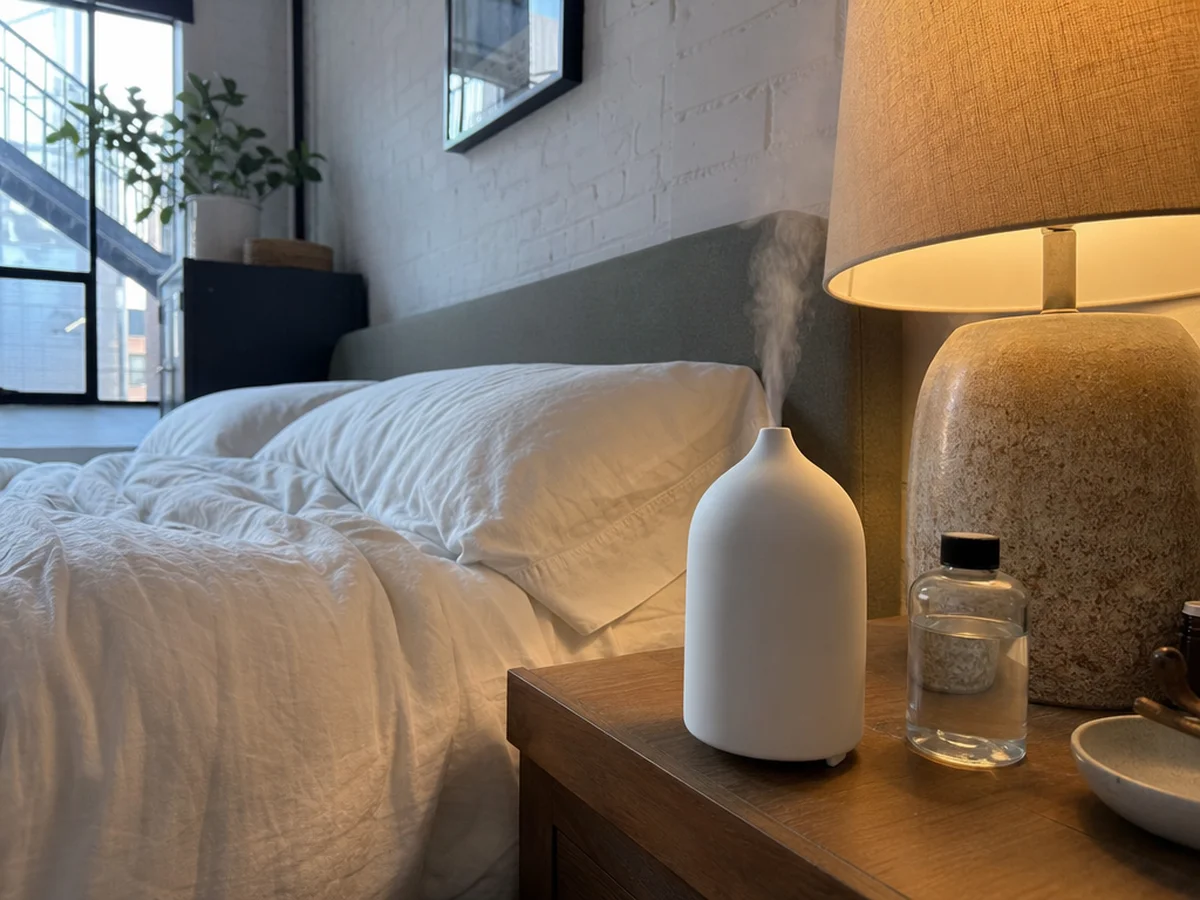
There is a quiet pleasure in an evening that has a shape: lights lowered, phone away, a faint woody scent in the room. People often ask whether cedarwood belongs in that picture, and the honest answer is that it can be a lovely cue, as long as we are clear about what does the real work.
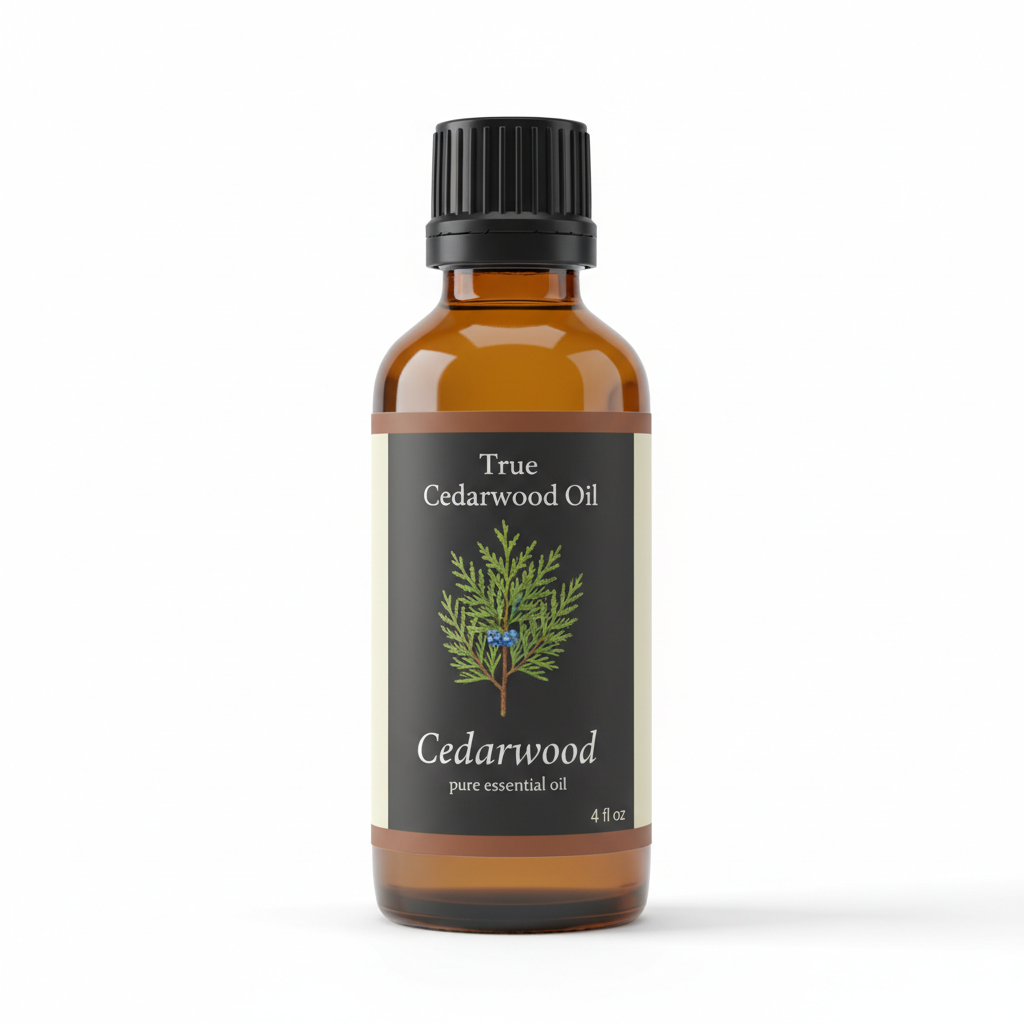
Cedarwood Essential Oil
Our own Cedarwood Essential Oil, in sizes from 0.5 oz to bulk.
From $9.99
Shop Now →The routine is the star
We sell cedarwood oils as aroma materials and make no sleep claim for any of them. The CDC's page on sleep, in fact, mentions habits and no scent at all: the same bedtime and wake time every day, a quiet, relaxing, cool bedroom, electronics put away at least 30 minutes before bed, and no caffeine in the afternoon or evening. For adults aged 18 to 60 it says 7 or more hours.
That list is free, and it is where an evening begins. Cedarwood is the finishing touch, not the foundation.
What the cedarwood research looked at
You will see cedarwood connected with calm evenings online, and it helps to know where that comes from. The studies used cedrol, one compound found in cedarwood oil, rather than a bottle of oil in a bedroom.
In a 2003 Japanese study, rats breathing cedrol moved less than unexposed rats, and the effect persisted when their sense of smell was dulled, which led the authors to suggest it was not working through the nose (Kagawa and colleagues). A 2007 study compared women in Norway, Thailand and Japan and found a change in the pupil's light reflex, a marker of nervous system activity, after cedrol inhalation (Yada and colleagues). Neither study measured how anyone slept.
There is also a matter of which oil. A 2026 composition review finds cedrol among the main components of juniper cedarwoods such as Virginian (about 13% on average across 56 commercial samples), while the true cedars, Atlas and Himalayan, are led by himachalenes and atlantones. So it is an open question how far a cedrol study speaks for any particular oil on your shelf. For the full account see our article on the cedrol studies.
Building a cedar-scented evening
Think of this as an arrangement of cues rather than a treatment. It is our suggestion, built from the habits above.
- Fix the frame first. Pick a wind-down time, put devices away, and keep the room cool and quiet.
- Use the scent at the same point each night. Repetition is what turns a smell into a signal for “the day is done.” That is reasoning about habit, not a finding about cedarwood.
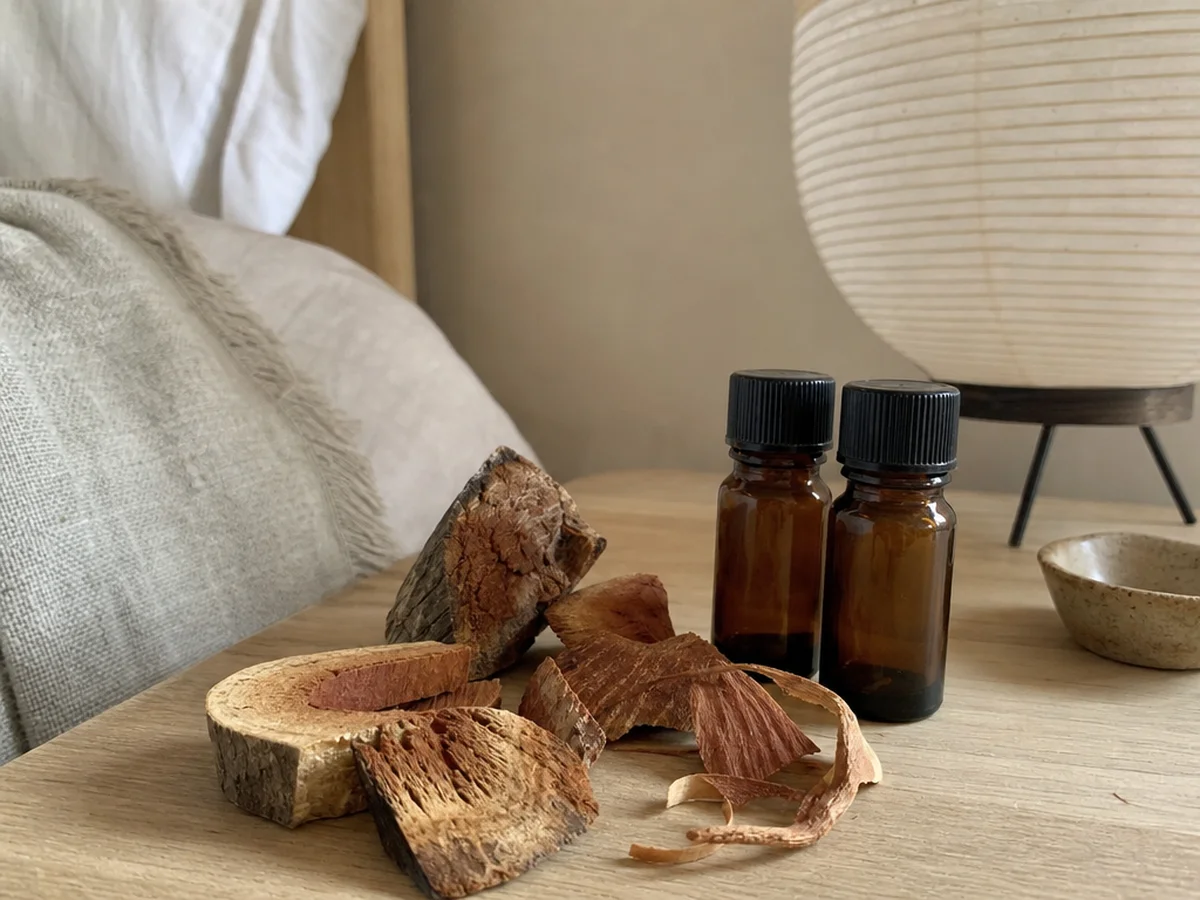
- Keep it light. A single drop on a cotton pad or a fabric sachet, set a short distance from the pillow rather than on bedding, is plenty. Cap the bottle afterwards.
- Choose by scent. We describe Atlas as dry, woody and warmly sweet, Himalayan as warm, sweet and softly resinous, Virginian as dry and sharp like pencil shavings, and Texas as soft and smooth. Our smell guide goes through each one.
Keep the oil off skin unless it is diluted; our dilution guide shows how.
One more thought on the scent itself. Cedarwood is a base-note material, which means it unfolds slowly and lingers rather than announcing itself, and that gentle persistence suits a quiet room. If you find yourself reaching for more, try a different oil from the family before turning up the amount; the Himalayan's softer, resinous character and the Atlas's warm sweetness feel quite different from the crisp Virginian.
Making the cue pleasant
Before you attach a scent to your evening, smell it on a cotton pad in daylight and be sure you like it. If a scent does not please you, no habit will rescue it. Then pair it with something you already enjoy: lowering the lamps, a warm mug of something caffeine-free, a few pages of a book. The scent should be one small, pleasant part of the picture and not the star of it.

Notice how the smell changes over the first few minutes. Cedarwood starts crisp and settles into something softer, and that slow settling is a nice thing to sit with while you put the day down.
A word on diffusers
If you prefer a diffuser, a pilot study with tea tree oil (not cedarwood) found that a heat diffuser produced terpene levels roughly ten times higher than an ultrasonic one in a simulated room (Zisook and colleagues, 2025). It is one oil in one test, but it is a fair reason to run any diffuser for a short while rather than all night. We cover the practicalities in our diffuser article.
A few small rituals worth keeping
An evening with a shape is made of small, repeatable things. Switch on one lamp instead of the overhead light. Put tomorrow's keys and bag by the door so the day is truly finished. Open the window a crack, then close it. Then, when you reach for the cedar-scented pad, you will notice that the smell has become part of the sequence. Keep the sequence short enough that you actually do it on a tired night.
If a night goes sideways, skip the ritual and try again tomorrow. A cue that feels like a chore has stopped being a pleasure.
Who should check first
Ask a veterinarian before scenting a room that pets share; our cat guide explains why. With young children in the house, America's Poison Centers advises keeping essential oils out of sight and reach, so a bedside bottle is best avoided. If you are pregnant, have a respiratory condition, or struggle with sleep that lingers, talk with your physician; the NCCIH notes that it is not known whether aromatherapy helps with insomnia because little rigorous research exists.
Used lightly, cedarwood is a calm, grounded note to close the day with. The evening itself is what does the heavy lifting.
Cedarwood Essential Oil
Cedarwood Essential Oil from our own shop, in sizes from 0.5 oz to bulk.
From $9.99
Shop Now →Sources & Further Reading
- About Sleep, CDC
- The sedative effects and mechanism of action of cedrol inhalation with behavioral pharmacological evaluation, Kagawa et al., Planta Medica, 2003
- Overseas survey of the effect of cedrol on the autonomic nervous system in three countries, Yada et al., Journal of Physiological Anthropology, 2007
- Cedarwood Oils: The Wood Essential Oil Compositions from Trees Known as "Cedar", Setzer and Satyal, Plants, 2026
- Volatile organic compound and particle emissions from the use of tea tree oil in essential oil diffusers, Zisook et al., Journal of Occupational and Environmental Hygiene, 2025
- Aromatherapy, NCCIH
- Essential oils: Poisonous when misused, Poison Control