Cedarwood Hair Claims: What the 1998 Scalp Trial Tested
If you have read that cedarwood oil is good for hair, you have probably met a single study: a 1998 trial that is quoted on countless product pages. It is a fascinating piece of research, and it is worth understanding exactly what it tested, because the headline number travels much further than the study does.
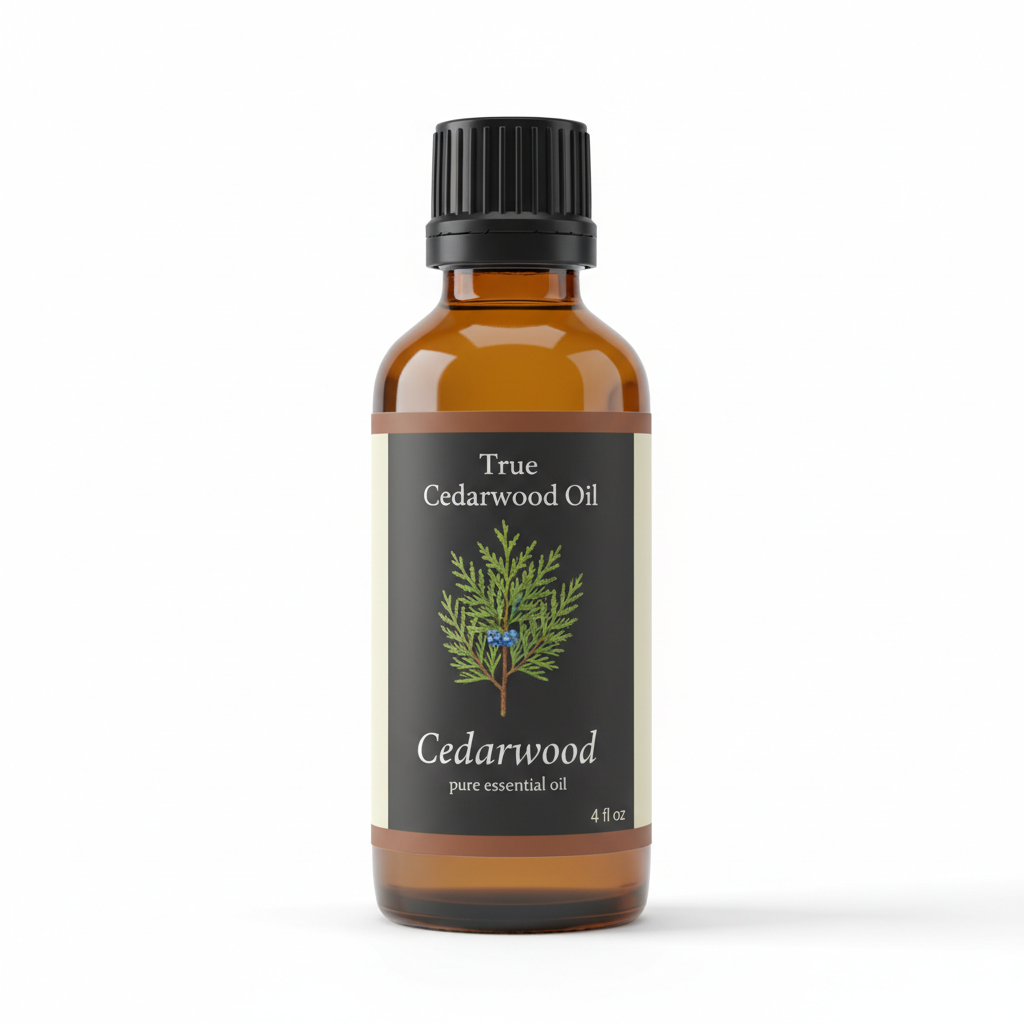
Cedarwood Essential Oil
Our own Cedarwood Essential Oil, in sizes from 0.5 oz to bulk.
From $9.99
Shop Now →Who was in it, and what they did
Hay, Jamieson and Ormerod recruited 86 people with alopecia areata, a condition in which hair falls out in patches. This is a medical condition diagnosed by doctors, quite different from everyday thinning. In a randomised, double-blind trial lasting seven months, half the group massaged a mixture of four essential oils (thyme, rosemary, lavender and cedarwood) in jojoba and grapeseed carrier oils into the scalp every day. The other half massaged in the carrier oils alone. Two dermatologists scored sequential photographs of the scalp, and they agreed with each other closely.
The result was that 19 of 43 people in the oil group (44 percent) showed improvement, against 6 of 41 (15 percent) in the carrier-only group. The authors concluded that the aromatherapy was a safe and effective treatment for alopecia areata.
What the number does and does not say
A few things are worth keeping in mind when you see that 44 percent quoted.
- It was a four-oil blend. Cedarwood was never tested alone, so the trial cannot say what any one oil contributed. A blend result is not a cedarwood result, and it is certainly not a result for any bottle on our shelf.
- "Improvement" is a rating, not a full head of hair. It was judged from photographs on a scale, so it is wrong to translate it as 44 percent regrowing their hair.
- Massage was in both groups. That was smart design, because it means the extra improvement is not simply the effect of rubbing the scalp. It also means a few people improved with carrier oil and massage alone.
- It was one trial in one condition. Alopecia areata is not pattern thinning, post-pregnancy shedding or stress shedding, and nothing here speaks to those.
Our own plain-English reading, which is reasoning rather than a finding of the paper, is that the strong scent of four oils would be hard to hide from participants, even with careful design. Researchers who later reviewed complementary treatments for alopecia concluded that few options have support from multiple randomised trials and called for better-designed studies. In short, it is an interesting trial that deserves a follow-up, which is a very different thing from a proven result for cedarwood.
How to read a headline like this one
A tidy habit helps whenever a study is quoted on a product page. Ask who the people were, what they did, how long it lasted, and how the result was judged. Then ask whether the thing for sale is the thing that was tested. Here the answers are: people with a specific condition, a daily massage for seven months, photographs scored by two doctors, and a four-oil blend. Once you have those four answers, a big percentage becomes much easier to place.
If hair is on your mind
Hair loss has many causes, and the NHS notes that illness, stress and iron deficiency are among them, while most hair loss does not need treatment. If you are losing hair in patches or suddenly, or if it is worrying you, the sensible first step is a GP or a dermatologist, who can say what type it is, well before any oil enters the picture. We do not claim that our cedarwood oils affect hair growth or any hair condition.
Using cedarwood for the scent
A warm, woody aroma is a lovely thing in a hair oil, and people have enjoyed cedar scent in grooming for generations. If that is what you are after, here is how we would go about it. Our guidance is to dilute to 0.5 to 2 percent in a carrier oil and patch test first, and for the scalp we would start at the low end, around 0.5 percent. That works out to about 0.15 ml per ounce of carrier, or roughly 3 drops (our arithmetic, at about 20 drops per ml). Keep it away from eyes, children and pets, and stop if your scalp itches or burns.
The four oils smell quite different. Atlas is dry and warmly sweet, Himalayan is softly resinous, Virginian is sharp like pencil shavings, and Texas is soft and smooth. The trial does not name its cedarwood species, so it gives no reason to favour one, and you can simply pick the aroma you like best. Our post on scalp massage and grooming has more on the practical side, cedarwood versus rosemary compares the two trials people usually set against each other, and our flaky scalp article covers the shampoo side. For skin sensitivity, see our patch testing guide.
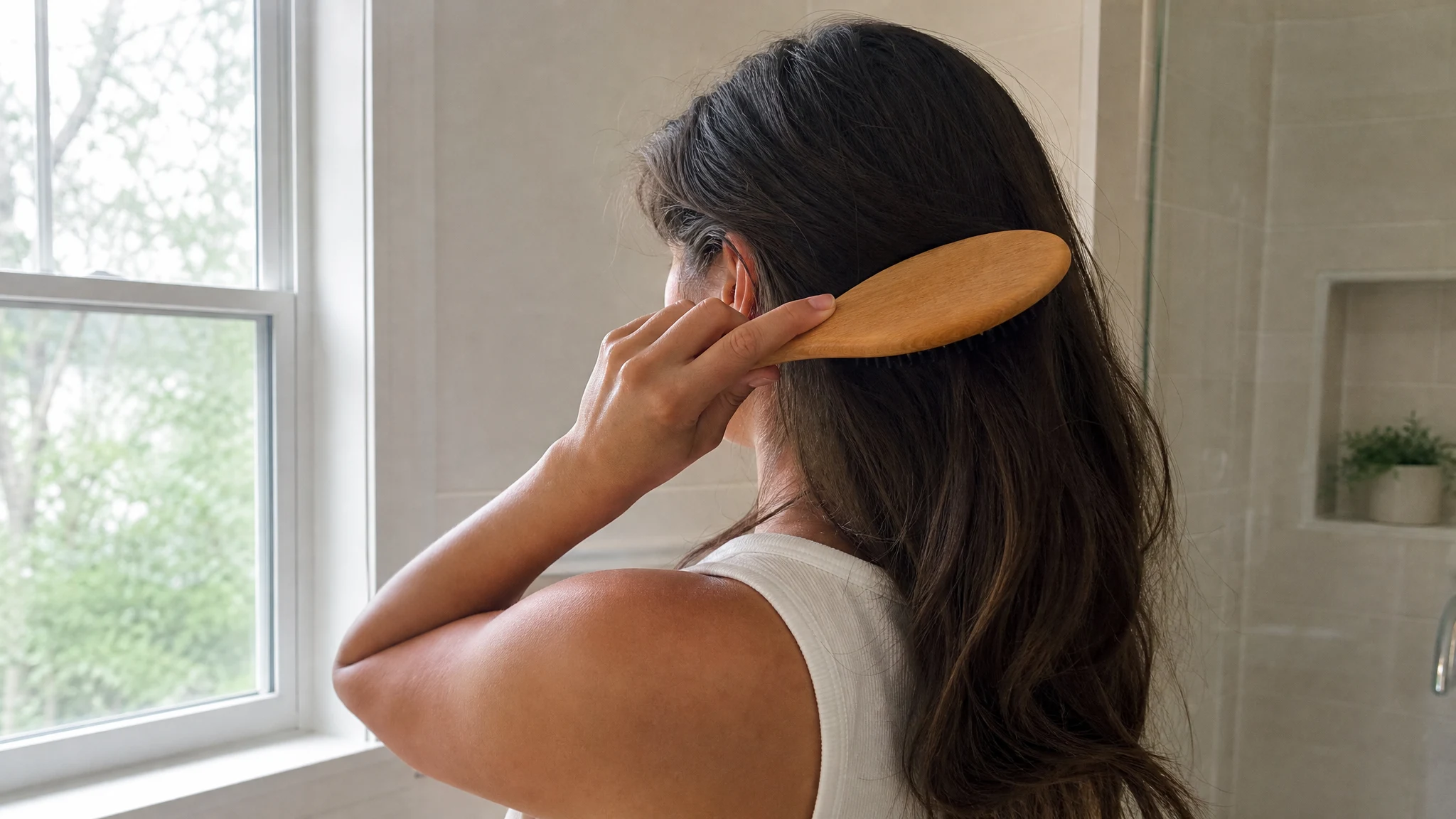
If you simply enjoy the idea of a scented scalp massage, the experience itself is worth thinking about. Warm the diluted oil between your palms and notice the woody scent as it warms. Go slowly, use your fingertips, and keep the oil away from your eyes. You will probably find the ritual is the part you enjoy most, and that is a perfectly good reason to do it.
That 1998 study remains a genuinely interesting piece of research, and the best way to enjoy it is to read it as a question that science is still working on.
Cedarwood Essential Oil
Cedarwood Essential Oil from our own shop, in sizes from 0.5 oz to bulk.
From $9.99
Shop Now →Sources & Further Reading
- Hay IC, Jamieson M, Ormerod AD, 1998. "Randomized trial of aromatherapy. Successful treatment for alopecia areata." Archives of Dermatology. PubMed 9828867
- Hosking AM, Juhasz M, Atanaskova Mesinkovska N, 2019. "Complementary and Alternative Treatments for Alopecia: A Comprehensive Review." Skin Appendage Disorders. PubMed 30815439
- NHS, "Hair loss - NHS." nhs.uk/conditions/hair-loss