Cedarwood vs Frankincense Oil: Which Scent Suits You?
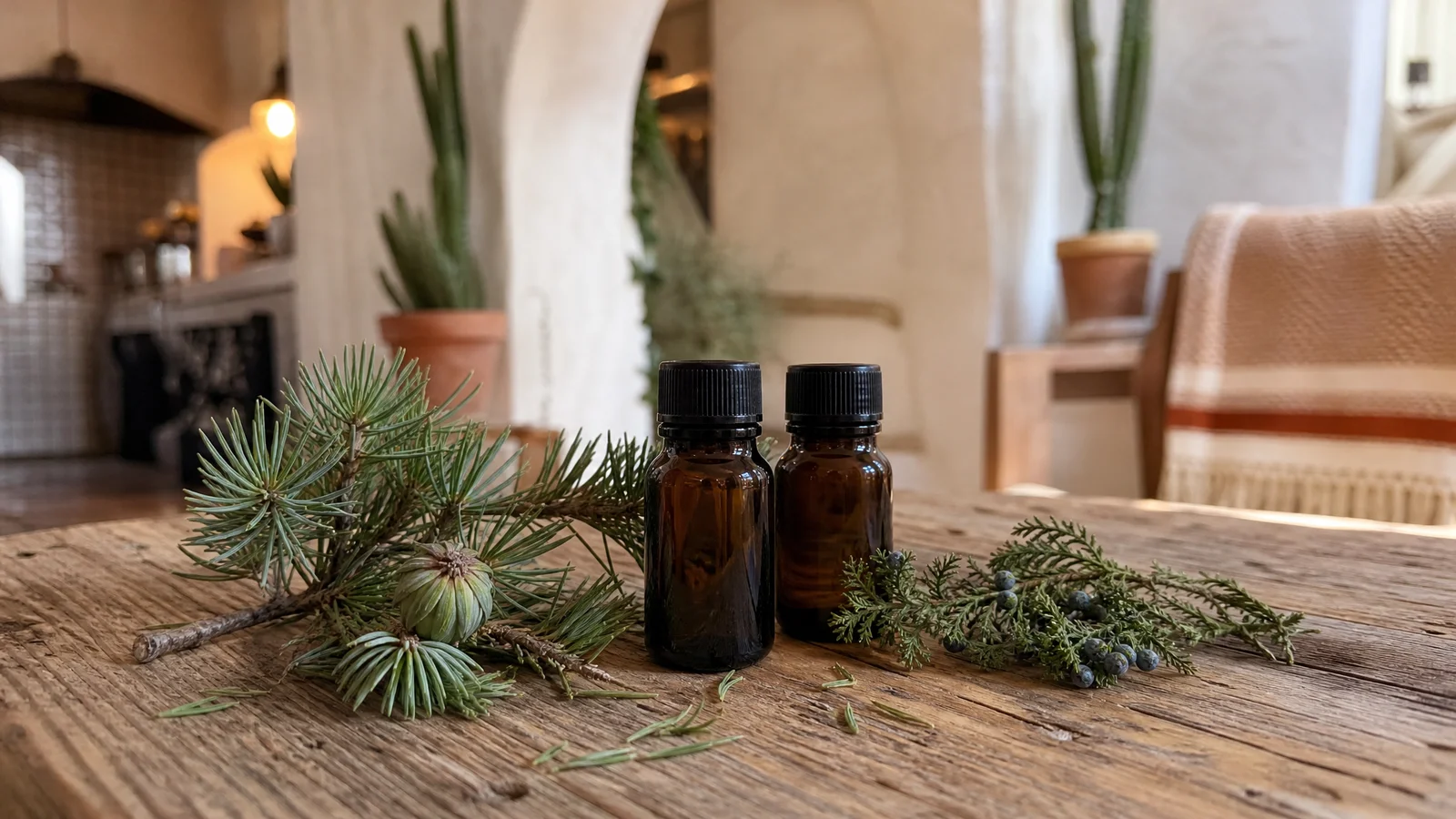
Hold a strip dipped in cedarwood next to one dipped in frankincense and the first thing you notice is height. Frankincense is bright and airy, with a piney, lemony lift, and it seems to float. Cedarwood is low and dry, the smell of a timber drawer. They are both "woody-resinous" on a shop shelf, but they sit in different parts of a blend, and knowing which part you need is most of the decision.

Cedarwood Essential Oil
Our own Cedarwood Essential Oil, in sizes from 0.5 oz to bulk.
From $9.99
Shop Now →Resin against wood
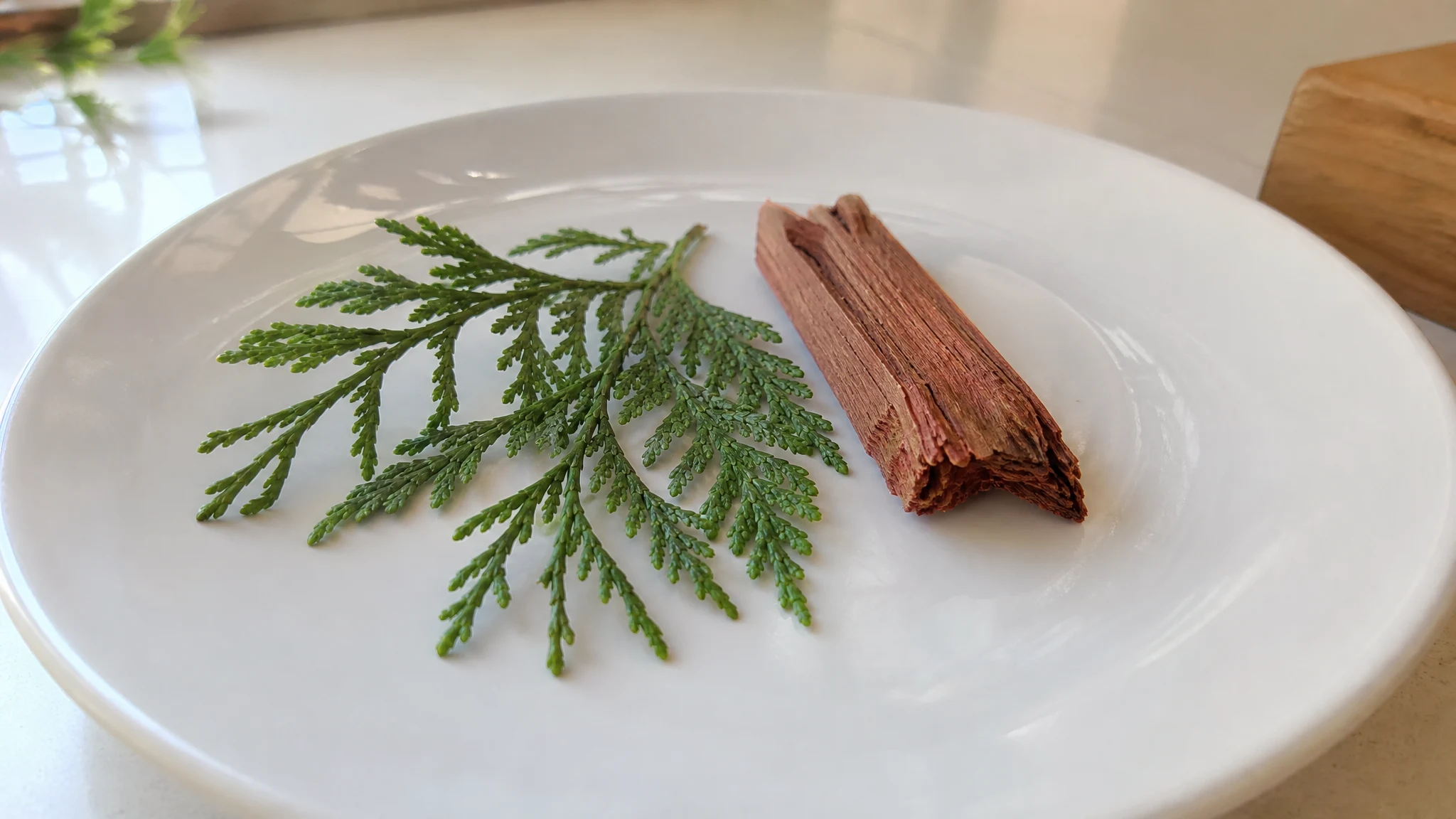
Cedarwood oil is distilled from wood. Frankincense oil is distilled from the oleo-gum resin of Boswellia trees, the hardened sap of those trees. That difference shows up in the chemistry. A 2022 study in the journal Plants distilled Boswellia carteri resin from Somaliland in the lab and found an oil led by alpha-pinene at 31.8 and 33.3 percent in the two runs, with limonene at 10.1 percent, alpha-thujene at 9.1, p-cymene at 5.5 and sabinene at 3.5. Pinene is the molecule behind the smell of fresh pine needles, and limonene is the one behind citrus peel. That is a light, fresh, high-flying profile.
Cedarwood sits in another range of the molecular scale. A 2026 review of cedarwood oils reports that our two true cedars (Atlas and Himalayan) are led by himachalenes, with beta-himachalene averaging 40.3 percent in 48 commercial Atlas oils, and that the juniper cedarwoods (our Virginian and Texas oils) are rich in cedrene, thujopsene and cedrol. These are heavier sesquiterpenes, and the same review notes that sesquiterpenoids in general give cedarwood oils their woody fragrance. So what you smell reflects what the molecules weigh: our reasoning is that the lighter pinene and limonene lift off the strip quickly, and the heavier cedar molecules linger. The sniff test agrees.
Which one is "your" scent?
We would put it this way:
- Choose cedarwood if you like dry, clean, dark-timber smells and want something to anchor a blend.
- Choose frankincense if you like fresh, resinous, slightly citrusy smells that feel light in a room.
- Want both? Use a little cedarwood as the floor and a little frankincense as the ceiling.
Among our four cedarwoods, the Himalayan echoes frankincense's resinous side: we describe it as warm, sweet and softly resinous. The Virginian is the contrast, dry and sharp like fresh pencil shavings. Frankincense is not one of the partners our product pages list, so this pairing is our own reasoning from the chemistry, not a house recipe. We do not sell frankincense, so look for it at an aroma or craft supply shop.
A blend on paper, with the arithmetic
For a diffuser, a simple 2 : 1 mix is a sensible start: 4 drops of frankincense to 2 drops of cedarwood, for 6 drops total. Because the lighter oil lifts off faster, give the cedarwood a minute or two before you decide the balance, since it shows up later than the first impression. If you want a drier, darker character, flip it to 2 drops frankincense and 4 cedarwood. Either way, treat the numbers as suggestions and smell the blend on a paper strip before you commit.
For a roller bottle, the arithmetic is tight. Ten millilitres of carrier at 1 percent holds 0.1 ml of essential oil, about 2 drops at the common estimate of 20 drops per ml (droppers vary, so weigh it if you can). At 2 percent it is 0.2 ml, about 4 drops. A 1 : 1 blend at 2 percent is therefore 2 drops of each. Our guidance for general skin use is 0.5 to 2 percent in a carrier oil, applied after a patch test. Published limits differ by oil and by product, so if you are making something to sell, check the current IFRA standards for each oil in your formula.
A word on buying frankincense
Frankincense oil is one of those oils worth buying with a little scepticism. In the same 2022 study, the authors also analysed 21 commercial oils bought online and sold as Boswellia carteri, and concluded that every one was either adulterated or contaminated with other species. Six had synthetic limonene, three had synthetic octyl acetate and three contained castor oil. It was a small sample bought from one market, so it is not a verdict on every seller, but it is a good reason to ask any supplier for the botanical name and a GC-MS report. The same habit matters for cedarwood, where the name alone does not tell you whether you have a true cedar or a juniper. If you need a report for one of ours, ask in writing through our contact page, and see how to read a cedarwood GC/MS report when it arrives.
To compare our four on the same terms, see Atlas, Himalayan, Virginian and Texas compared, what cedarwood oil smells like and cedarwood against sandalwood. Planning a mixed blend? What to blend with cedarwood oil has more ratios.
Neither oil needs to win. Keep a bottle of each for what each does best and you will find that the lighter one makes the darker one look warmer, and the darker one gives the lighter one somewhere to stand.
Cedarwood Essential Oil
Cedarwood Essential Oil from our own shop, in sizes from 0.5 oz to bulk.
From $9.99
Shop Now →Sources & Further Reading
- Ojha PK, Poudel DK, Rokaya A, Satyal R, Setzer WN, Satyal P. Comparison of Volatile Constituents Present in Commercial and Lab-Distilled Frankincense (Boswellia carteri) Essential Oils for Authentication. Plants (Basel), 2022.
- Setzer WN, Satyal P. Cedarwood Oils: The Wood Essential Oil Compositions from Trees Known as "Cedar". Plants (Basel), 2026.