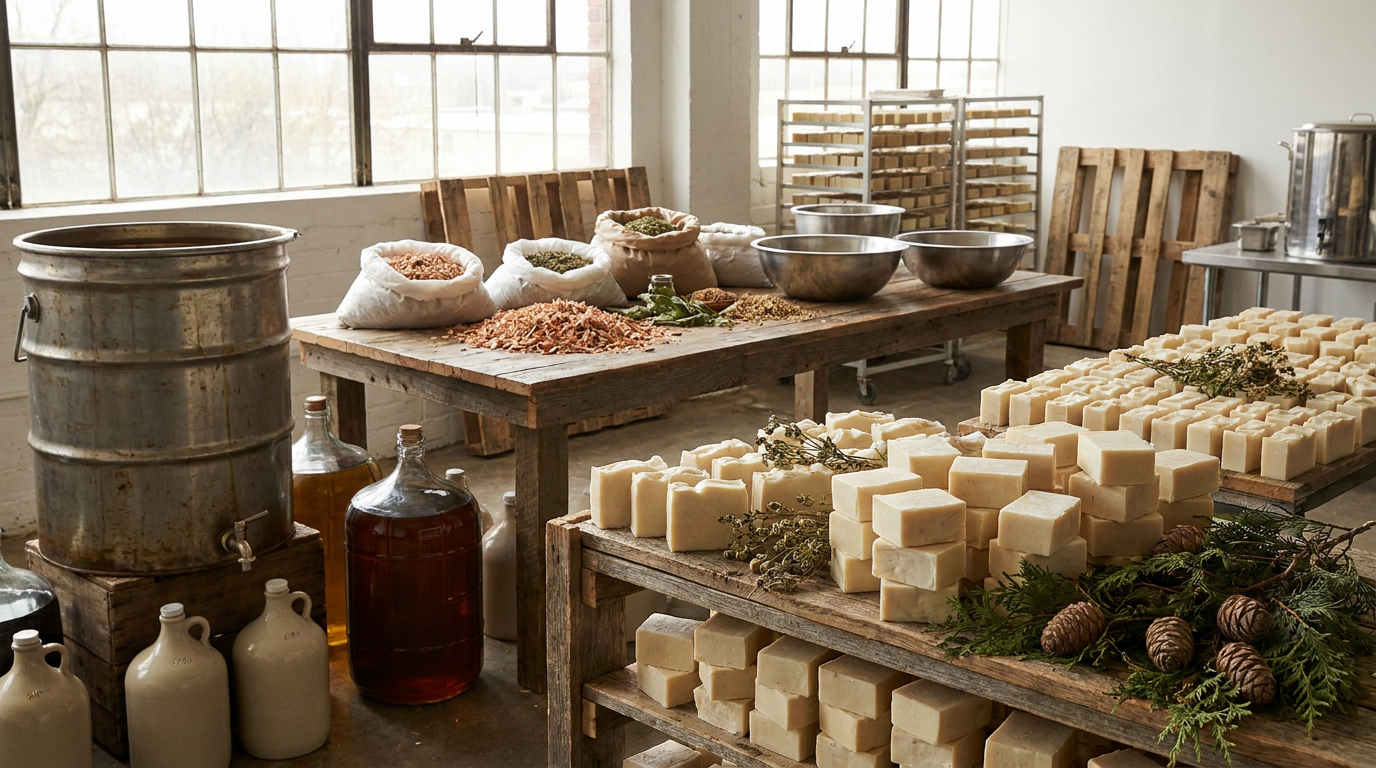
Soap makers value cedarwood for a base note that survives saponification and still reads clearly once the bar has cured. This page is part of our Guide to Buying Cedarwood Essential Oil in Bulk.
Order a sample to test through a full cure before committing to a drum.
A dry, woody, balsamic base note holds up better through the cold-process cure than many lighter florals and citrus notes, which is why cedarwood shows up in the base layer of a scent formula rather than as the whole story. The dry, woody character is described in detail in our profile of the cedarwood aroma, useful groundwork for a soap maker building a scent brief.
Soap makers rarely run cedarwood alone; it usually anchors a blend with bergamot, lavender, or other top notes layered over it. Our roundup of woody pairing ideas covers combinations that hold up well through the soap-making process, though not every pairing tested there survives cold process equally well.
Cold-process soap making runs at high heat and high pH before curing, which is harder on a fragrance profile than a cool-mixed lotion or oil blend. Formulators generally treat cedarwood as forgiving in this environment relative to lighter citrus notes, though exact retention depends on the recipe's superfat and cure time rather than anything specific to a given supplier.
A scent that tests well in a small trial batch should be re-tested after a full cure, since base notes like cedarwood tend to soften over weeks in ways a fresh-poured bar does not show.
Small soap operations often start at 5 lbs or 25 lbs per batch cycle, with larger cooperatives and private-label runs moving to 100 lbs.
Check bulk pricing for your next batch cycle.