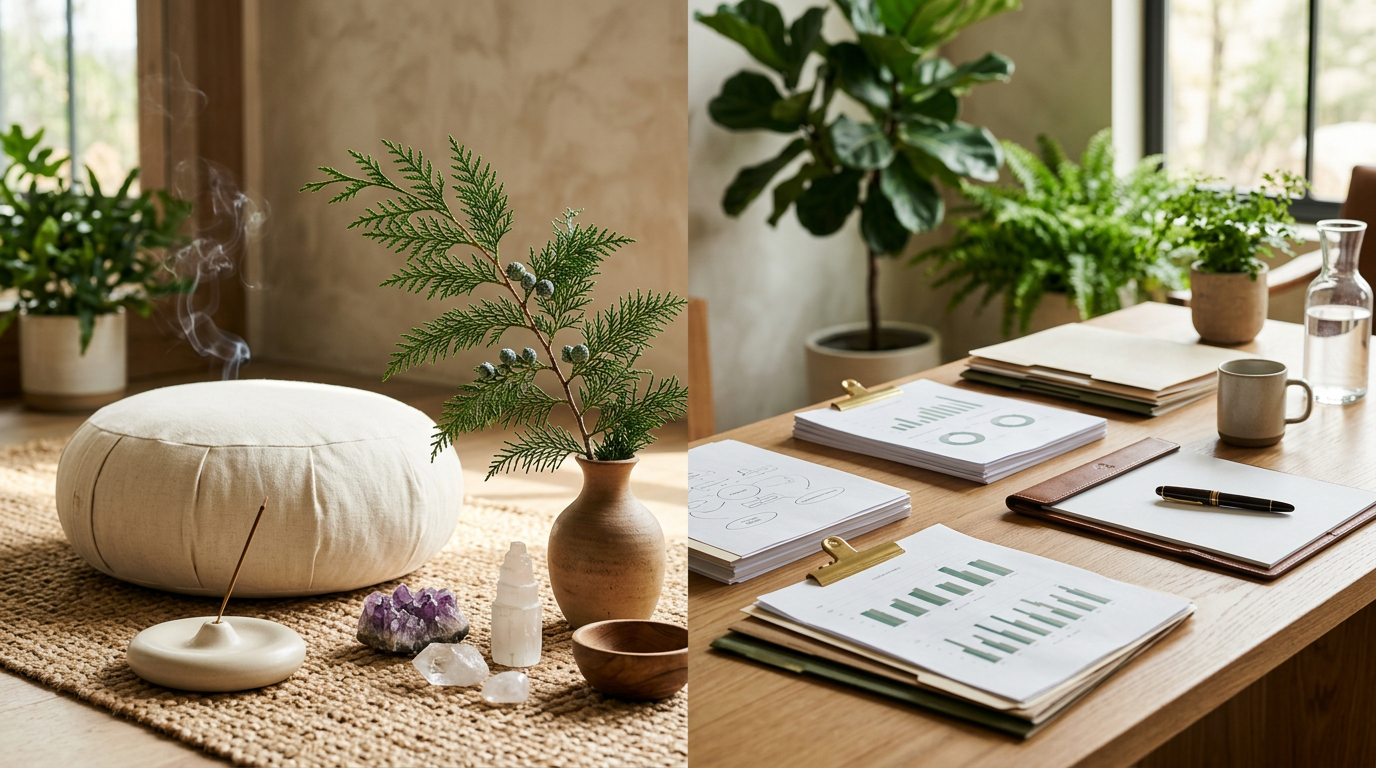
Cedarwood and Grounding Practice: Scent Notes for Quiet Focus
There is a particular quality to the air this time of year. The light shifts. The pace of daily life pulls in two directions at once: inward toward rest, outward toward obligation. Many people find themselves reaching for anchors. A ritual cup of tea. A slower walk. A scent that stops the mental chatter long enough to take one full breath.
Cedarwood essential oil has been that anchor for a long time. Across cultures and centuries, the dense, resinous wood of true cedar trees carried an association with steadiness. It was used in sacred spaces, in libraries, in the quiet corners of homes where serious thinking happened. That history is not accidental. The scent itself has a quality that seems to ask you to slow down. This article explores why cedarwood has become a go-to grounding essential oil for so many people building intentional daily practices, and how you might work it into your own seasonal rhythm.
Why This Conversation Is Happening Now
Interest in grounding practices tends to spike at seasonal transitions. Search data consistently shows a rise in terms like cedarwood meditation scent and grounding essential oils during autumn and early winter, and again at the shift from winter to spring. These are the periods when routines get disrupted. Schedules compress. The urge to create a felt sense of stability becomes practical rather than abstract.
Cedarwood fits this moment well. Its scent profile reads as earthy and composed. It does not demand attention the way citrus or eucalyptus does. It settles in. For people building a grounding practice, that quality of settl-in matters.
There is also a growing body of general interest in the relationship between scent and focus. Aromatherapy is no longer fringe. Diffusers are standard items in home offices. People are more literate about essential oil sourcing and quality than they were even five years ago. That literacy creates a natural appetite for deeper information: not just what to use, but why, and how to use it well.
What We Mean by Grounding
The word "grounding" gets used a lot in wellness contexts. It is worth being precise about what it means here. A grounding practice, in the sense used throughout this article, refers to any intentional activity designed to bring your attention back to the present moment and to your physical surroundings. It might be a breathing exercise. A slow walk without headphones. A few minutes of stillness before a meeting. The use of a consistent, memorable scent as an anchor.
Scent is a particularly effective tool for grounding because of how the olfactory system works. Unlike other senses, smell travels a more direct route to the limbic region of the brain, the area associated with memory and emotional tone. A familiar scent can shift the quality of a moment quickly. It does not require concentration or skill. It just requires presence.
People who work with cedarwood essential oil for spiritual benefits often describe this as one of its most distinctive qualities: the oil seems to prompt a shift in attention without effort. You smell it, and something in you slows down. That is not a medical claim. It is a widely reported experiential pattern worth noting honestly.
The Scent Profile of True Cedarwood

Not all cedarwood oils smell the same, and this matters if you are building a practice around a specific scent.
True Atlas cedarwood (Cedrus atlantica) carries a dry, slightly smoky woodiness with a faint sweetness underneath. Himalayan cedarwood (Cedrus deodara) is warmer, more balsamic, with a softness that blends readily. Virginia cedarwood (Juniperus virginiana) is sharper and more pencil-shaving forward. Texas cedarwood (Juniperus ashei) is rugged and resinous.
For grounding and quiet-focus practices, most experienced users gravitate toward Atlas or Himalayan varieties. Their warmth reads as more enveloping. Less bracing. The scent profile supports stillness rather than alertness, which is exactly what you want when the goal is to land in the present moment rather than launch into productivity mode.
If you are newer to cedarwood and want a solid overview of how different varieties compare across uses, our complete guide to cedarwood oil uses breaks this down clearly.
Building a Grounding Practice Around Cedarwood Scent
The single most effective thing you can do is choose one application method and use it consistently at the same time each day. Consistency is what transforms a pleasant scent into a genuine anchor. Your nervous system learns the association over time.
Diffusing for Morning or Evening Stillness
A diffuser is the most straightforward entry point. Add four to six drops of cedarwood to a standard ultrasonic diffuser with water according to the manufacturer's instructions. Run it for twenty to thirty minutes rather than continuously. A defined window gives the scent a beginning and an end, which reinforces the ritual quality of the practice.
Morning use pairs well with journaling or slow breathing before the day begins. Evening use supports the transition between the active part of the day and quieter hours. For a deeper look at how to get the most from cedarwood in a diffuser setup, see our guide on cedarwood in the diffuser and aromatherapy basics.
Topical Application for Grounding Rituals
Some people prefer a hands-on sensory experience. Cedarwood blends well into a carrier oil for use on pulse points or as part of a brief self-massage routine. A standard dilution for adults is two to three drops of essential oil per teaspoon of carrier oil, which works out to roughly one to two percent. Always perform a patch test before applying to a larger area: apply a small amount of the diluted blend to the inside of your wrist, wait twenty-four hours, and check for any reaction before wider use.
Common carrier options include jojoba, fractionated coconut oil, or sweet almond. Jojoba is particularly compatible with cedarwood because its own mild nutty scent does not compete.
Safety note: Avoid applying undiluted essential oil directly to skin. Keep all essential oils away from eyes and mucous membranes. Cedarwood is generally considered safe for most adults at standard dilutions, but consult a qualified healthcare provider before use during pregnancy, with young children, or if you have any relevant health considerations.
Scent Strips and Personal Inhalers
For grounding practice during work hours or travel, a personal inhaler or scent strip offers a discreet option. Add eight to ten drops to the cotton wick of a personal aromatherapy inhaler. Keep it in a desk drawer or bag. When you notice your attention scattering, take three slow breaths with the inhaler nearby. The scent cue is quick, private, and does not require a diffuser setup.
Seasonal Variations on the Theme

Cedarwood works across seasons, but the way you work with it can shift to match the time of year.
Autumn and Winter
This is cedarwood's native season, in a sense. The combination of darker evenings and the cultural pull toward home and gathering makes the oil's warm, resinous quality feel exactly right. In diffuser blends, pair it with frankincense and a drop of vetiver for a deeply grounding evening scent. A touch of cardamom adds gentle warmth without sweetness. The result is less spa, more library: serious, settled, conducive to reading and reflection.
Spring Transition
When the calendar turns but the mind still feels wintry, cedarwood works well as a base for lighter pairings. Try it with bergamot or grapefruit for a grounding-but-lifted quality. The woodsy base keeps you anchored while the citrus top note encourages a gentle openness. This combination works particularly well for morning practice when the goal is steady attention rather than withdrawal.
Summer
Heat can intensify essential oils in the diffuser, so reduce quantities slightly in warmer months. Cedarwood with a drop of clary sage and lavender makes a clean, uncluttered blend suited to outdoor meditation spaces or screened porches. The green quality of lavender softens cedarwood's density without losing its grounding character.
For a wider range of blend ideas across every season, the article on 12 cedarwood essential oil blends that work is worth bookmarking.
Quality Considerations for a Grounding Practice
If you are building a consistent ritual around a specific scent, quality matters more than it would for casual use. The scent memory your practice depends on is tied to the actual chemical profile of the oil, not just the label.
Look for:
- Clear species identification on the label (Cedrus atlantica, Cedrus deodara, Juniperus virginiana, etc.) rather than simply "cedarwood"
- Country of origin listed, since Atlas cedarwood from Morocco and Himalayan cedar from Nepal or India will smell noticeably different
- Gas chromatography and mass spectrometry (GC/MS) testing results available from the supplier
- Harvest method and distillation details, when available
- Dark glass packaging, stored away from light and heat
Synthetic fragrance oils can mimic the general idea of cedarwood but they do not carry the same complexity. For a scent-memory-based practice, that complexity is part of what makes the anchor work. Invest in a small quantity of a genuine, well-sourced oil before committing to a larger bottle.
A Simple Starting Framework

If you are just beginning, keep it genuinely simple. Pick one time of day. Choose one application method. Use the same cedarwood oil each time. Do this for two weeks before adjusting anything.
The goal in the early days is not a perfect practice. It is repetition. You are building a scent association between cedarwood and a particular quality of attention. That association takes time to form and time to deepen. Give it the time.
After two weeks, you will likely notice that the scent itself begins to do some of the work. You open the bottle, or the diffuser starts, and something in you shifts before you have consciously done anything. That is the anchor doing its job.
A Note on Sourcing and Sustainability
Atlas cedarwood (Cedrus atlantica) has faced pressure from overharvesting in parts of its native range in Morocco. When sourcing this variety, look for suppliers who can speak to sustainable harvesting practices and who source from certified or responsibly managed forests. This is not only an ethical consideration. Sustainably sourced oil tends to be higher quality because the trees are allowed to mature fully before harvest, which affects the depth and complexity of the scent profile.
Himalayan cedarwood faces similar concerns in some regions. Ask your supplier. A good supplier will have an answer. If they do not, that itself is informative.
Closing Notes on Scent and Stillness
A grounding practice does not require complexity. It requires repetition and a genuine anchor. Cedarwood essential oil, chosen with care and used consistently, offers something concrete to return to when the mind scatters. The scent is dense enough to cut through distraction. Familiar enough, over time, to become a cue. Old enough in human use that it arrives with a kind of cultural weight: this is what steady feels like.
Start small. Stay consistent. Let the scent do the work it has always done.