
Is Cedarwood Oil Safe for Dogs? What Pet Owners Should Know
Cedarwood oil has a long history in natural home and personal care routines, and many pet owners are curious whether it fits safely into a household that includes dogs. The short answer is: it depends heavily on the species of cedar, the quality of the oil, the method of use, and the individual dog. This page pulls together the most common questions we hear from dog owners and gives you the clearest, most honest answers we can.
Before reading further, one important note: this page covers aromatic and topical use in a household context only. It does not cover internal use, which should never be attempted with essential oils and dogs. Always consult your veterinarian before introducing any new aromatic product into your pet's environment.
The Basics: What You Need to Know First
1. Is cedarwood oil safe for dogs?
Cedarwood essential oil is generally considered to be among the lower-risk essential oils for dogs when used correctly, meaning well-diluted, applied or diffused with care, and sourced from a true cedar species. However, "generally lower-risk" does not mean risk-free. Every dog is different, and factors like size, age, breed, and individual sensitivity all matter.
2. Which species of cedarwood oil are we actually talking about?
This is one of the most important questions to ask, and most articles skip it entirely. There are several plants sold under the "cedarwood" name, and they are not interchangeable. True cedars belong to the genus Cedrus and include Atlas cedar (Cedrus atlantica), Himalayan cedar (Cedrus deodara), and Lebanese cedar (Cedrus libani). Junipers like Virginian "cedar" (Juniperus virginiana) and Texas "cedar" are botanically separate and have different chemical profiles. If you want to understand the differences in depth, our complete guide to true cedarwood oil covers the sourcing and species question thoroughly.
3. Does the species of cedar affect dog safety?
Yes, and this is under-discussed. The chemical composition of Cedrus atlantica oil differs meaningfully from that of Juniperus virginiana oil, even though both are sold as "cedarwood oil." Some components found in certain juniper-derived oils, such as higher concentrations of certain ketones, may be more of a concern for dogs than the sesquiterpene-rich profile typical of true Cedrus oils. Knowing exactly what you have in the bottle matters.
4. Why are dogs more sensitive to essential oils than humans?
Dogs have a significantly more powerful sense of smell than humans, estimated at 10,000 to 100,000 times more sensitive depending on the breed. What registers as a subtle background scent to you can be overwhelming to a dog. Beyond scent intensity, dogs metabolize certain compounds differently than humans do, which is why some substances safe for people require much more caution around pets.
Safe Use: Diffusion, Dilution, and Application
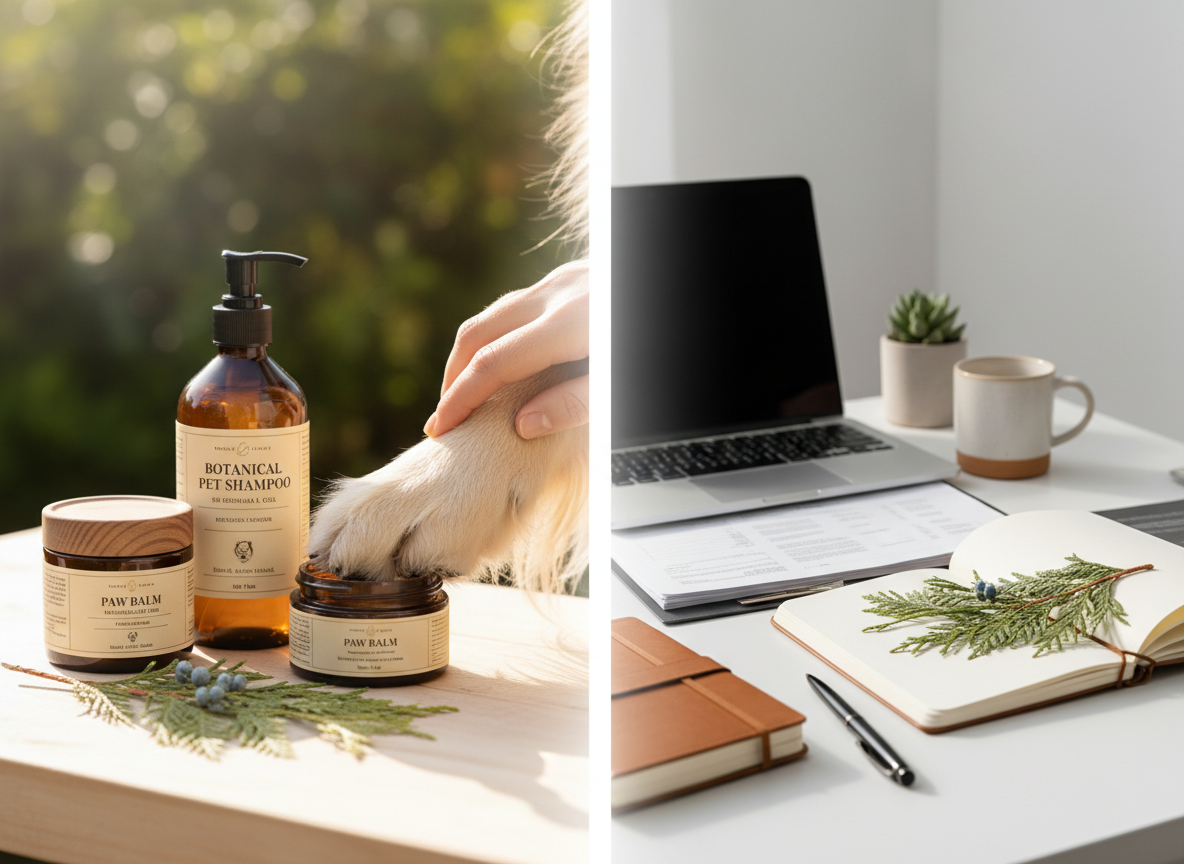
5. Can I diffuse cedarwood essential oil for dogs in my home?
Passive or intermittent diffusion in a well-ventilated room is generally considered lower risk than continuous diffusion in a closed space. The key is giving your dog the ability to leave the room freely. Never diffuse essential oils in a space where your dog is confined or cannot move away from the scent source.
6. How long should I run a diffuser if my dog is nearby?
Most pet-aware aromatherapy guidelines suggest limiting diffusion sessions to 30 to 60 minutes at a time, followed by adequate ventilation. Continuous all-day diffusion is not advisable in any space shared with pets. Observe your dog during and after each session for any signs of discomfort.
7. Can cedarwood oil be applied topically to a dog's coat or skin?
Some pet groomers and dog owners do use highly diluted cedarwood oil in grooming contexts, but this should only be done with veterinary guidance and with oils confirmed to be free of adulterants. The standard human dilution ratios for topical essential oil use are already considered conservative; for dogs, dilution should be even more generous, and the product should never be applied near the face, nose, eyes, or genitals. This is an area where a conversation with your vet is non-negotiable before you proceed.
8. What dilution ratio is considered appropriate for dogs?
Specific safe dilution rates for dogs are not universally standardized, and recommendations vary among veterinary and holistic professionals. Many sources suggest that if topical use is being considered under veterinary guidance, concentrations should be far lower than the 1 to 2 percent range commonly cited for adult humans. Given the variability in guidance, we strongly recommend working with a veterinarian who has experience with aromatic products rather than following any single online recommendation.
9. Are there dogs for whom cedarwood oil use should be avoided entirely?
Yes. Puppies, elderly dogs, dogs with compromised organ function (particularly liver conditions), pregnant or nursing dogs, and dogs with known respiratory sensitivities are considered higher-risk populations for any essential oil exposure. Brachycephalic breeds (those with flat faces, such as pugs and bulldogs) are also often flagged as more vulnerable to strong airborne scents due to their already-compromised breathing anatomy. Always discuss your specific dog's profile with a vet.
Recognizing Problems: Signs of Sensitivity or Overexposure

10. What are the signs that a dog is reacting negatively to cedarwood oil?
Behavioral and physical signals can include excessive drooling, pawing at the face or nose, watery eyes, sneezing or coughing, lethargy, wobbling or appearing uncoordinated, vomiting, or attempting to leave the area persistently. Any of these signs after aromatic or topical exposure should be taken seriously. Remove your dog from the environment immediately and contact your veterinarian or an animal poison control line.
11. What should I do if my dog ingests cedarwood oil?
Essential oil ingestion by a dog is a veterinary emergency. Do not attempt to induce vomiting unless instructed to by a professional. Contact the ASPCA Animal Poison Control Center (888-426-4435) or your emergency vet immediately and bring the oil bottle with you so the veterinarian can see exactly what the product contains.
12. Can a dog be harmed just by walking on a surface where oil was spilled?
Potentially, yes. Dogs often lick their paws, which means any undiluted or highly concentrated oil on a floor or surface can become an ingestion risk. Clean any spills thoroughly, and avoid applying undiluted oils to surfaces your dog walks on or rests against.
Quality and Sourcing: Why the Oil Itself Matters

13. Does oil quality affect safety for dogs?
Absolutely. Low-quality or adulterated cedarwood oils may contain synthetic fragrance compounds, carrier fillers, or blended botanicals that are not disclosed on the label. These additions can introduce unknown variables into a safety assessment. For any use in a home with dogs, look for oils that provide a gas chromatography and mass spectrometry (GC-MS) report confirming species identity and chemical composition. Our article on the key chemistry of true cedar oil explains what to look for in those reports.
14. What should the label or product documentation tell me?
A reputable true cedarwood oil will name the exact botanical species (Cedrus atlantica, Cedrus deodara, etc.) rather than just "cedarwood." It should also list the country of origin, the plant part used (wood, bark, or leaves), and the extraction method. GC-MS testing documentation, ideally available upon request or downloadable from the brand's website, adds another layer of transparency.
15. Is "cedar" in a product's scent the same as cedarwood essential oil?
No. Many products labeled "cedar-scented" use synthetic fragrance compounds designed to mimic cedar rather than actual plant-derived essential oil. Synthetic fragrances have their own set of concerns around pets and are outside the scope of this FAQ, but the distinction matters: a product containing genuine Cedrus atlantica essential oil and a product using artificial cedar fragrance are not the same thing.
Comparisons and Context: Dogs vs. Other Pets
16. Is cedarwood oil safer for dogs than for cats?
Dogs and cats have different metabolic pathways, and cats are generally considered more sensitive to essential oils than dogs are, particularly because cats lack certain liver enzymes involved in processing aromatic compounds. That said, "safer for dogs than for cats" does not mean safe without precautions. If your household includes both species, we have a separate resource specifically addressing cedarwood oil safety for cats that is worth reading alongside this one.
17. Are all dog breeds equally sensitive to essential oils?
Not necessarily. Smaller breeds have a higher surface-area-to-body-weight ratio, which can affect how topical exposure translates systemically. As mentioned earlier, flat-faced breeds face added respiratory considerations. Dogs bred for scent work (hounds, spaniels, retrievers) have especially sensitive olfactory systems, and what seems like a mild scent level to you may be quite intense for them. Breed context is worth discussing with your vet.
Household Considerations
18. Can I use cedarwood oil in my laundry or cleaning routine if I have a dog?
Products rinsed out thoroughly (like a few drops in laundry that is fully rinsed and dried) are generally considered lower-risk than direct skin contact or inhalation. However, surfaces that your dog rests on directly, like their bedding, present more prolonged contact and should be treated with particular caution. When in doubt, avoid adding essential oils to anything your dog will be in sustained physical contact with.
19. What about cedar wood (the actual wood) versus cedarwood oil?
Cedar wood itself, such as cedar-lined closets or cedar chips sometimes used in pet bedding, is a different consideration from concentrated essential oil. The aromatic compounds in raw cedar wood are present in much lower concentrations than in extracted essential oil. Still, some dogs may react to heavily aromatic cedar chip bedding, so monitoring your pet when introducing any new aromatic material is always wise.
20. Is it safe to use cedarwood oil in a home spray or room mist if my dog is present?
Sprays disperse droplets into the air, which can settle on your dog's coat, be inhaled directly, or later be ingested during grooming. Spraying essential oil blends in the same room as a dog, particularly a fine mist at nose height, is generally not recommended. If you use a room spray, allow the space to air thoroughly before your dog re-enters.
Getting Professional Guidance
21. Should I ask my regular vet or a specialist?
Your regular veterinarian is always a good first contact, and many are well-informed about essential oil risks for pets. If you want more detailed guidance on integrative or aromatic approaches, ask for a referral to a veterinarian with additional training in that area. The Veterinary Botanical Medicine Association (VBMA) maintains a directory that may be helpful.
22. Are there resources I should look at before using any essential oil around my dog?
The ASPCA's Animal Poison Control Center website maintains a list of substances of concern for pets. Several veterinary schools have also published position statements on essential oil use in animals. These are more reliable starting points than generalized wellness blogs, including this one. We aim to be transparent: our expertise is in cedarwood oil sourcing and quality, not veterinary medicine.
23. What is the single most important takeaway from this FAQ?
Species and quality of the oil matter as much as how you use it. A poorly sourced, adulterated, or mislabeled oil introduces variables that no safety guideline can account for. Start with a verified, pure true cedarwood oil, keep concentrations low, give your dog the ability to move away from any scent source, and involve your vet in any decision that involves direct contact or sustained exposure. Those four principles go a long way.