Cedarwood Oil for Hair: Woody Scalp Massage and Grooming Ideas
There is something quietly satisfying about working a warm, woodsy oil into your scalp and letting the scent do its thing while your hands do theirs. Cedarwood essential oil has been a fixture in grooming rituals for generations, prized for its deep, resinous aroma and the way it blends so naturally into carrier oils, conditioners, and homemade hair masks. This guide walks you through several practical ways to incorporate it into your routine, from a simple pre-wash scalp massage to a lightweight grooming oil for styled hair.
Before diving in, a note on sourcing: not all cedarwood oils are the same. True cedarwood oil, distilled from Cedrus atlantica (Atlas cedar) or Cedrus deodara (Himalayan cedar), differs from the more widely sold Virginian cedarwood (Juniperus virginiana), which is technically a juniper. Each has its own aromatic profile and chemical makeup. For the recipes below, Atlas or Himalayan cedarwood is recommended for their richer, creamier scent. If you want a broader look at how cedarwood oil fits into daily life beyond hair care, the complete guide to cedarwood oil uses is a good place to start.
What Makes Cedarwood Oil Worth Adding to Your Hair Routine
Cedarwood essential oil contains compounds called sesquiterpenes, including cedrol and cedrene. Some research suggests these compounds may interact with the scalp environment in ways that support the appearance of healthy hair over time. People who use cedarwood oil in their routines often report that their scalp feels less tight and that their hair looks shinier after consistent use. These are experiential observations, not clinical guarantees.
The aromatic dimension matters too. The woody, slightly sweet scent of true cedarwood lingers gently without being overpowering. It layers beautifully with rosemary, lavender, and sandalwood, which makes it a flexible building block for personalized blends.
A few things cedarwood oil is commonly noted for in grooming contexts:
- May help support the appearance of a balanced, comfortable scalp
- Adds a grounding, woodsy fragrance to DIY hair products
- Blends well with a wide range of carrier oils
- Traditionally included in beard grooming formulas for conditioning and scent
- May contribute to a sense of calm during a scalp massage ritual (the scent, not a medical effect)
Safety and Dilution: Read This First
Essential oils are highly concentrated plant extracts. Cedarwood oil should never be applied directly to the scalp or skin without dilution in a carrier oil. A concentration of 1 to 2 percent is standard for scalp and hair use. That translates to roughly 6 to 12 drops of essential oil per ounce (30 ml) of carrier oil.
Always perform a patch test before full application. Apply a small amount of your diluted blend to the inside of your elbow or wrist, wait 24 hours, and check for any redness or irritation before proceeding.
Cedarwood oil is generally considered safe for adults at proper dilution levels. It is not recommended for use during pregnancy without guidance from a qualified healthcare provider. Keep all essential oils away from eyes and mucous membranes. If irritation occurs, discontinue use.
Reminder: The information here is educational and intended for cosmetic and aromatic use only. Always consult a qualified healthcare provider if you have concerns about your scalp or hair.
Recipe 1: Classic Cedarwood Scalp Massage Oil
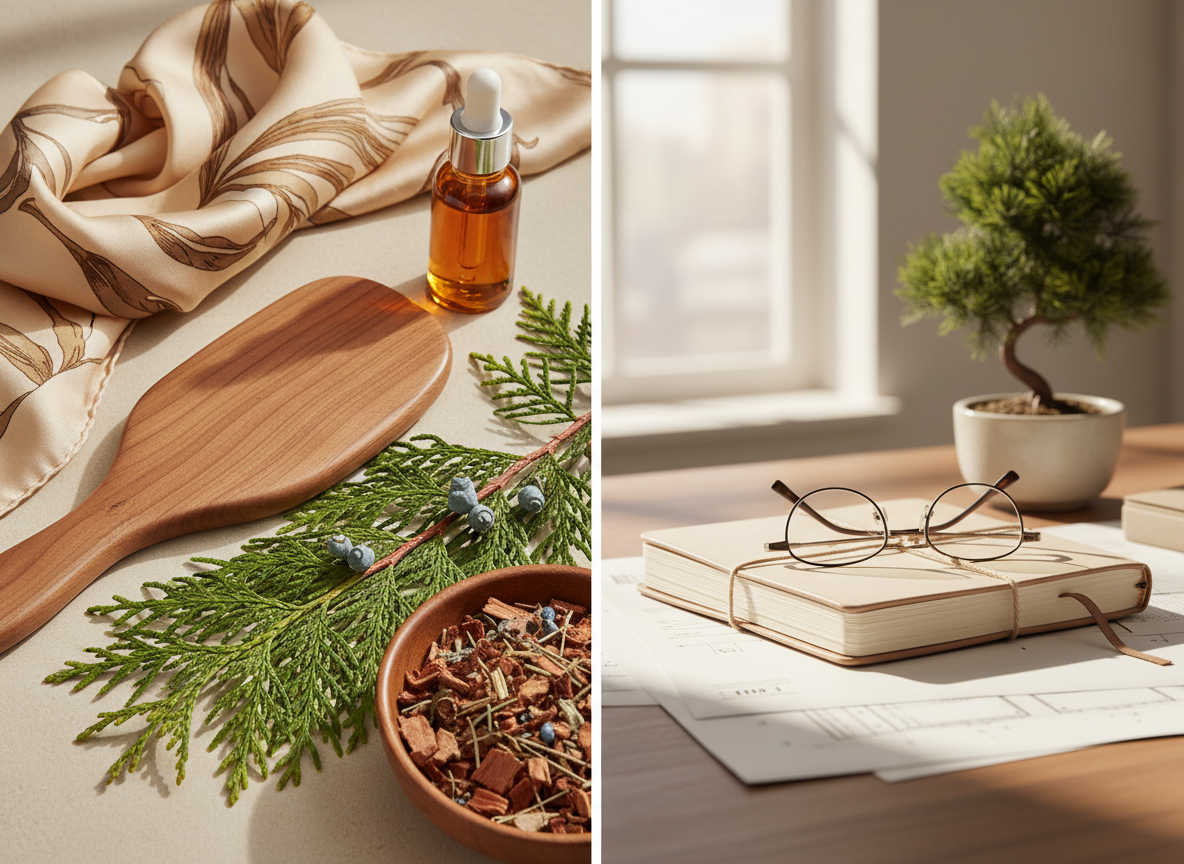
This is the most straightforward way to experience cedarwood oil benefits for hair. A pre-wash scalp massage with a diluted blend may help support circulation to the scalp, loosen buildup, and leave hair looking more lustrous after washing. Many people build this into a weekly self-care ritual.
Materials Needed
- 1 ounce (30 ml) jojoba oil (closest in composition to scalp sebum; absorbs without heavy residue)
- 8 drops Atlas or Himalayan cedarwood essential oil
- 4 drops rosemary essential oil (optional, for added aromatic complexity)
- A small dark glass bottle or dropper bottle
- A fine-tooth comb or rat-tail comb for sectioning
Steps
- Combine your oils. Add the jojoba oil to your glass bottle first, then add the cedarwood and rosemary drops. Cap the bottle and roll it gently between your palms for 30 seconds to blend. Shaking vigorously is not necessary and may introduce air bubbles.
- Warm the blend slightly. Hold the capped bottle in your hands for a minute or two. Warm oil absorbs more comfortably and the scent opens up beautifully. Do not microwave.
- Section your hair. Use your comb to create four or five sections across your scalp, starting with a center part and working outward. Clipping sections aside with hair clips keeps the application neat.
- Apply to the scalp. Dispense a few drops directly onto each parted section. You do not need to saturate the lengths of your hair. The focus is the scalp itself.
- Massage for five to ten minutes. Use the pads of your fingertips (not your nails) to work in small circular motions across the scalp. Move from the nape of the neck up to the crown, then across the temples. The combination of oil and gentle pressure is the core of the ritual.
- Leave on for 20 to 30 minutes. You can cover your hair with a shower cap to prevent dripping. Some people leave the oil on overnight, which is fine as long as your pillowcase is protected.
- Wash out thoroughly. Apply your shampoo directly to the oiled scalp before adding water. This helps the shampoo bind to the oil. Rinse, then shampoo a second time if needed. Follow with your usual conditioner on the lengths.
Expected Results
After consistent weekly use over four to six weeks, many people report that their scalp feels more comfortable and their hair appears shinier and more manageable. Results vary by hair type, water quality, and overall hair care routine. This is a gradual, cumulative practice, not an overnight fix.
Common Mistakes to Avoid
- Using too much oil. More is not better here. A few drops per section is sufficient. Excess oil is harder to wash out and can weigh fine hair down.
- Skipping the patch test. Even familiar-seeming ingredients can cause reactions. Do not skip this step.
- Applying to dry, flaky buildup without cleansing first. If your scalp has significant product buildup, do a gentle clarifying wash first to allow the oil to reach the skin properly.
- Using low-quality cedarwood oil. Adulterated or mislabeled oils are common. Look for oils that list the Latin botanical name, country of origin, and batch testing information on the label.
Recipe 2: Cedarwood and Coconut Deep Conditioning Mask
For drier hair types or anyone who wants extra softness, this simple mask combines the scalp-supporting properties of cedarwood with the deeply conditioning nature of coconut oil. Apply it once every two weeks as a grooming ritual.
Materials Needed
- 2 tablespoons virgin coconut oil (solid or gently melted)
- 1 tablespoon argan oil
- 10 drops cedarwood essential oil
- 4 drops sandalwood essential oil (optional, for a warmer aromatic layer)
- A small bowl and spoon
- Shower cap
Steps
- Melt and measure your base. If your coconut oil is solid, place it in a small bowl set over a larger bowl of warm water until it melts. Do not heat directly on the stove or in a microwave, as high heat can degrade both the carrier and essential oils.
- Add your essential oils. Once the coconut oil is liquid and no longer hot, stir in the argan oil, cedarwood drops, and sandalwood if using. Mix well.
- Apply generously from scalp to ends. Unlike the scalp-only massage oil, this mask can be worked through the full length of your hair for conditioning. Start at the scalp and work downward.
- Cover and wait. Put on a shower cap and leave the mask on for 30 to 45 minutes. The warmth your head generates helps the oils penetrate the hair shaft.
- Wash out thoroughly. Use the same shampoo-before-water technique from Recipe 1. Coconut oil is heavier than jojoba and may require two rounds of shampooing to remove fully. This is normal.
Tips
- This mask works beautifully on coarse, curly, or color-treated hair. For very fine hair, use it only on the mid-lengths and ends to avoid heaviness at the roots.
- Store any leftover blend in a sealed glass jar in a cool, dark spot for up to two weeks.
Recipe 3: Cedarwood Beard and Grooming Oil
Cedarwood has a long history in men's grooming. Its woody, slightly earthy scent is a natural fit for beard oils and facial hair conditioners. This lightweight blend is designed to soften coarse beard hair and keep skin beneath the beard feeling comfortable.
Materials Needed
- 1 ounce (30 ml) sweet almond oil or hemp seed oil
- 6 drops cedarwood essential oil
- 3 drops frankincense essential oil (optional)
- 2 drops black pepper essential oil (optional, for a spicier aromatic note)
- A 1-ounce dark glass dropper bottle
Steps
- Combine and blend. Add the carrier oil to your dropper bottle, then add the essential oil drops. Cap and roll to combine.
- Dispense 3 to 4 drops into your palm. Rub your palms together to warm the oil and distribute it evenly.
- Work into beard and skin. Press your palms into your beard and massage the oil into both the hair and the skin underneath using your fingertips. Work from the cheeks downward.
- Comb through. Use a beard comb or boar bristle brush to distribute the oil evenly through the full length of your beard.
This blend can be used daily or as needed. The cedarwood scent is present but not heavy, making it appropriate for everyday wear without interfering with fragrance choices.
Building a Consistent Cedarwood Hair Ritual
Consistency is the most important factor in any hair grooming routine. A single application of cedarwood scalp oil is a pleasant experience, but the people who report the most noticeable results are those who keep it up weekly over several months. Treat it as a standing appointment with yourself rather than a one-off experiment.
Pairing your scalp massage with a quiet evening at home makes it easier to sustain. You might find that the grounding scent of cedarwood becomes a signal to your nervous system that the day is winding down. If you enjoy building that kind of intentional atmosphere, the evening wind-down with cedarwood guide offers more ideas for using the oil aromatically around bedtime.
A few practical notes on keeping your supplies in good shape:
- Store all blends in dark glass bottles away from heat and direct sunlight.
- Label bottles with the date of preparation. Most DIY blends keep well for three to six months depending on the carrier oil used.
- Jojoba oil has an exceptionally long shelf life (up to two years) and is a good base choice if you want to make blends in slightly larger batches.
- Cedarwood essential oil itself is one of the more stable essential oils and does not oxidize quickly, but storing it correctly still matters.
Choosing Quality Cedarwood Oil for Hair Use
The phrase "cedarwood oil benefits for hair" only applies when you are starting with a genuine, high-quality oil. The market for essential oils includes a significant amount of diluted, adulterated, or mislabeled product. Here is what to look for when purchasing:
| What to Check | What Good Looks Like |
|---|---|
| Latin botanical name | Cedrus atlantica or Cedrus deodara clearly stated |
| Country of origin | Morocco (Atlas cedar) or India/Nepal (Himalayan cedar) |
| Extraction method | Steam distilled from wood or sawdust |
| GC/MS testing | Batch-specific results available from the supplier |
| Packaging | Dark amber or cobalt glass with a reducer cap or orifice dropper |
| Price | Unusually cheap oils are a common red flag for adulteration |
If you want to explore the full range of ways cedarwood oil can be used at home, including room scenting, linen sprays, and more, the complete cedarwood oil uses guide covers it in detail. For a specific DIY project beyond hair care, the cedarwood linen mist tutorial is a simple and satisfying next step.
Cedarwood oil for hair is one of those practices that rewards patience and attention. The rituals above are intentionally simple so they can actually be kept up over weeks and months. Start with the basic scalp massage oil, get your technique consistent, and then layer in the other recipes as your interest grows. The woodsy scent alone makes the routine worth keeping.