Actually a cedar. That is rare.

Our Story

Most cedarwood oil is not from a cedar at all. Ours is Atlas cedar from the Moroccan mountains, taken from licensed thinnings and distilled here.

Cedrus A True Cedar
Morocco Licensed Thinnings
Heartwood Prioritised Over Sapwood
4 yr Keeps and Deepens
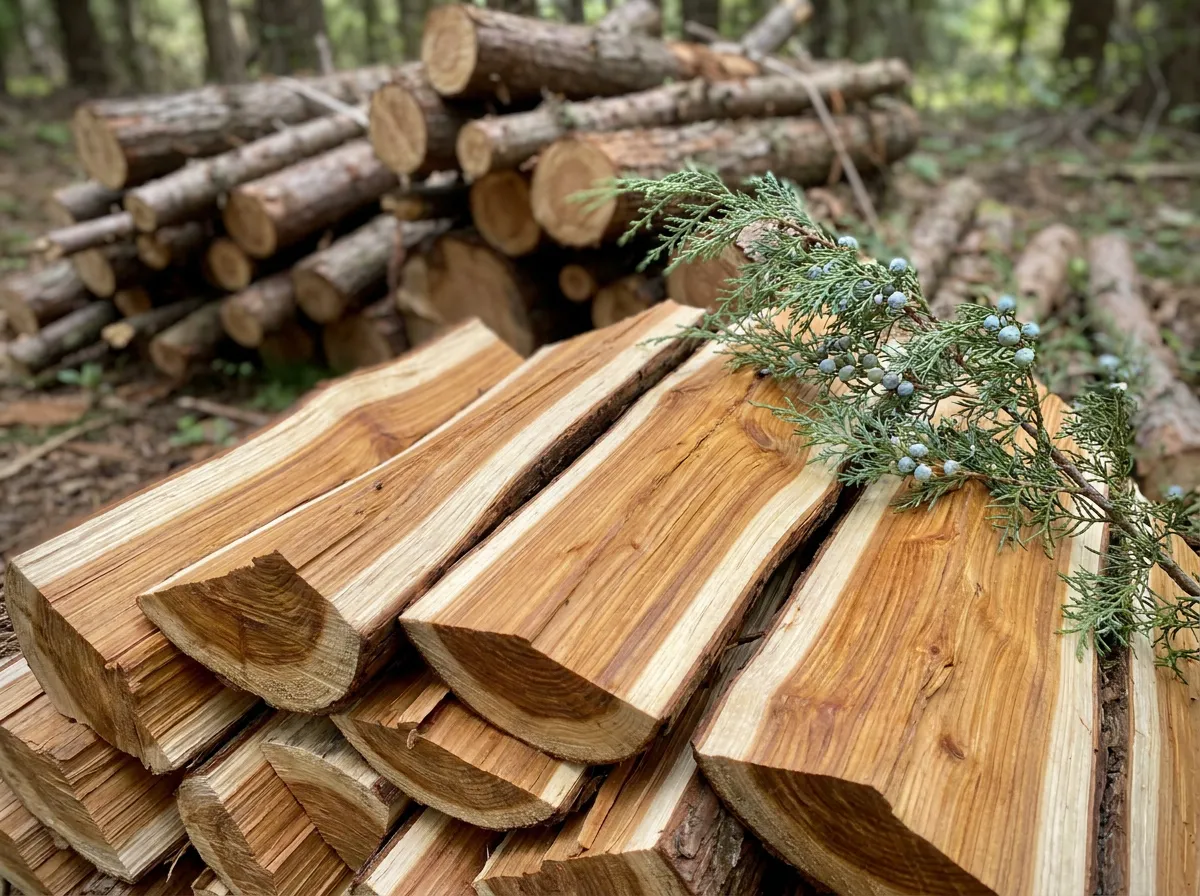
Mature Atlas cedar forest on a Moroccan mountainside with stacked thinned timber

Licensed Thinnings From the High Atlas

Atlas cedar forest is a protected resource and its harvesting is regulated. Our wood comes from licensed thinnings: younger trees removed to give the older, larger cedars room to grow.

That is the opposite of clearing. Thinning is how the stand is kept healthy, and the timber it produces would exist whether or not anyone distilled it.

The heartwood is what we want. It holds the sesquiterpenes that carry cedar's scent, while sapwood yields very little and dilutes a charge, so it is separated rather than chipped in to make up weight.
Most Cedarwood Is Not Cedar

The word cedarwood covers several unrelated trees, and only a minority of the oil sold under it comes from a genuine cedar.

Virginia and Texas cedarwood are junipers. Others are cypresses. They are decent materials and they smell different: drier, sharper, more pencil-shaving than balsamic. None of them is a Cedrus, and almost nobody selling them makes that clear.

Ours is Cedrus atlantica, the Atlas cedar of Morocco's mountains and a botanical sibling of the cedar of Lebanon. It carries a sweet, balsamic, faintly animalic warmth the junipers simply do not have, and that difference is the entire reason to pay for the real thing.

Aged Chips, Long Run

The distillation is ours. In a category where junipers and cypresses are routinely relabelled as cedar, owning the still is how we can promise you a Cedrus.

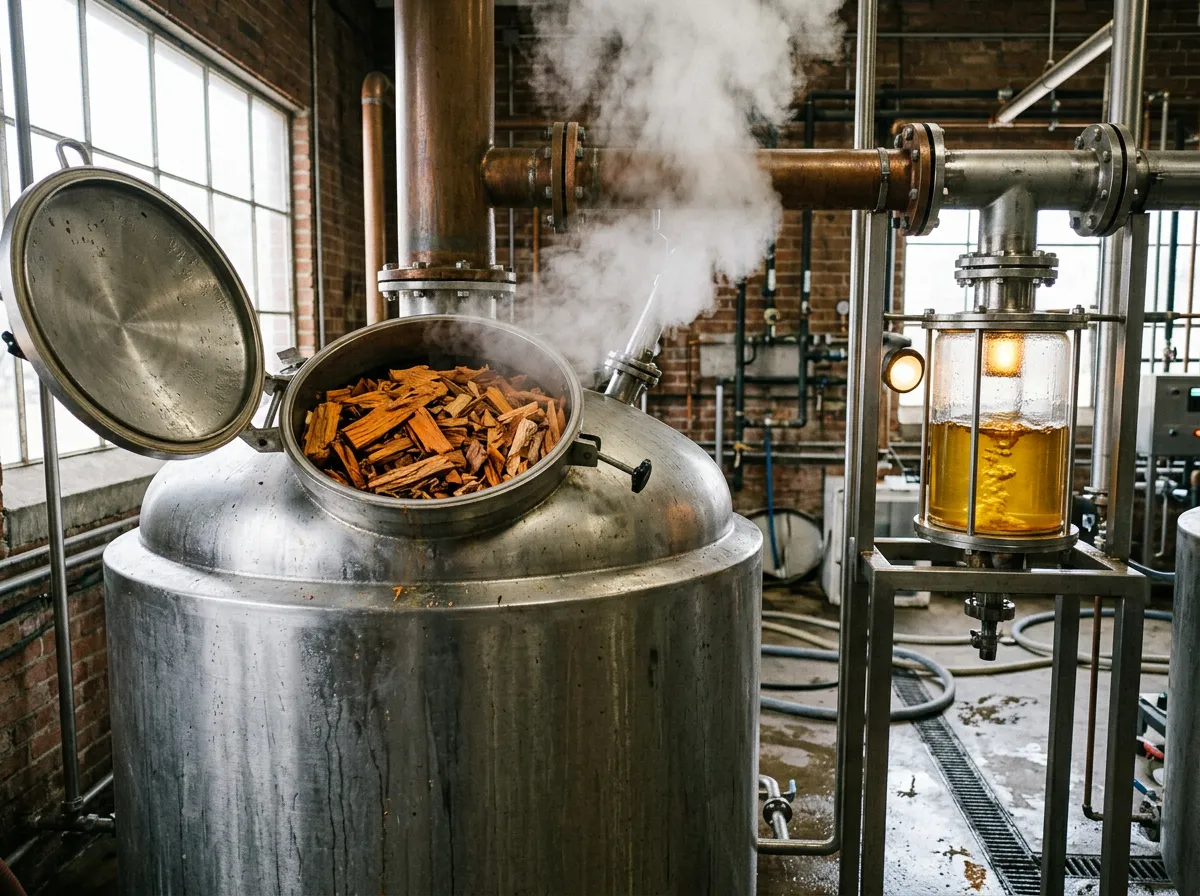
Chipped wood is packed into the retort and steamed. Aged, dried chips outperform fresh-cut material on this species, so the wood is given time rather than rushed to the charge.

Heavy wood oils release their best late in the run, so each charge is taken out fully. No hour figure is quoted because the wood decides when it is finished.

Chipped Atlas cedar heartwood packed into a still in a working distillery

Where We Stay Straight

Six positions on an oil the trade routinely muddles.

Genus Named

Cedrus atlantica on the label, not the vague word cedarwood doing the work.

Licensed Thinnings

Regulated removals that keep the stand healthy, never clear-felled forest.

Heartwood First

The resin-bearing core, with sapwood separated out.

Distilled By Us

Chipped wood into our own still, sealed bottle out.

Aged, Not Fresh

Dried chips rather than green wood, because dried material distils better.

Full Strength

Nothing extended with a cheaper conifer, in any size.

Dated and Amber

Distillation and bottling, with a lot number. Cedar keeps well, so these speak to provenance rather than urgency.

Which Cedar, Established

An independent laboratory examines every batch, and the first thing it settles is which tree the oil came from.

Himachalenes

The alpha and beta forms dominate genuine Atlas cedar and are the clearest evidence of a Cedrus rather than a juniper.

Atlantones

The compounds behind that sweet, faintly animalic warmth, and a marker of properly distilled Atlas material.

Cedrol check

High cedrol points to Virginian or Texan juniper oil. Finding it here would mean the batch is not what the label says.

Give us the lot number and we will send its analysis, or ask through the contact page.

Two Honest Notes

There is no medical claim on this page. Atlas cedar is a base note with a long history in perfumery and a traditional reputation around textiles, and we will leave the case there.

Use it in a base oil rather than neat, spot-checking one area beforehand, and set it aside during pregnancy as a precaution.

If you have been buying cedarwood cheaply elsewhere, expect this to smell different rather than merely stronger. It is a different tree. And when licensed material is not available in the quality we want, we go out of stock rather than quietly switch to a juniper.

Compare It With the Junipers

Atlas cedar from licensed Moroccan thinnings, heartwood prioritised, distilled out fully in our own still, with himachalenes and atlantones confirmed independently.

Smell it beside a cheap cedarwood.

Shop Cedarwood Oil
These statements have not been evaluated by the FDA. Products are not intended to diagnose, treat, cure, or prevent any disease.